
Generate Event-Driven Architecture Diagrams from Text with AI
Describe your event producers, brokers, and consumers in plain English. Get a valid Draw.io diagram with Kafka topics, saga patterns, and DLQ flows.
This AI event-driven architecture diagram generator converts plain-text event flow descriptions into Draw.io diagrams with event producers, brokers, consumers, and failure handling paths. Describe a system where an order service publishes order.created events to Apache Kafka, a payment service consumes from the orders topic and publishes payment.completed or payment.failed events, an inventory service listens for payment.completed to reserve stock via a saga coordinator, and failed events route to a dead letter topic with alerting through PagerDuty. The AI maps each component to its correct icon, draws event flow arrows with topic labels, and groups services by bounded context. Every element snaps to a 10px grid. Architecture warnings flag missing security boundaries between trust zones (WARN-04) and ambiguous component responsibilities (WARN-05). Native .drawio XML output.
What Is an AI Event-Driven Architecture Diagram Generator?
An event-driven architecture diagram shows how services communicate through asynchronous events rather than synchronous request-response calls. These systems use message brokers like Apache Kafka, AWS EventBridge, Amazon SNS/SQS, Google Pub/Sub, or Azure Event Hubs to decouple producers from consumers. Diagramming them manually is difficult because event flows fan out, loop back through saga compensations, and branch into dead letter queues. Traditional tools lack native constructs for topics, partitions, consumer groups, or event schemas. An AI event-driven architecture diagram generator solves this. You describe event producers, topics, consumers, and failure paths. The AI generates a diagram with correct broker icons, labeled event flow arrows, consumer group annotations, and DLQ branches. Diagrams.so recognizes event-driven patterns explicitly. Describe 'CQRS with Kafka Streams materializing a read model in Redis' and the diagram shows command and query paths separated by an event store. Describe 'saga orchestration with Step Functions coordinating order, payment, and shipment services' and the output renders the orchestrator with forward and compensating transaction arrows. Mention 'Kafka Connect with Debezium CDC connector streaming PostgreSQL WAL to an orders.changes topic' and the diagram includes the CDC pipeline. The AI enforces RULE-05 for left-to-right event flow. RULE-06 groups services into bounded context containers. Opinionated mode locks layout to prevent changes that obscure event flow direction. VLM visual validation catches overlapping topic labels and crossing consumer arrows. WARN-04 flags events crossing trust boundaries without encryption. WARN-05 identifies services with unclear event handling responsibilities. Native .drawio XML output.
Key components
- Event producers with labeled publish arrows showing event types like order.created or payment.failed
- Message brokers: Kafka clusters with topic/partition annotations, EventBridge buses, SNS topics, SQS queues
- Consumer groups with partition assignment indicators and consumer lag annotations
- Saga orchestrators (Step Functions, Temporal) with forward and compensating transaction paths
- CQRS separation: command-side write path and query-side read model materialization via event streams
- Dead letter queues and topics with retry count labels and alerting sink connections (PagerDuty, Slack)
- CDC pipelines: Debezium connectors from PostgreSQL WAL or DynamoDB Streams to broker topics
- Bounded context containers grouping producers and consumers by domain per RULE-06
How to generate with AI
- 1
Describe your event flows
Write your event-driven architecture in plain English. Name every producer, event type, broker, and consumer. For example: 'Order service publishes order.created to Kafka orders topic (3 partitions, replication factor 3). Payment service consumer group payment-processors reads from orders topic and publishes payment.completed or payment.failed to payments topic. Inventory service reads payment.completed events and calls reserveStock. If reserveStock fails, inventory service publishes stock.insufficient to a compensation topic. Saga coordinator (Temporal workflow) listens for stock.insufficient and triggers order cancellation and payment refund compensating transactions. Failed events after 5 retries go to orders.dlq topic. PagerDuty alert fires on DLQ messages.'
- 2
Select event-driven type and options
Choose 'Event Driven' as the diagram type. Select a cloud provider if you use managed brokers like EventBridge, MSK, or Pub/Sub. Diagrams.so loads vendor-specific icons from 30+ libraries. For self-managed Kafka, the generic Kafka icon is used. Enable opinionated mode to enforce left-to-right event flow layout with producers on the left, brokers in the center, and consumers on the right.
- 3
Generate and review
Click generate. The AI outputs a .drawio XML with producers, brokers, consumers, and failure paths rendered with correct icons and labeled event arrows. VLM visual validation flags overlapping topic labels and tangled consumer connections. Architecture warnings identify events crossing trust boundaries without encryption (WARN-04) and services with ambiguous event handling (WARN-05). Download as .drawio for editing, or export to PNG or SVG.
Example prompt
Event-driven architecture for a food delivery platform: Customer places order through React app calling Order API (REST). Order service validates the order and publishes order.placed event to Kafka orders topic (6 partitions, RF=3). Three consumer groups subscribe: (1) Restaurant service matches the order to nearest restaurant and publishes restaurant.assigned event. (2) Payment service creates Stripe PaymentIntent and publishes payment.authorized event. (3) Notification service sends order confirmation via FCM push. A Temporal saga coordinator waits for restaurant.assigned AND payment.authorized. If both succeed within 5 minutes, publishes order.confirmed. If payment fails, compensating transaction cancels the restaurant assignment. If restaurant fails to confirm within 5 minutes, compensating transaction refunds payment. Driver matching service subscribes to order.confirmed and publishes driver.assigned based on proximity algorithm. All services publish events to a CDC pipeline via Debezium from PostgreSQL to Kafka for event sourcing. DLQ topic with PagerDuty alerting for any consumer that exceeds 3 retry attempts.
Example diagrams from the gallery


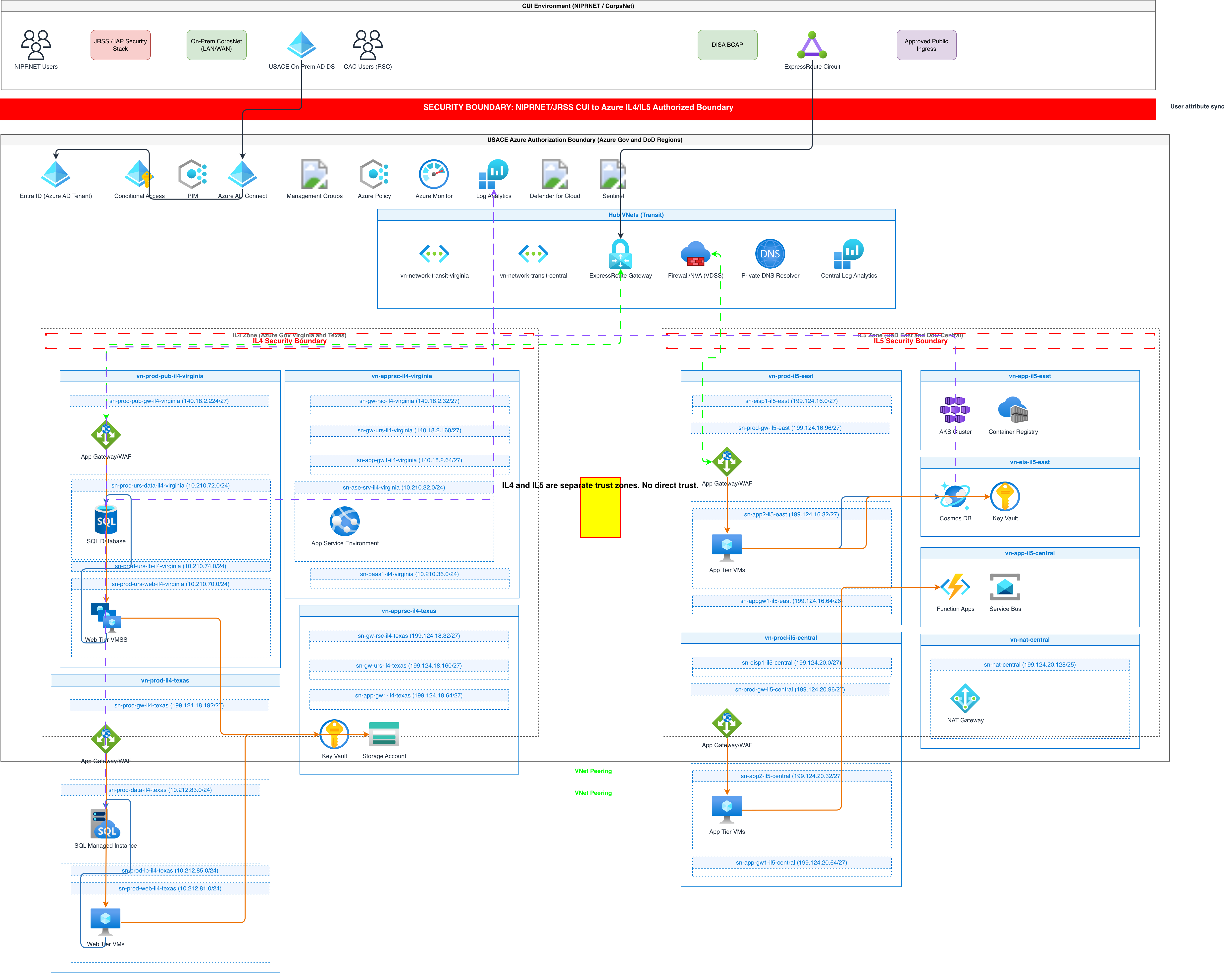

Event-Driven Architecture vs Request-Response Architecture vs Batch Processing Architecture
These three architectural styles handle inter-service communication differently. Event-driven systems use asynchronous events through message brokers. Request-response systems use synchronous calls between services. Batch processing systems accumulate data and process it in scheduled intervals.
| Feature | Event-Driven Architecture | Request-Response Architecture | Batch Processing Architecture |
|---|---|---|---|
| Communication pattern | Asynchronous publish-subscribe through brokers like Kafka, EventBridge, or SNS/SQS | Synchronous HTTP/gRPC calls where the caller blocks until the callee responds | Scheduled jobs process accumulated data at fixed intervals (hourly, daily) via cron or Step Functions |
| Coupling level | Loose; producers don't know which consumers exist; new consumers subscribe without producer changes | Tight; callers must know callee URLs, API contracts, and handle callee failures directly | Loose; producers write to shared storage (S3, database); processors read independently on schedule |
| Latency profile | Near-real-time (milliseconds to seconds); limited by broker throughput and consumer lag | Real-time; response latency equals sum of all downstream call latencies in the chain | High latency; data waits until the next scheduled processing window (minutes to hours) |
| Failure handling | Retry policies, dead letter queues, saga compensating transactions, poison pill isolation | Circuit breakers (Hystrix, Resilience4j), retry with exponential backoff, fallback responses | Job-level retry, checkpoint-based resumption, idempotent processing, DLQ for failed records |
| Diagram characteristics | Fan-out topology; one event triggers multiple consumers; broker sits between every producer-consumer pair | Linear call chains; service A calls B calls C; arrows point in the request direction | Source-to-sink pipelines; data flows from storage through processing stages to output destinations |
| Best suited for | Order processing, IoT telemetry, real-time notifications, inventory sync across microservices | CRUD APIs, user-facing form submissions, search queries, authentication flows | ETL pipelines, report generation, ML training data preparation, end-of-day financial reconciliation |
When to use this pattern
Use an event-driven architecture diagram when your system relies on asynchronous communication between services through message brokers. This is the right diagram for documenting Kafka topic topologies, EventBridge rule configurations, saga orchestration flows, and CQRS read model materialization pipelines. Common scenarios include onboarding new engineers to the event flow across microservices, incident post-mortems tracing which consumer failed to process an event, and architecture reviews evaluating event schema evolution strategies. If your services communicate through synchronous REST or gRPC calls, a request-response sequence diagram fits better. If your data processing happens in scheduled batch jobs, a data pipeline diagram is more appropriate.
Frequently asked questions
What message brokers does the AI event-driven architecture diagram generator support?
This AI event-driven architecture diagram generator supports Apache Kafka (including MSK), AWS EventBridge, Amazon SNS/SQS, Google Pub/Sub, Azure Event Hubs, Azure Service Bus, RabbitMQ, and Redis Streams. Each broker renders with its correct icon from the 30+ libraries. Topic, queue, and bus names appear as labels on the broker nodes.
Can I show CQRS patterns in the diagram?
Yes. Describe command and query separation in your prompt: 'Order service writes to PostgreSQL and publishes events to Kafka. A Kafka Streams application materializes a read model in Redis for the query API.' The AI separates command and query paths visually, with the event store bridging them. Write and read models get distinct containers.
How are saga patterns represented?
Describe the saga coordinator and compensating transactions in your prompt. The AI draws the orchestrator (Step Functions, Temporal, or custom) with forward transaction arrows and dashed compensating transaction arrows pointing back. Each compensation step labels the rollback action, like 'refund payment' or 'release inventory reservation.' Timeout annotations appear on wait states.
Does the diagram include dead letter queue flows?
Yes. Mention retry counts and DLQ targets in your prompt. The AI draws a failure branch from the consumer to the dead letter queue or topic with the retry threshold labeled. Alerting sinks like PagerDuty or Slack connect to the DLQ with notification arrows. This makes failure paths visible alongside happy-path event flows.
Can I show CDC pipelines from databases to event brokers?
Yes. Describe the CDC source and connector: 'Debezium PostgreSQL connector reads WAL and publishes to Kafka orders.changes topic.' The AI draws the database, Debezium connector, and target Kafka topic with labeled arrows showing the change data capture flow. DynamoDB Streams to Lambda or EventBridge Pipes are also supported.
Related diagram generators
Generate Microservices Architecture Diagrams from Text
Describe your service boundaries in plain English. Get a valid Draw.io diagram with API gateways, message brokers, database-per-service patterns, and service mesh routing.
Generate Serverless Architecture Diagrams from Text with AI
Describe your serverless components and event triggers in plain English. Get a valid Draw.io diagram with Lambda functions, API Gateway, and managed services.
Generate Data Flow Diagrams from Text with AI
Describe how data moves through your system. Get a valid Draw.io DFD with Yourdon-DeMarco notation, decomposition levels, and named data flows.
Generate System Architecture Diagrams from Text
Describe your system's components in plain English. Get a valid Draw.io diagram with services, databases, message queues, caches, and API connections.