
Generate API Gateway Diagrams from Text with AI
Describe your API gateway routing, auth, and rate limiting in plain English. Get a valid Draw.io diagram with request flows, middleware chains, and backend services.
This AI API gateway diagram generator converts plain-text API routing descriptions into Draw.io diagrams with gateway nodes, middleware chains, routing rules, and backend service connections. Describe a Kong API Gateway that receives HTTPS requests at api.example.com, validates JWT tokens issued by Auth0, applies rate limiting at 1000 requests per minute per API key, routes /users/* to a user-service on ECS Fargate, /orders/* to an order-service on EKS, and /search/* to an Elasticsearch proxy with response caching in Redis (TTL 60 seconds). The AI draws the gateway with labeled middleware plugins, routing arrows to backend services, and cache hit/miss paths. Every element snaps to a 10px grid. Architecture warnings flag public endpoints without WAF (WARN-02) and missing security boundaries (WARN-04). Native .drawio XML output.
What Is an AI API Gateway Diagram Generator?
An API gateway diagram shows how client requests flow through a central gateway, pass through authentication and rate limiting middleware, get routed to backend services, and return responses optionally through a cache layer. Gateways like Kong, AWS API Gateway, Azure API Management, and Envoy Gateway handle cross-cutting concerns that individual services shouldn't duplicate. Diagramming this manually means placing the gateway node, drawing middleware chains in correct order (auth before rate limiting before routing), connecting each route to its backend, and adding cache paths. For gateways with 10 or more routes, this becomes tedious. An AI API gateway diagram generator automates the process. You describe routes, middleware, and backends in natural language. The AI produces a diagram with the correct request flow. Diagrams.so understands gateway-specific constructs. Describe 'Kong with OpenID Connect plugin validating Auth0 JWTs, rate-limiting plugin at 1000 req/min scoped to consumer groups, and request-transformer plugin adding X-Request-ID headers' and the diagram shows the plugin chain in execution order. Describe 'AWS API Gateway HTTP API with Lambda authorizer, /v1/users route with VPC link to internal ALB, and /v1/public route with mock integration' and the AI renders distinct route paths. Mention 'response caching in ElastiCache Redis with 60-second TTL for GET /products' and the diagram includes cache hit/miss branching. RULE-05 enforces left-to-right request flow. RULE-06 groups related routes into containers. VLM visual validation catches overlapping route labels. WARN-02 flags gateways without WAF protection. WARN-04 identifies routes missing authentication. Native .drawio XML output with icons from 30+ libraries.
Key components
- API gateway node: Kong, AWS API Gateway, Azure API Management, or Envoy Gateway with protocol labels
- Middleware chain: auth (JWT, OAuth 2.0, API key), rate limiting, request transformation, CORS in execution order
- Route mapping: path-based (/users/*, /orders/*) and host-based (api.v1.example.com) routing arrows
- Backend services: ECS, EKS, Lambda, EC2 targets with VPC link or direct integration labels
- Response caching: Redis or ElastiCache nodes with cache hit (fast path) and cache miss (backend call) branches
- Rate limiting annotations: requests per minute, per API key, per consumer group, burst limits
- Authentication flows: JWT validation, OAuth 2.0 introspection, Lambda/custom authorizer chains
- Error responses: 401 Unauthorized, 429 Too Many Requests, 503 Service Unavailable with fallback paths
How to generate with AI
- 1
Describe your API gateway configuration
Write your gateway setup in plain English. Name routes, middleware, and backends. For example: 'Kong Gateway at api.example.com. OpenID Connect plugin validates JWTs from Auth0 with audience=api.example.com. Rate limiting: 500 req/min for free tier, 5000 req/min for premium tier, scoped by consumer group. Routes: /v1/users/* to user-service (ECS Fargate, port 8080), /v1/orders/* to order-service (EKS, port 3000), /v1/products/* to product-service (Lambda function URL). GET /v1/products cached in Redis with 120-second TTL. Custom 429 response body with retry-after header for rate-limited requests.'
- 2
Select API diagram type and options
Choose 'API' as the diagram type. Select your cloud provider to load vendor-specific icons for API Gateway, ALB, Lambda, and backend services. Diagrams.so recognizes Kong, AWS API Gateway (REST and HTTP APIs), Azure API Management, Google Cloud Endpoints, and Envoy Gateway. Enable opinionated mode for strict left-to-right request flow from clients through gateway to backends.
- 3
Generate and export
Click generate. The AI outputs a .drawio XML with the gateway node, middleware chain in execution order, route arrows to backends, and cache branching paths. VLM visual validation flags overlapping route labels and tangled middleware connections. Architecture warnings flag gateways without WAF (WARN-02) and routes missing authentication (WARN-04). Download as .drawio for editing, or export to PNG or SVG for API documentation.
Example prompt
API gateway diagram for a multi-tenant SaaS platform: Kong Gateway receives HTTPS traffic at api.platform.com behind AWS CloudFront and WAF. Plugin chain: (1) OpenID Connect validates JWT from Okta with tenant_id claim extraction, (2) rate limiting at 100 req/min for trial tenants and 10000 req/min for enterprise tenants scoped by tenant_id header, (3) request-transformer adds X-Tenant-ID and X-Correlation-ID headers. Routes: /v1/users/* to user-service on ECS Fargate (port 8080) via VPC link to internal ALB, /v1/billing/* to billing-service on ECS Fargate (port 8081), /v1/analytics/* to analytics-service on EKS (port 3000), /v1/webhooks/* to webhook-processor Lambda via AWS Lambda integration. GET /v1/analytics/dashboard cached in ElastiCache Redis with 300-second TTL per tenant. 401 responses for invalid JWTs, 429 with Retry-After header for rate-limited requests, 503 with circuit breaker when backend health checks fail. Show the middleware execution order and cache hit/miss paths.
Example diagrams from the gallery


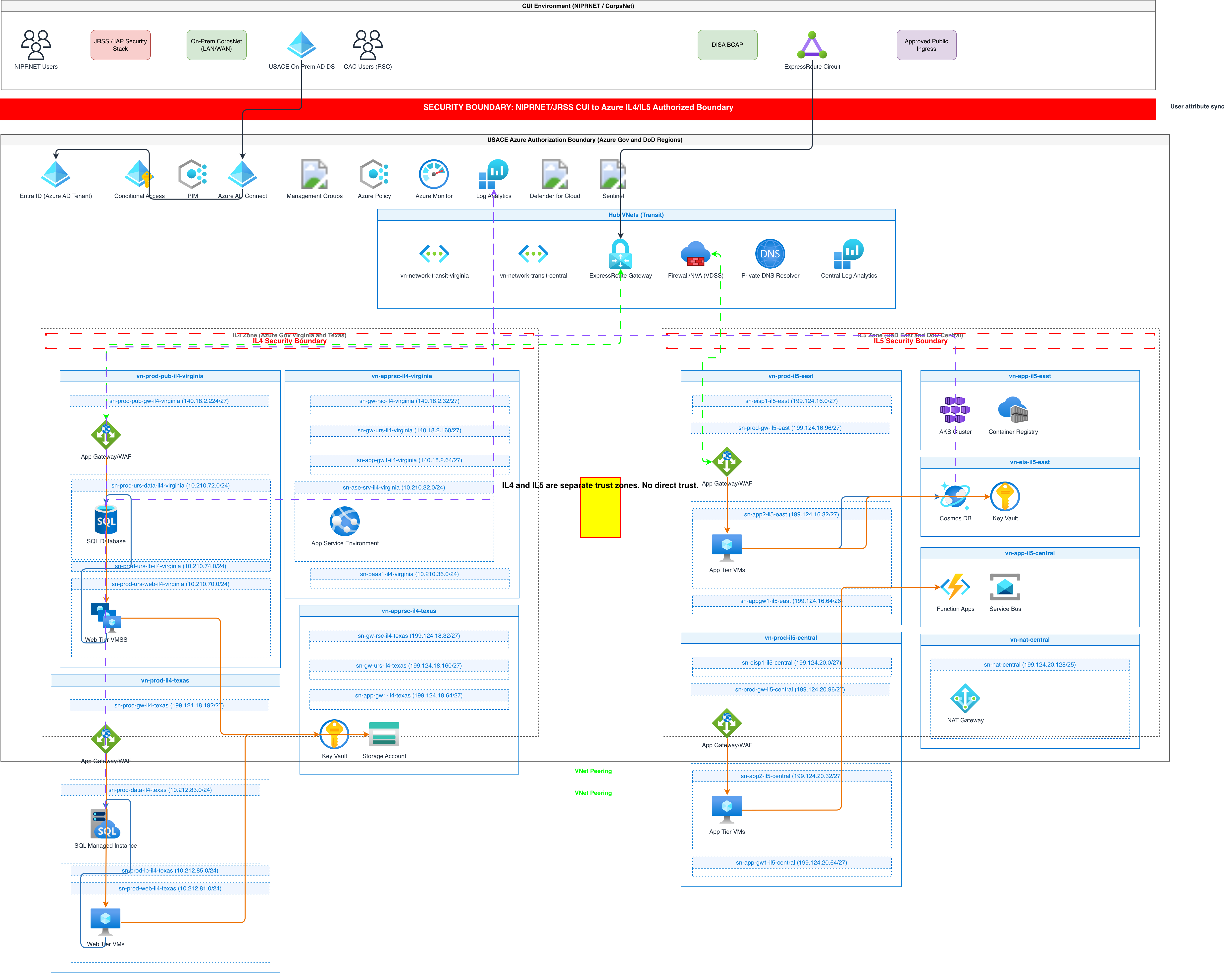

API Gateway Pattern vs Service Mesh vs Direct Service-to-Service
These three patterns handle inter-service communication at different layers. API gateways manage north-south traffic (client to service). Service meshes manage east-west traffic (service to service). Direct communication requires each service to implement its own cross-cutting concerns.
| Feature | API Gateway Pattern | Service Mesh | Direct Service-to-Service |
|---|---|---|---|
| Traffic direction | North-south: external client requests entering the system through a single entry point | East-west: internal service-to-service communication within the cluster via sidecar proxies | Both: each service exposes endpoints directly to clients and other services without intermediaries |
| Authentication scope | Centralized at the gateway: JWT validation, OAuth 2.0, API key checks before requests reach backends | mTLS between services via sidecar proxies (Envoy in Istio/Linkerd); identity based on SPIFFE certificates | Each service implements its own auth; duplicated JWT validation logic across services |
| Rate limiting | Gateway-level: per-API key, per-consumer group, per-route with centralized policy enforcement | Per-service rate limiting via Envoy filters or Istio mixer policies with local/global counters | Per-service implementation; each service manages its own rate counters in Redis or in-memory |
| Observability | Centralized access logs, latency metrics, and error rates at the gateway for all inbound traffic | Distributed tracing, per-service metrics, and traffic telemetry via sidecar proxies without code changes | Each service instruments independently; correlation requires manual propagation of trace context headers |
| Operational overhead | Single component to manage; scales independently; Kong or AWS API Gateway as managed service | Sidecar per pod adds memory/CPU overhead; control plane (Istiod) requires separate management | No infrastructure overhead; all complexity lives in application code and shared libraries |
| Best suited for | Public API exposure, multi-tenant rate limiting, third-party developer portals, mobile app backends | Zero-trust internal networking, canary deployments, traffic mirroring, inter-service mTLS enforcement | Simple architectures with 2-3 services, prototypes, and systems where latency overhead is unacceptable |
When to use this pattern
Use an API gateway diagram when you need to document how external client requests enter your system, pass through authentication and rate limiting, and route to backend services. Common scenarios include API documentation for third-party developers consuming your public API, architecture reviews evaluating gateway middleware ordering, and capacity planning for rate limiting tiers across tenant classes. If your focus is on how internal services communicate with each other inside a Kubernetes cluster, a service mesh diagram (Istio, Linkerd) is more appropriate. If you have a simple architecture with two or three services, direct service-to-service communication without a gateway may be sufficient, and a basic system architecture diagram covers that case.
Frequently asked questions
What API gateway products does the AI API gateway diagram generator support?
This AI API gateway diagram generator supports Kong Gateway, AWS API Gateway (REST API and HTTP API), Azure API Management, Google Cloud Endpoints, Envoy Gateway, Traefik, and NGINX as API gateway. Each renders with its correct icon from the 30+ available libraries. Mention the product by name and the AI selects the matching icon automatically.
How is the middleware chain shown in the diagram?
The AI renders middleware plugins in execution order as a vertical or horizontal chain within the gateway node. Authentication runs first, then rate limiting, then request transformation, then routing. Each plugin gets a labeled box with configuration details like 'JWT validation (Auth0, audience=api.example.com).' The chain shows the exact order requests pass through.
Can I show different rate limiting tiers?
Yes. Describe tier-based rate limits in your prompt: '100 req/min for free tier, 10000 req/min for enterprise tier.' The AI annotates the rate limiting node with per-tier limits and the scoping key (API key, tenant ID, consumer group). Different tiers render as branching paths from the rate limiter to the same backend routes.
Does the diagram include response caching?
Yes. Mention caching in your prompt: 'GET /products cached in Redis with 60-second TTL.' The AI draws a cache node with two outbound paths: a fast cache-hit arrow returning directly to the client and a cache-miss arrow continuing to the backend service. TTL and cache key annotations appear on the cache node.
Can I diagram WebSocket and gRPC routes alongside REST?
Yes. Describe mixed protocol routes: '/ws/* WebSocket upgrade to notification-service, /api/* REST to user-service, /rpc/* gRPC to inference-service.' The AI labels each route with its protocol type and draws distinct connection styles. WebSocket routes show the upgrade handshake path. gRPC routes show HTTP/2 framing indicators.
Related diagram generators
Generate Microservices Architecture Diagrams from Text
Describe your service boundaries in plain English. Get a valid Draw.io diagram with API gateways, message brokers, database-per-service patterns, and service mesh routing.
Generate System Architecture Diagrams from Text
Describe your system's components in plain English. Get a valid Draw.io diagram with services, databases, message queues, caches, and API connections.
Generate Security Architecture Diagrams from Text with AI
Describe your trust boundaries, encryption layers, and access controls in plain English. Get a valid Draw.io security diagram with defense-in-depth zones.
Generate Network Diagrams from Text with AI
Describe your network topology in plain English. Get a valid Draw.io diagram with routers, switches, firewalls, VLAN segmentation, and labeled subnet ranges.