
Generate UML Diagrams from Text with AI
Describe your classes, components, or deployment topology in plain English. Get a valid Draw.io UML diagram with correct UML 2.5 notation and relationships.
This AI UML diagram generator converts plain-text descriptions into Draw.io UML diagrams with correct UML 2.5 notation, stereotypes, and all six relationship types. Describe a class hierarchy where an abstract PaymentProcessor defines processPayment() and refund() methods, with StripeProcessor and BraintreeProcessor as concrete implementations, each depending on an HttpClient interface through dependency injection. The AI generates a class diagram with abstract class markers, interface lollipop notation, inheritance arrows with hollow triangles, and dependency dashed lines. Attributes include visibility markers (+, -, #) and typed signatures. Every element snaps to a 10px grid per RULE-04. Architecture warnings flag ambiguous components (WARN-05) when class responsibilities overlap or interface contracts are unclear. The output is native .drawio XML compatible with Draw.io, Confluence, and VS Code without format conversion.
What Is an AI UML Diagram Generator?
A UML diagram uses the Unified Modeling Language 2.5 specification to represent software structure and behavior through standardized notation. Traditional UML tools like Enterprise Architect or StarUML require you to manually place class boxes, define compartments for attributes and methods, draw association lines, and set multiplicity labels. An AI UML diagram generator replaces that manual process. You describe the classes, interfaces, relationships, and stereotypes in natural language. The AI produces the correct UML notation automatically. Diagrams.so handles multiple UML diagram types from a single prompt. Write about classes with attributes and methods, and you get a class diagram with proper visibility markers (+, -, #), data types, and method signatures. Describe component dependencies, and the output is a component diagram with provided/required interface lollipops and port notation. Describe deployment to Kubernetes nodes, and you get a deployment diagram with node stereotypes like <<device>> and <<executionEnvironment>>. The AI distinguishes between association, aggregation, composition, generalization, realization, and dependency relationships. It places multiplicity labels (1, 0..*, 1..*) on association ends. Abstract classes render in italics per UML convention. Interfaces get the <<interface>> stereotype. Opinionated mode enforces top-down inheritance hierarchies and left-to-right dependency flow per RULE-05. VLM visual validation catches overlapping compartments and crossing relationship lines. Architecture warnings identify components with unclear responsibilities (WARN-05). The output is native .drawio XML, exportable to PNG and SVG, and compatible with 30+ icon libraries.
Key components
- Class boxes with three compartments: name (with stereotypes), attributes (with visibility and types), methods (with signatures)
- Relationship arrows: association, aggregation (hollow diamond), composition (filled diamond), generalization, realization (dashed)
- Interface notation with <<interface>> stereotype and lollipop/socket connectors on component diagrams
- Multiplicity labels (1, 0..1, 0..*, 1..*) on association ends with role names
- Abstract class rendering with italicized names and abstract method markers
- Component diagrams with provided/required interfaces, ports, and dependency arrows
- Deployment diagrams with <<device>> and <<executionEnvironment>> node stereotypes
- Package grouping for namespaces and modules following RULE-06 container guidelines
How to generate with AI
- 1
Describe your UML structure
Write your class hierarchy, component architecture, or deployment topology in plain English. Be specific about relationships and their types. For example: 'Abstract class Vehicle with attributes make (string), model (string), year (int) and abstract method calculateInsurance(). Car and Truck extend Vehicle. Car has a composition relationship with Engine (1-to-1). Truck has an aggregation with TrailerAttachment (0..1). Both implement the Insurable interface which defines getPremium() and getCoverageDetails() methods.' Name visibility levels, data types, and multiplicities for precise output.
- 2
Select UML diagram type
Choose 'UML' as the diagram type. Specify the UML subtype in your prompt: class diagram, component diagram, or deployment diagram. For class diagrams, mention stereotypes, abstract classes, and interfaces explicitly. For component diagrams, describe provided and required interfaces. Diagrams.so applies UML 2.5 notation automatically. Enable opinionated mode for strict top-down inheritance layout.
- 3
Generate and export
Click generate. The AI outputs a .drawio XML file with correctly notated UML elements: visibility markers (+/-/#), typed attributes, method signatures, and relationship arrows with multiplicities. VLM visual validation flags overlapping class compartments and tangled inheritance lines. Architecture warnings identify classes with ambiguous responsibilities (WARN-05). Download as .drawio for refinement, or export to PNG or SVG for documentation.
Example prompt
UML class diagram for an e-commerce order system: Abstract class Order with attributes orderId (UUID), customerId (UUID), createdAt (DateTime), status (OrderStatus enum). Methods: calculateTotal() returns Decimal, applyDiscount(coupon: Coupon) returns Decimal, abstract validate(). OnlineOrder extends Order, adds shippingAddress (Address) and trackingNumber (string), implements validate(). InStoreOrder extends Order, adds storeId (UUID) and cashierId (UUID), implements validate(). Order has composition with OrderLineItem (1..*). OrderLineItem has attributes productId (UUID), quantity (int), unitPrice (Decimal). Order has association with Customer (many-to-one). PaymentStrategy interface defines charge(amount: Decimal) and refund(transactionId: string). StripePayment and PayPalPayment implement PaymentStrategy. Order depends on PaymentStrategy. Show visibility markers, multiplicities, and stereotype labels.
Example diagrams from the gallery


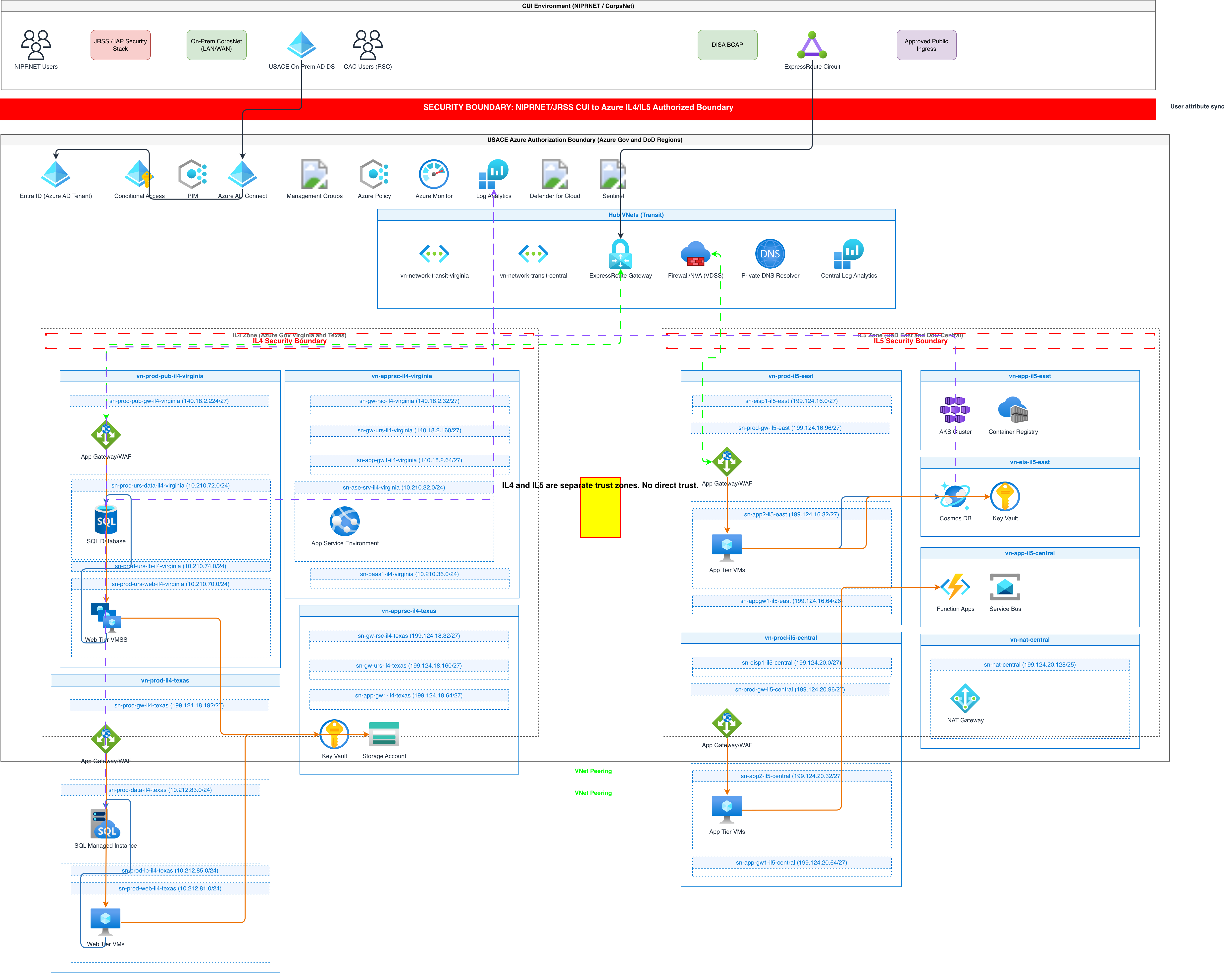

UML Class Diagram vs UML Component Diagram vs UML Deployment Diagram
These three UML diagram types operate at different abstraction levels. Class diagrams model code-level structure with attributes and methods. Component diagrams model architectural building blocks with interfaces. Deployment diagrams model physical or virtual infrastructure where components execute.
| Feature | UML Class Diagram | UML Component Diagram | UML Deployment Diagram |
|---|---|---|---|
| Abstraction level | Code-level: individual classes, interfaces, enums with attributes, methods, and relationships | Architecture-level: logical groupings of classes behind provided/required interfaces | Infrastructure-level: physical servers, VMs, containers, and execution environments |
| Primary elements | Class boxes with name/attributes/methods compartments, interfaces, enums, association lines | Component rectangles with <<component>> stereotype, lollipop/socket interfaces, ports | 3D node boxes with <<device>> or <<executionEnvironment>> stereotypes, artifact deployments |
| Relationship types | Association, aggregation, composition, generalization, realization, dependency with multiplicities | Dependency arrows between components, assembly connectors linking provided to required interfaces | Communication paths between nodes, deployment relationships between artifacts and nodes |
| Design phase usage | Detailed design phase; maps directly to code implementation in OOP languages | Architectural design phase; defines module boundaries and interface contracts | Infrastructure planning phase; maps components to actual servers, clusters, or cloud services |
| Change impact | Shows which classes break when an interface method signature changes | Shows which components are affected when a required interface is deprecated | Shows which nodes need updates when a component requires a new runtime or resource |
| Best suited for | Code reviews, design pattern documentation, ORM entity mapping, API model documentation | Microservice boundary definitions, plugin architecture design, SDK module documentation | Kubernetes topology visualization, AWS/Azure/GCP resource mapping, capacity planning |
When to use this pattern
Use a UML class diagram when you need to document code-level structure for code reviews, design pattern discussions, or onboarding materials that new engineers reference daily. Class diagrams are the right tool when you need to show inheritance hierarchies, interface implementations, and composition relationships between domain entities like Order, LineItem, and Payment. Use component diagrams when discussing microservice boundaries, plugin architectures, or SDK module dependencies, where individual class details matter less than the interface contracts between modules. Use deployment diagrams when mapping software components to physical or virtual infrastructure for Kubernetes topology visualization or cloud migration planning. Avoid UML for quick process documentation. Flowcharts are faster and more accessible for non-technical stakeholders who don't need code-level detail.
Frequently asked questions
What UML diagram types does the AI UML diagram generator support?
This AI UML diagram generator supports class diagrams, component diagrams, and deployment diagrams with full UML 2.5 notation. Class diagrams include visibility markers, typed attributes, method signatures, and all six relationship types. Component diagrams render lollipop/socket interface notation. Deployment diagrams use node stereotypes like <<device>> and <<executionEnvironment>>.
Does the AI correctly render inheritance and interface relationships?
Yes. Generalization renders as a solid line with a hollow triangle arrowhead pointing to the parent class. Interface realization uses a dashed line with a hollow triangle. Composition uses a filled diamond, aggregation uses a hollow diamond. The AI follows UML 2.5 specification for all six relationship types.
Can I include stereotypes and constraints?
Yes. Mention stereotypes in your prompt like 'PaymentGateway has stereotype <<service>>' and the AI renders them in guillemets above the class name. Constraints render in curly braces: {ordered}, {unique}, {readOnly}. Abstract classes display with italicized names per UML convention. Tagged values also render when specified in the description.
How does the AI handle multiplicity labels?
Specify multiplicities in your description: 'Order has composition with OrderLineItem, one-to-many.' The AI places the correct notation (1, 0..1, 0..*, 1..*) on both ends of the association line. Role names appear alongside multiplicities when you name them in the prompt. Bidirectional associations get labels on both ends.
Can I generate UML diagrams for existing codebases?
Describe the class structure from your existing code in the prompt. List class names, key attributes with types, method signatures, and relationships. The AI generates the UML diagram matching your description. For Java or TypeScript codebases, you can paste interface definitions directly and the AI maps them to correct UML notation.
Related diagram generators
Generate Sequence Diagrams from Text with AI
Describe interactions between services or actors. Get a valid Draw.io sequence diagram with UML 2.5 lifelines, activation bars, and message arrows.
Generate Entity-Relationship Diagrams from Text with AI
Describe your database schema in plain English. Get a valid Draw.io ERD with Crow's Foot notation, cardinality markers, and primary/foreign key labels.
Generate System Architecture Diagrams from Text
Describe your system's components in plain English. Get a valid Draw.io diagram with services, databases, message queues, caches, and API connections.
Generate Flowcharts from Text with AI
Describe a process in plain English. Get a valid Draw.io flowchart with correct ISO 5807 symbols, decision diamonds, and directional arrows.
Format converters
Convert PlantUML to an editable .drawio diagram
Paste your PlantUML and get a native .drawio you can edit — real draggable shapes and connectors instead of a rendered PNG, ready for Draw.io.
Convert Mermaid to an editable .drawio diagram
Paste your Mermaid and get a native .drawio you can actually edit — real draggable shapes and connectors instead of a rendered image, ready for Draw.io.