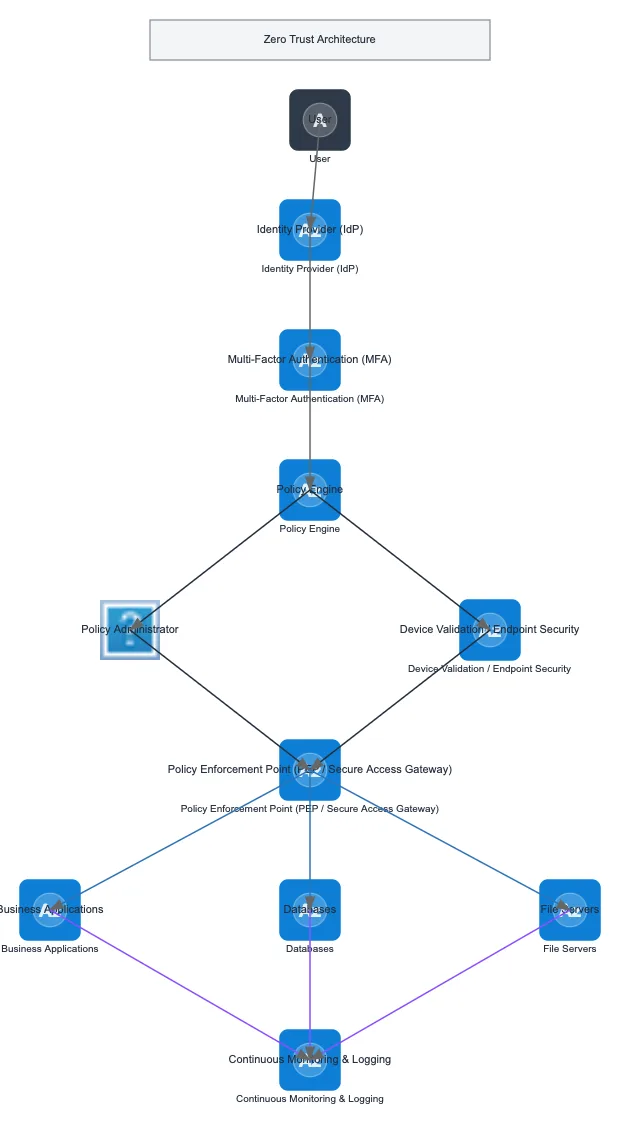
Zero Trust Architecture — AZURE architecture diagram

About This Architecture

Zero Trust Architecture on Azure enforces continuous identity verification and device validation before granting access to any resource. User authentication flows through an Identity Provider and Multi-Factor Authentication to a Policy Engine, which evaluates device compliance and applies access policies via a Secure Access Gateway. This gateway controls traffic to Applications, Databases, and File Servers while all activity feeds into Continuous Monitoring & Logging for real-time threat detection. Zero Trust eliminates implicit trust, reducing breach surface area and meeting compliance requirements for regulated workloads. Fork this diagram on Diagrams.so to customize policies, add conditional access rules, or integrate Azure Entra ID and Conditional Access components.

People also ask

How do I implement a Zero Trust Architecture on Azure with identity verification and device validation?

This diagram shows a Zero Trust model where users authenticate via an Identity Provider and MFA, then the Policy Engine evaluates device compliance before the Secure Access Gateway grants access to applications, databases, and file servers. All access is continuously monitored and logged for threat detection.

Zero Trust Architecture

AzureadvancedZero TrustSecurity ArchitectureIdentity ManagementEndpoint SecurityCompliance
Domain: SecurityAudience: Security architects designing zero-trust network access and identity-driven authorization
1 views0 favoritesPublic

Created by

August 13, 2026

Updated

August 16, 2026 at 3:03 PM

Type

architecture

Need a custom architecture diagram?

Describe your architecture in plain English and get a production-ready Draw.io diagram in seconds. Works for AWS, Azure, GCP, Kubernetes, and more.

Generate with AI

AI-generated. Verify before production use. Learn more

Report this diagram