
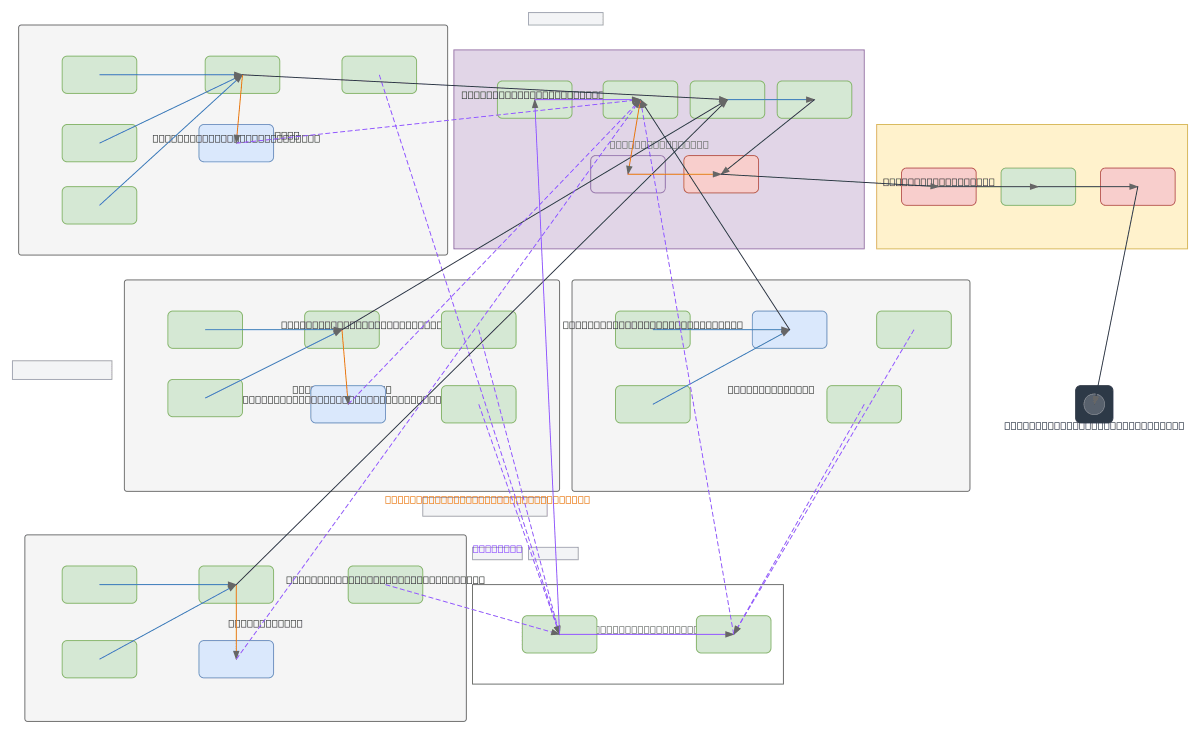
About This Architecture
Steel mill dual-plane 5G and industrial PON architecture integrates cellular and fiber-optic networks across ironmaking, steelmaking, rolling, and warehouse zones with distributed MEC and UPF nodes. Data flows from field devices (PLCs, ONUs, gNBs) through access-layer OLTs and edge MEC cabinets to a hardened core data center, with unidirectional DMZ firewalls and data diodes enforcing OT-to-IT security isolation. This converged topology eliminates single points of failure via dual-uplink OLTs, active-active UPF redundancy, and overlapping 5G coverage from macro and micro gNBs positioned at blast furnace, steelmaking, and rolling equipment. Industrial operators gain deterministic latency, sub-millisecond failover, and air-gapped OT security while maintaining enterprise IT visibility and cloud integration. Fork this diagram on Diagrams.so to customize zone layouts, adjust MEC placement, or swap firewall vendors for your mill topology. The architecture demonstrates best practices for IEC 62443 compliance and NIST cybersecurity frameworks in process-critical environments.