SNCC Substation Control System Flowchart

GENERALFlowchartintermediate
SNCC Substation Control System Flowchart — GENERAL flowchart diagram

About This Architecture

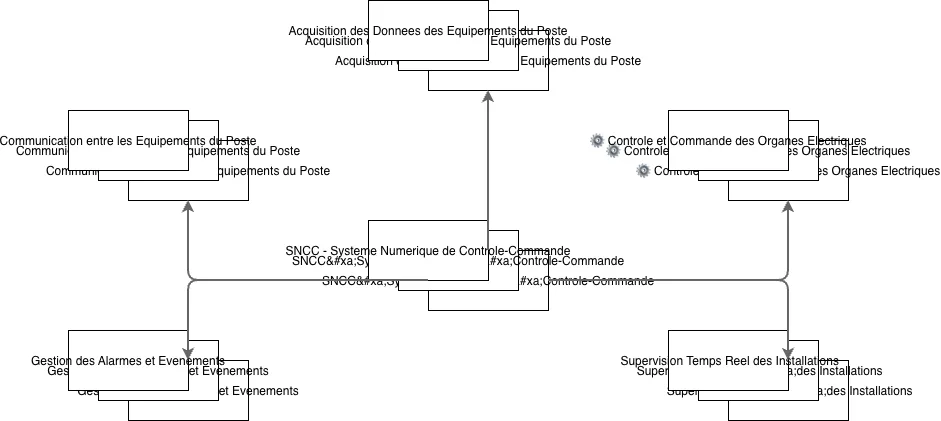
SNCC substation control system flowchart orchestrates real-time monitoring and automated command execution across field equipment including sensors, relays, and circuit breakers. Data acquisition from field devices triggers alarm detection and event management, with supervisory logic determining whether control actions or commands are required on electrical organs. Communication between substation equipment and transmission to the central SNCC control center completes each surveillance cycle, enabling operators to maintain grid stability and respond to faults. Fork this diagram on Diagrams.so to customize alarm thresholds, add redundancy paths, or integrate with your SCADA infrastructure. The cyclic architecture ensures continuous monitoring with graceful retry logic when data acquisition fails.

People also ask

How does an SNCC substation control system manage real-time monitoring and automated command execution across field equipment?

The SNCC flowchart cycles through data acquisition from sensors, relays, and circuit breakers, detects alarms or events, triggers alarm management and real-time supervision, evaluates control requirements, executes commands on electrical organs, and communicates status to the central control center before restarting surveillance.

electrical-engineeringSNCCsubstation-controlSCADAreal-time-monitoringautomation
Domain:
Electrical Engineering
Audience:
electrical engineers and substation control system operators managing SNCC digital control systems

Generated by Diagrams.so — AI architecture diagram generator with native Draw.io output. Fork this diagram, remix it, or download as .drawio, PNG, or SVG.

Generate your own flowchart diagram →

About This Architecture

SNCC substation control system flowchart orchestrates real-time monitoring and automated command execution across field equipment including sensors, relays, and circuit breakers. Data acquisition from field devices triggers alarm detection and event management, with supervisory logic determining whether control actions or commands are required on electrical organs. Communication between substation equipment and transmission to the central SNCC control center completes each surveillance cycle, enabling operators to maintain grid stability and respond to faults. Fork this diagram on Diagrams.so to customize alarm thresholds, add redundancy paths, or integrate with your SCADA infrastructure. The cyclic architecture ensures continuous monitoring with graceful retry logic when data acquisition fails.

People also ask

How does an SNCC substation control system manage real-time monitoring and automated command execution across field equipment?

The SNCC flowchart cycles through data acquisition from sensors, relays, and circuit breakers, detects alarms or events, triggers alarm management and real-time supervision, evaluates control requirements, executes commands on electrical organs, and communicates status to the central control center before restarting surveillance.

SNCC Substation Control System Flowchart

Autointermediateelectrical-engineeringSNCCsubstation-controlSCADAreal-time-monitoringautomation
Domain: Electrical EngineeringAudience: electrical engineers and substation control system operators managing SNCC digital control systems
0 views0 favoritesPublic

Created by

May 12, 2026

Updated

May 12, 2026 at 6:09 PM

Type

flowchart

Need a custom architecture diagram?

Describe your architecture in plain English and get a production-ready Draw.io diagram in seconds. Works for AWS, Azure, GCP, Kubernetes, and more.

Generate with AI