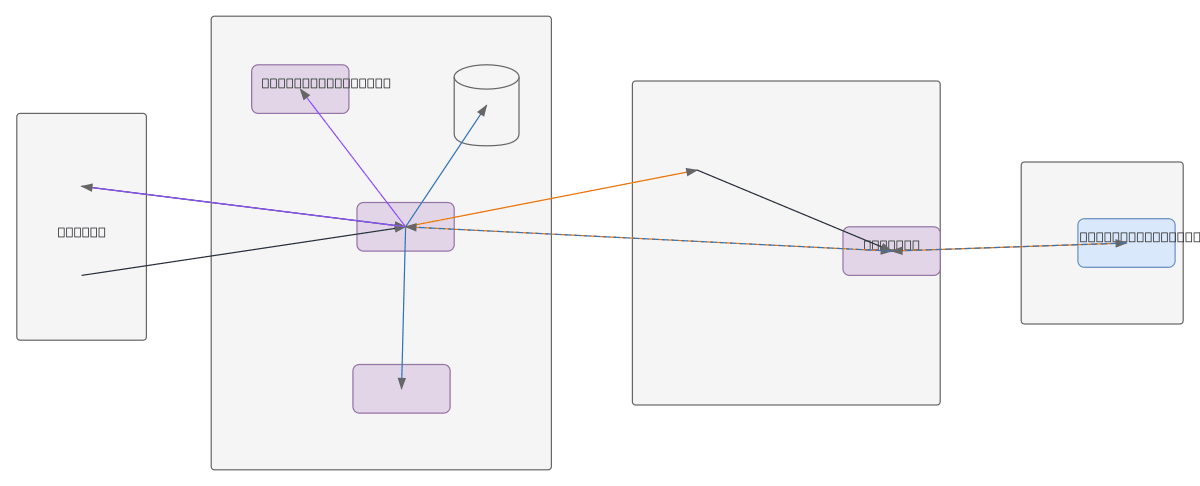
Sevensync AI Ops Orchestration Architecture

GENERALData Pipelineadvanced
Sevensync AI Ops Orchestration Architecture — GENERAL data pipeline diagram

About This Architecture

Sevensync AI Ops Orchestration Architecture integrates alert-driven automation with human-in-the-loop approval workflows using n8n as the central orchestrator. Slack and Grafana Alerts trigger n8n workflows, which leverage LiteLLM (OpenAI) for intelligent decision-making, MongoDB for chat memory, and Qdrant Vector DB for Confluence-based RAG context. Execution flows through a Slack Proxy approval gate before Rundeck executes infrastructure changes on Production Servers, with feedback loops returning results to n8n and Slack. This pattern combines event-driven orchestration, AI reasoning, and approval gates to reduce MTTR while maintaining operational safety. Fork and customize this diagram on Diagrams.so to adapt the workflow for your monitoring stack and approval requirements.

People also ask

How do you build an AI-driven incident response system with human approval gates and infrastructure automation?

Sevensync AI Ops Orchestration uses n8n as the central orchestrator to ingest Slack and Grafana Alerts, invoke LiteLLM (OpenAI) for intelligent decision-making with MongoDB chat memory and Qdrant RAG context, route decisions through a Slack Proxy approval gate, and execute infrastructure changes via Rundeck to Production Servers with feedback loops.

n8nRundeckAI automationincident responseDevOpsorchestration
Domain:
Devops Cicd
Audience:
DevOps engineers and SREs implementing AI-driven incident response and infrastructure automation

Generated by Diagrams.so — AI architecture diagram generator with native Draw.io output. Fork this diagram, remix it, or download as .drawio, PNG, or SVG.

Generate your own data pipeline diagram →

About This Architecture

Sevensync AI Ops Orchestration Architecture integrates alert-driven automation with human-in-the-loop approval workflows using n8n as the central orchestrator. Slack and Grafana Alerts trigger n8n workflows, which leverage LiteLLM (OpenAI) for intelligent decision-making, MongoDB for chat memory, and Qdrant Vector DB for Confluence-based RAG context. Execution flows through a Slack Proxy approval gate before Rundeck executes infrastructure changes on Production Servers, with feedback loops returning results to n8n and Slack. This pattern combines event-driven orchestration, AI reasoning, and approval gates to reduce MTTR while maintaining operational safety. Fork and customize this diagram on Diagrams.so to adapt the workflow for your monitoring stack and approval requirements.

People also ask

How do you build an AI-driven incident response system with human approval gates and infrastructure automation?

Sevensync AI Ops Orchestration uses n8n as the central orchestrator to ingest Slack and Grafana Alerts, invoke LiteLLM (OpenAI) for intelligent decision-making with MongoDB chat memory and Qdrant RAG context, route decisions through a Slack Proxy approval gate, and execute infrastructure changes via Rundeck to Production Servers with feedback loops.

Sevensync AI Ops Orchestration Architecture

Autoadvancedn8nRundeckAI automationincident responseDevOpsorchestration
Domain: Devops CicdAudience: DevOps engineers and SREs implementing AI-driven incident response and infrastructure automation
0 views0 favoritesPublic

Created by

April 20, 2026

Updated

April 20, 2026 at 12:18 PM

Type

data pipeline

Need a custom architecture diagram?

Describe your architecture in plain English and get a production-ready Draw.io diagram in seconds. Works for AWS, Azure, GCP, Kubernetes, and more.

Generate with AI