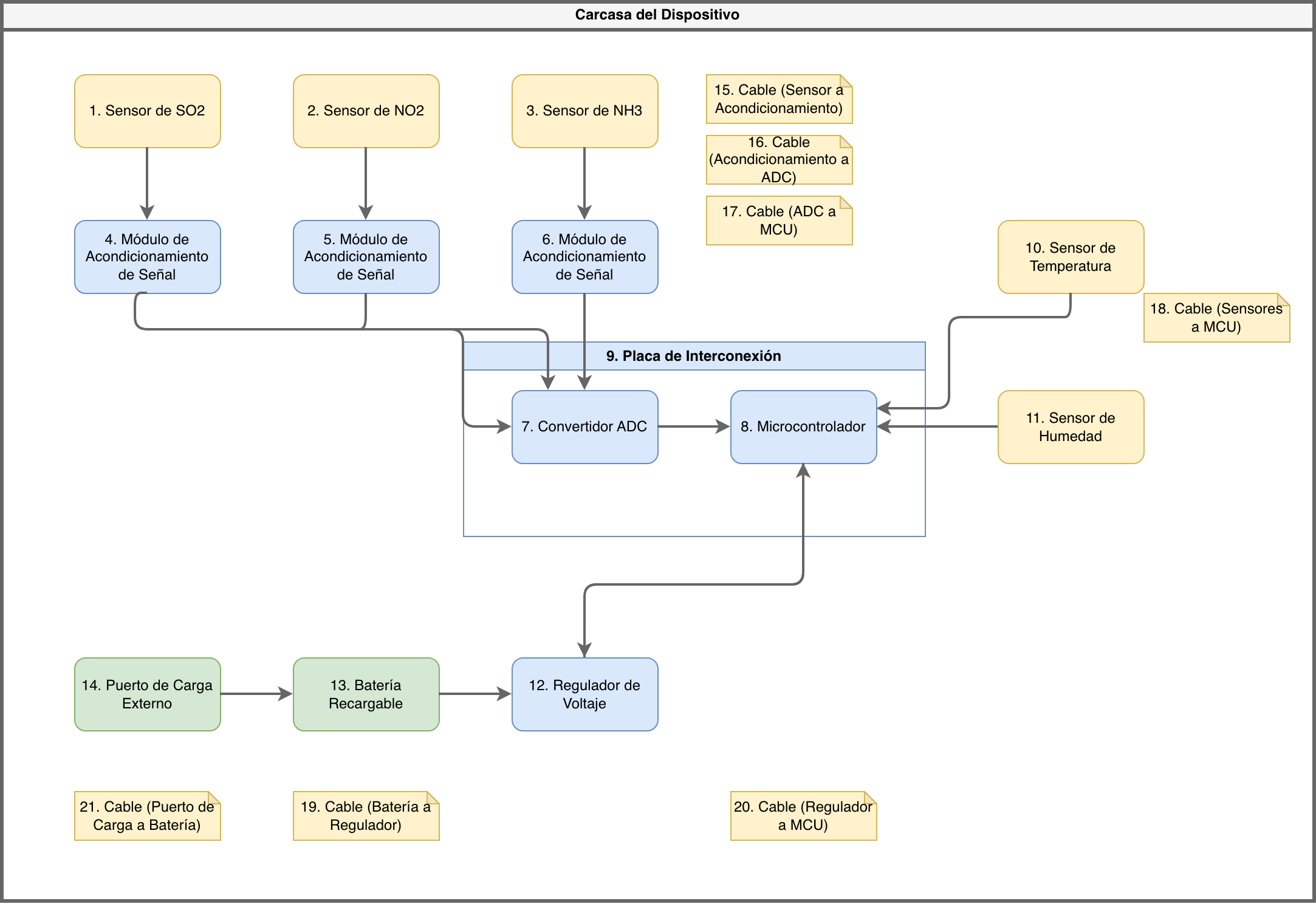
Portable Gas Analyzer Internal Layout

GENERALArchitectureintermediate
Portable Gas Analyzer Internal Layout — GENERAL architecture diagram

About This Architecture

Portable gas analyzer architecture integrates three electrochemical sensors (SO2, NO2, NH3) with dedicated signal conditioning modules feeding a centralized ADC converter. The microcontroller receives digitized gas readings plus direct inputs from temperature and humidity sensors for environmental compensation. Power management uses a rechargeable battery through a voltage regulator with external charging port, enabling field deployment. This layout demonstrates best practices for multi-sensor embedded systems requiring analog signal integrity and power efficiency. Fork this diagram on Diagrams.so to customize sensor types, add wireless connectivity modules, or adapt the power architecture for solar charging applications.

People also ask

How do you design the internal architecture for a portable gas analyzer with multiple electrochemical sensors?

A portable gas analyzer architecture uses dedicated signal conditioning modules for each electrochemical sensor (SO2, NO2, NH3), routes conditioned signals through a centralized ADC converter to a microcontroller, and integrates temperature/humidity sensors for environmental compensation with rechargeable battery power management.

embedded-systemssensor-integrationsignal-conditioningenvironmental-monitoringanalog-designpower-management
Domain:
Electrical Engineering
Audience:
embedded systems engineers designing portable environmental monitoring devices

Generated by Diagrams.so — AI architecture diagram generator with native Draw.io output. Fork this diagram, remix it, or download as .drawio, PNG, or SVG.

Generate your own architecture diagram →

About This Architecture

Portable gas analyzer architecture integrates three electrochemical sensors (SO2, NO2, NH3) with dedicated signal conditioning modules feeding a centralized ADC converter. The microcontroller receives digitized gas readings plus direct inputs from temperature and humidity sensors for environmental compensation. Power management uses a rechargeable battery through a voltage regulator with external charging port, enabling field deployment. This layout demonstrates best practices for multi-sensor embedded systems requiring analog signal integrity and power efficiency. Fork this diagram on Diagrams.so to customize sensor types, add wireless connectivity modules, or adapt the power architecture for solar charging applications.

People also ask

How do you design the internal architecture for a portable gas analyzer with multiple electrochemical sensors?

A portable gas analyzer architecture uses dedicated signal conditioning modules for each electrochemical sensor (SO2, NO2, NH3), routes conditioned signals through a centralized ADC converter to a microcontroller, and integrates temperature/humidity sensors for environmental compensation with rechargeable battery power management.

Portable Gas Analyzer Internal Layout

Autointermediateembedded-systemssensor-integrationsignal-conditioningenvironmental-monitoringanalog-designpower-management
Domain: Electrical EngineeringAudience: embedded systems engineers designing portable environmental monitoring devices
2 views0 favoritesPublic

Created by

February 13, 2026

Updated

April 10, 2026 at 5:17 PM

Type

architecture

Need a custom architecture diagram?

Describe your architecture in plain English and get a production-ready Draw.io diagram in seconds. Works for AWS, Azure, GCP, Kubernetes, and more.

Generate with AI