
About This Architecture
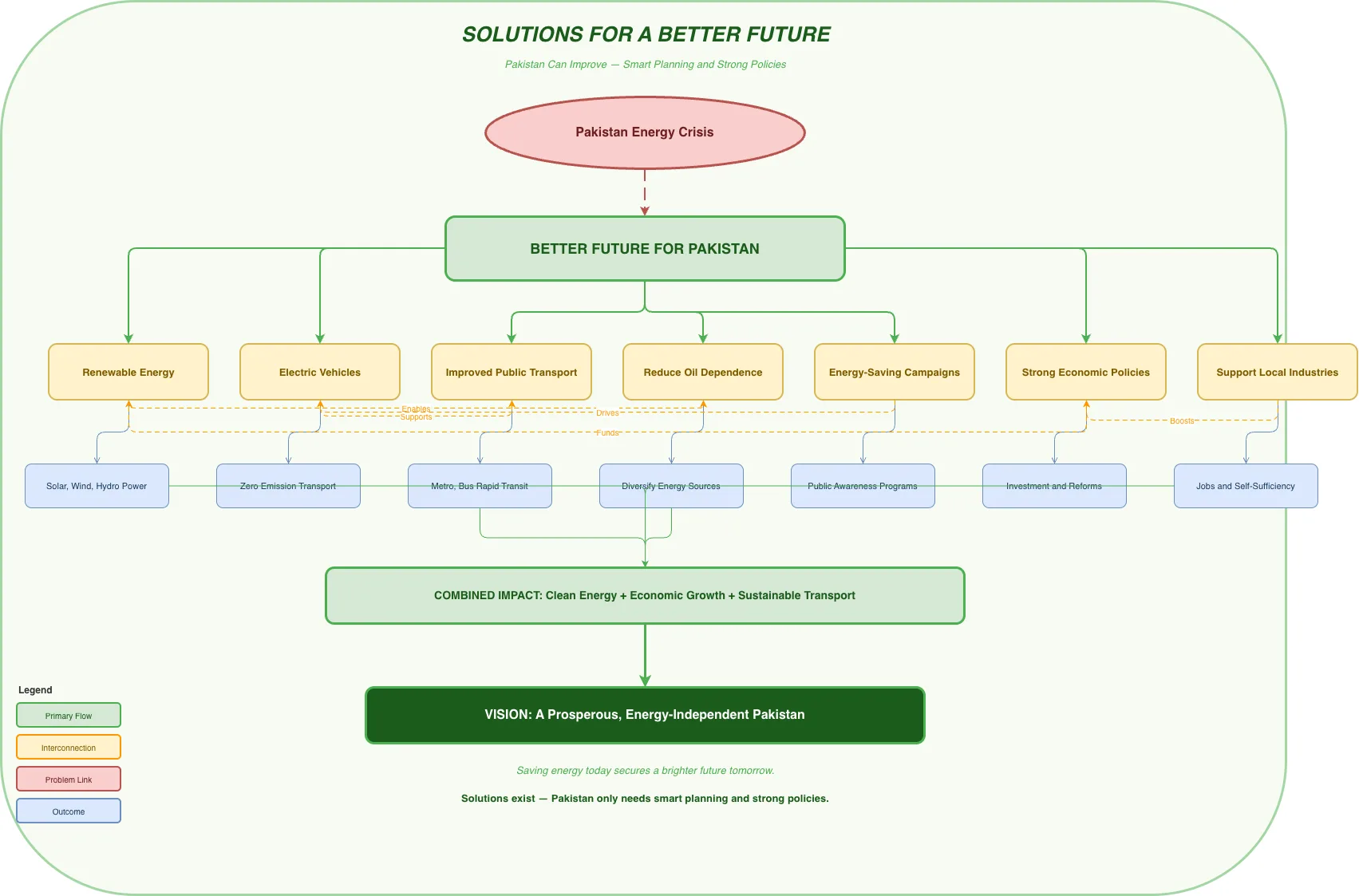
Pakistan's energy crisis demands an integrated strategy combining renewable energy, electric vehicles, and improved public transport to achieve energy independence. This systems diagram maps the interconnections between renewable energy sources—solar, wind, and hydro power—electric vehicle adoption, public transit modernization via metro and bus rapid transit systems, and supportive economic policies. The architecture demonstrates how diversifying energy sources, reducing oil dependence, and launching public awareness campaigns create a multiplier effect toward sustainable transport and economic growth. Fork this diagram on Diagrams.so to customize it for regional energy plans, policy presentations, or stakeholder engagement materials. The model illustrates that Pakistan's path to prosperity requires coordinated action across energy, transport, and industrial sectors simultaneously.