Mynime SaaS Platform Architecture

MULTIArchitectureadvanced
Mynime SaaS Platform Architecture — MULTI architecture diagram

About This Architecture

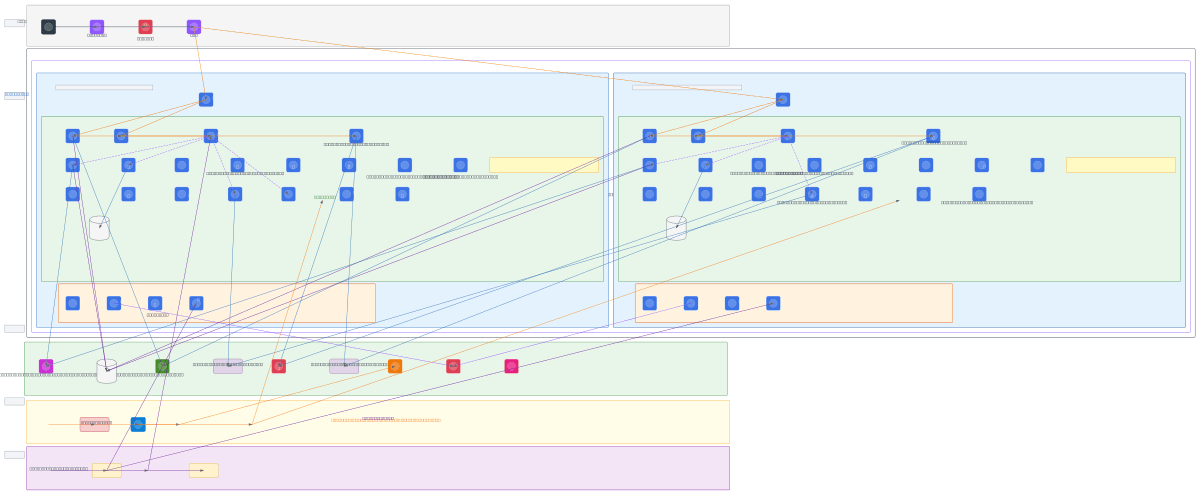
Mynime SaaS platform uses a multi-cluster EKS architecture with separate nonprod and prod environments, each running 16+ microservices across namespaces via Nginx Ingress and NATS message bus. Traffic flows through Route 53, AWS WAF, and ALB to fe-mynime (Next.js 14) and api-gateway (NestJS), with backend services including authorization, claims, insurance, and property-management microservices backed by CNPG and RDS Aurora PostgreSQL. Karpenter auto-scales nodes, cert-manager and External Secrets Operator manage certificates and secrets, while Promtail feeds observability data to CloudWatch and VPC Flow Logs. The architecture consolidates 16 services into 4-5 starter services, integrates Supabase for auth and realtime, AWS Bedrock for AI, and LlamaParse for document processing. Fork this diagram on Diagrams.so to customize cluster topology, add additional services, or adapt the multi-tenant database strategy for your SaaS requirements.

People also ask

How do you design a multi-tenant SaaS platform on AWS EKS with separate nonprod and prod clusters, microservice consolidation, and auto-scaling?

Mynime's architecture uses dual EKS clusters (nonprod and prod) with Nginx Ingress, NATS broker for async messaging, and 16+ NestJS/FastAPI microservices. Karpenter auto-scales nodes, CNPG and RDS Aurora provide data isolation per service, and Supabase handles auth and realtime. This pattern enables cost-efficient multi-tenancy while consolidating services from 16 to 4-5 starter services.

AWSKubernetesEKSmicroservicesmulti-tenantSaaS
Domain:
Cloud Multi
Audience:
Platform engineers and DevOps architects designing multi-tenant SaaS on Kubernetes

Generated by Diagrams.so — AI architecture diagram generator with native Draw.io output. Fork this diagram, remix it, or download as .drawio, PNG, or SVG.

Generate your own architecture diagram →

About This Architecture

Mynime SaaS platform uses a multi-cluster EKS architecture with separate nonprod and prod environments, each running 16+ microservices across namespaces via Nginx Ingress and NATS message bus. Traffic flows through Route 53, AWS WAF, and ALB to fe-mynime (Next.js 14) and api-gateway (NestJS), with backend services including authorization, claims, insurance, and property-management microservices backed by CNPG and RDS Aurora PostgreSQL. Karpenter auto-scales nodes, cert-manager and External Secrets Operator manage certificates and secrets, while Promtail feeds observability data to CloudWatch and VPC Flow Logs. The architecture consolidates 16 services into 4-5 starter services, integrates Supabase for auth and realtime, AWS Bedrock for AI, and LlamaParse for document processing. Fork this diagram on Diagrams.so to customize cluster topology, add additional services, or adapt the multi-tenant database strategy for your SaaS requirements.

People also ask

How do you design a multi-tenant SaaS platform on AWS EKS with separate nonprod and prod clusters, microservice consolidation, and auto-scaling?

Mynime's architecture uses dual EKS clusters (nonprod and prod) with Nginx Ingress, NATS broker for async messaging, and 16+ NestJS/FastAPI microservices. Karpenter auto-scales nodes, CNPG and RDS Aurora provide data isolation per service, and Supabase handles auth and realtime. This pattern enables cost-efficient multi-tenancy while consolidating services from 16 to 4-5 starter services.

Mynime SaaS Platform Architecture

MultiadvancedAWSKubernetesEKSmicroservicesmulti-tenantSaaS
Domain: Cloud MultiAudience: Platform engineers and DevOps architects designing multi-tenant SaaS on Kubernetes
0 views0 favoritesPublic

Created by

April 17, 2026

Updated

April 17, 2026 at 11:55 PM

Type

architecture

Need a custom architecture diagram?

Describe your architecture in plain English and get a production-ready Draw.io diagram in seconds. Works for AWS, Azure, GCP, Kubernetes, and more.

Generate with AI