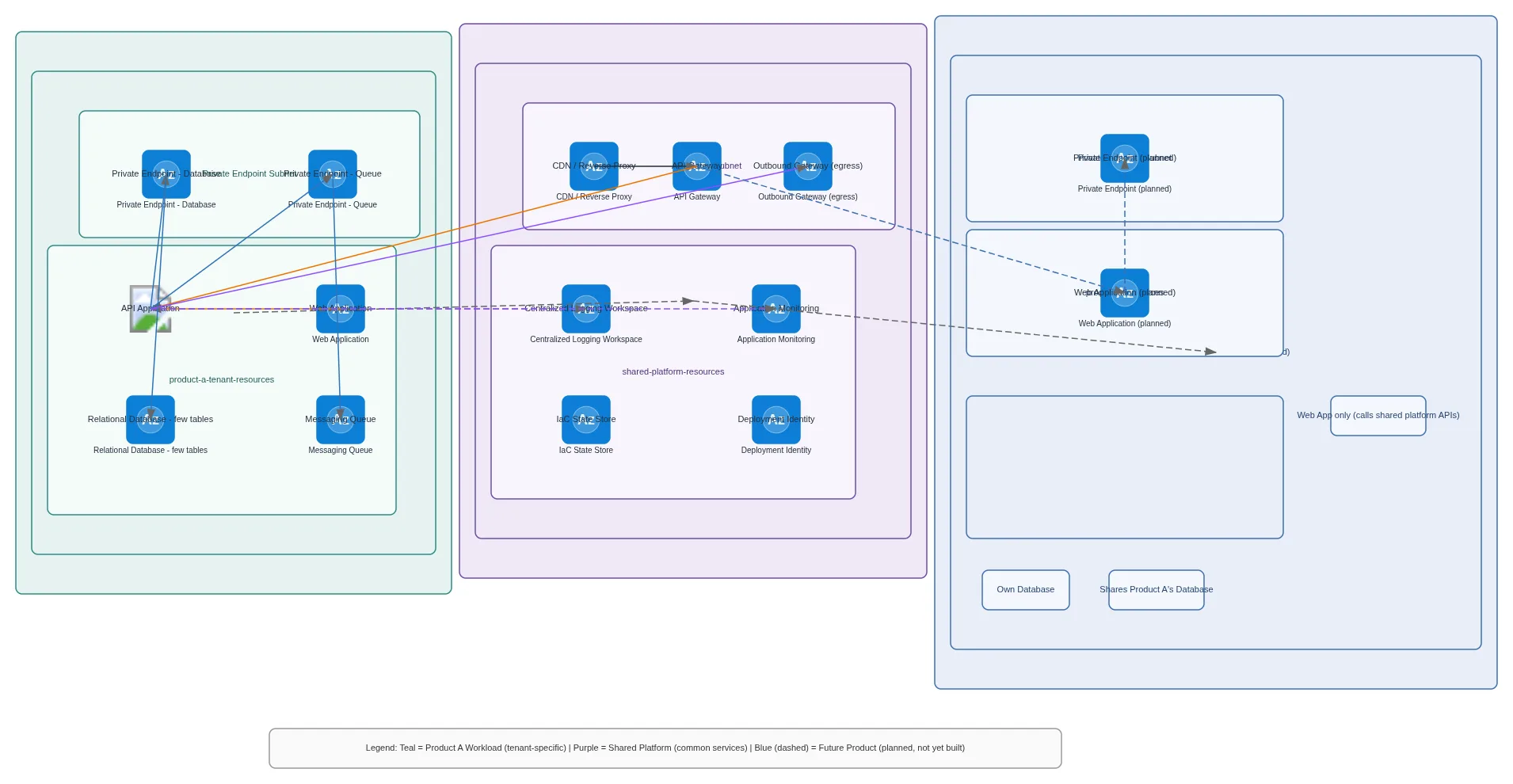
Multi-Tenant Platform With Shared Services — AWS architecture diagram

About This Architecture

Multi-tenant SaaS platform on AWS with isolated per-tenant workloads (Product A) sharing centralized platform services via private endpoints and API gateways. Product A tenants deploy dedicated VPCs with private subnets, accessing shared RDS databases and SQS queues through VPC endpoints, while the platform layer provides CDN, API Gateway, centralized logging, and monitoring. This architecture isolates blast radius per tenant while reducing operational overhead through shared infrastructure for logging, identity, and IaC state management. Fork this diagram on Diagrams.so to customize tenant isolation policies, add additional product environments, or adjust private endpoint configurations for your SaaS requirements. The design supports future product environments (Product B) with flexible database ownership—dedicated or shared—demonstrating a scalable multi-product platform pattern.

People also ask

How do you design a multi-tenant SaaS platform on AWS that isolates customer workloads while sharing infrastructure costs?

This diagram shows a multi-tenant architecture where each tenant (Product A) gets an isolated VPC with private subnets and dedicated API/Web applications, while securely accessing shared RDS databases and SQS queues via VPC private endpoints. A centralized platform layer provides API Gateway, CDN, logging, monitoring, and IaC state management, reducing operational overhead while maintaining strong

Multi-Tenant Platform With Shared Services

AWSadvancedmulti-tenantSaaSVPCAPI Gatewayprivate endpoints
Domain: Cloud AwsAudience: AWS solutions architects designing multi-tenant SaaS platforms
2 views0 favoritesPublic

Created by

August 1, 2026

Updated

August 15, 2026 at 4:39 PM

Type

network

Need a custom architecture diagram?

Describe your architecture in plain English and get a production-ready Draw.io diagram in seconds. Works for AWS, Azure, GCP, Kubernetes, and more.

Generate with AI

AI-generated. Verify before production use. Learn more

Report this diagram