
About This Architecture
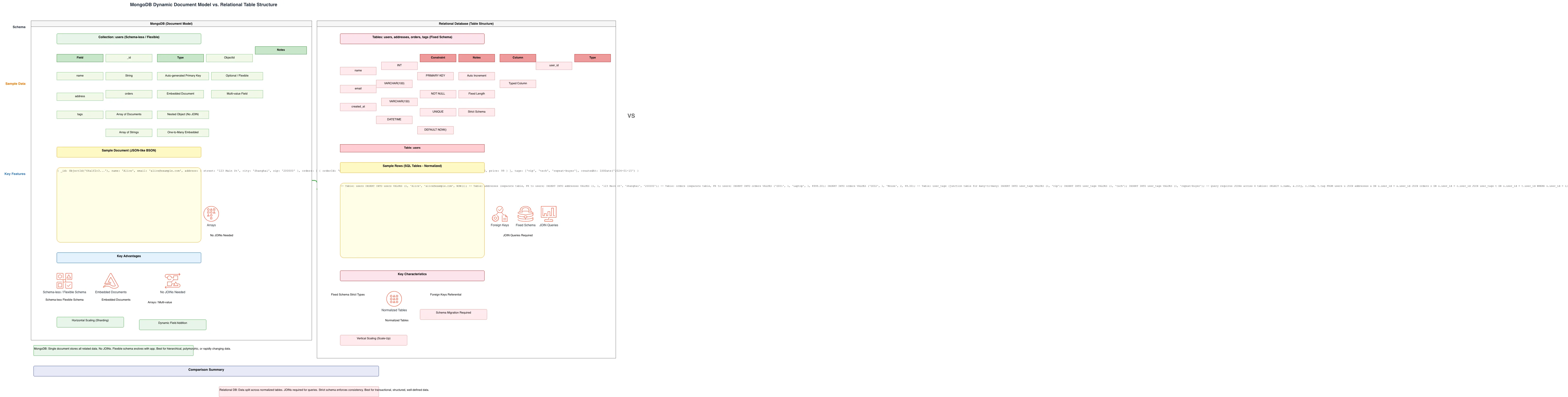
MongoDB's document-oriented model stores related data in flexible, schema-less collections using embedded documents and arrays, eliminating JOIN operations entirely. Relational databases organize data across normalized tables with fixed schemas, foreign keys, and JOIN queries to reconstruct relationships. MongoDB excels at horizontal scaling through sharding and rapid schema evolution, while relational databases prioritize data integrity and ACID compliance through strict schemas and vertical scaling. Fork this diagram to compare how your application's data model fits each paradigm, then customize it with your own entities and access patterns. Use this reference when architecting microservices, evaluating database migrations, or designing polyglot persistence strategies.