Microsoft Intune Suite - Component Overview

GENERALArchitectureintermediate
Microsoft Intune Suite - Component Overview — GENERAL architecture diagram

About This Architecture

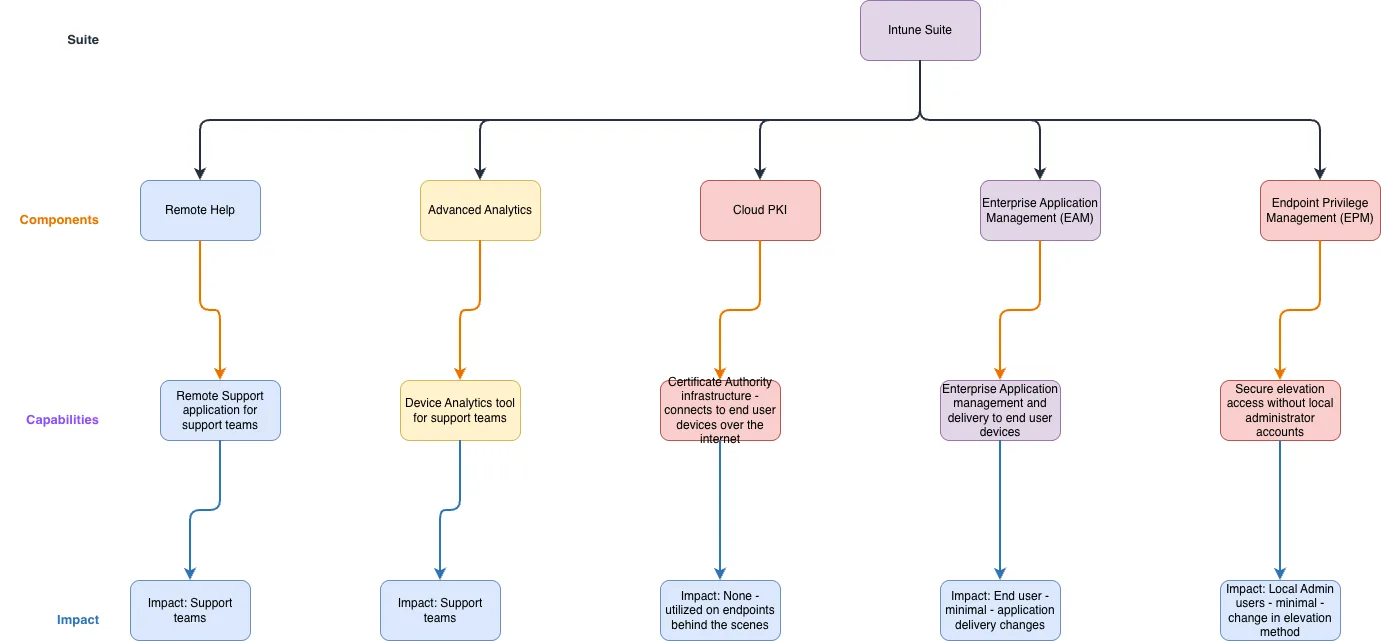
Microsoft Intune Suite consolidates five core capabilities—Remote Help, Advanced Analytics, Cloud PKI, Enterprise Application Management, and Endpoint Privilege Management—into a unified endpoint management platform. Remote Help enables support teams to assist users remotely, while Advanced Analytics provides device insights and Device Analytics tools for proactive support. Cloud PKI delivers certificate authority infrastructure for secure device authentication, EAM streamlines application delivery to endpoints, and EPM eliminates local admin accounts through secure elevation access. This integrated approach reduces administrative overhead, improves security posture, and minimizes end-user disruption across your organization. Fork and customize this diagram on Diagrams.so to map your Intune deployment architecture and stakeholder impacts.

People also ask

What are the core components of Microsoft Intune Suite and how do they work together?

Microsoft Intune Suite integrates five key capabilities: Remote Help for support team assistance, Advanced Analytics with Device Analytics tools for proactive monitoring, Cloud PKI for certificate-based authentication, Enterprise Application Management for app delivery, and Endpoint Privilege Management for secure elevation without local admin accounts. Each component targets specific stakeholder

Microsoft Intuneendpoint managemententerprise securitydevice managementcloud PKIapplication delivery
Domain:
Cloud Azure
Audience:
Microsoft Intune administrators and enterprise IT architects managing endpoint security and device management

Generated by Diagrams.so — AI architecture diagram generator with native Draw.io output. Fork this diagram, remix it, or download as .drawio, PNG, or SVG.

Generate your own architecture diagram →

About This Architecture

Microsoft Intune Suite consolidates five core capabilities—Remote Help, Advanced Analytics, Cloud PKI, Enterprise Application Management, and Endpoint Privilege Management—into a unified endpoint management platform. Remote Help enables support teams to assist users remotely, while Advanced Analytics provides device insights and Device Analytics tools for proactive support. Cloud PKI delivers certificate authority infrastructure for secure device authentication, EAM streamlines application delivery to endpoints, and EPM eliminates local admin accounts through secure elevation access. This integrated approach reduces administrative overhead, improves security posture, and minimizes end-user disruption across your organization. Fork and customize this diagram on Diagrams.so to map your Intune deployment architecture and stakeholder impacts.

People also ask

What are the core components of Microsoft Intune Suite and how do they work together?

Microsoft Intune Suite integrates five key capabilities: Remote Help for support team assistance, Advanced Analytics with Device Analytics tools for proactive monitoring, Cloud PKI for certificate-based authentication, Enterprise Application Management for app delivery, and Endpoint Privilege Management for secure elevation without local admin accounts. Each component targets specific stakeholder

Microsoft Intune Suite - Component Overview

AutointermediateMicrosoft Intuneendpoint managemententerprise securitydevice managementcloud PKIapplication delivery
Domain: Cloud AzureAudience: Microsoft Intune administrators and enterprise IT architects managing endpoint security and device management
0 views0 favoritesPublic

Created by

May 5, 2026

Updated

May 5, 2026 at 2:05 PM

Type

architecture

Need a custom architecture diagram?

Describe your architecture in plain English and get a production-ready Draw.io diagram in seconds. Works for AWS, Azure, GCP, Kubernetes, and more.

Generate with AI