
About This Architecture
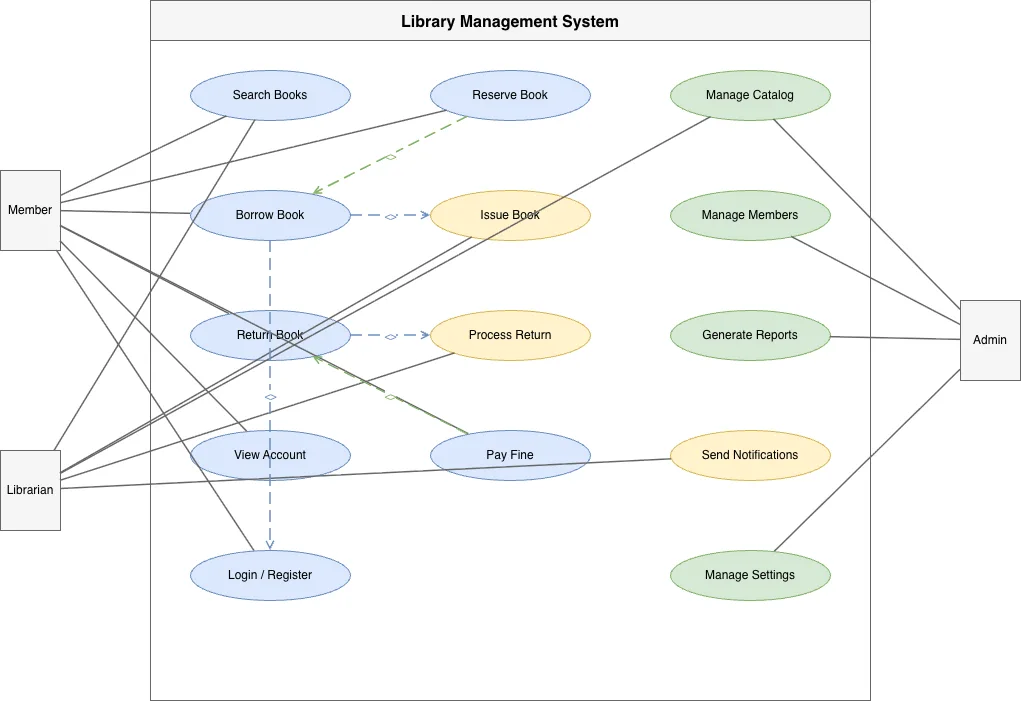
Library Management System use case diagram models interactions between three actor roles—Member, Librarian, and Admin—and 13 core system functions including search, reserve, borrow, return, and fine payment. Members initiate searches, reservations, and borrowing workflows, while Librarians process issues and returns and manage the catalog; Admins oversee member records, reporting, and system configuration. The diagram captures authentication (Login/Register), notification flows, and the dependency chain from reservation through borrowing to return processing. This use case architecture demonstrates role-based access control and separation of concerns essential for library operations. Fork and customize this diagram on Diagrams.so to align with your institution's specific workflows, staffing model, or integrated systems.