Kubernetes Multi-Namespace Microservices

KUBERNETESDeploymentintermediate
Kubernetes Multi-Namespace Microservices — KUBERNETES deployment diagram

About This Architecture

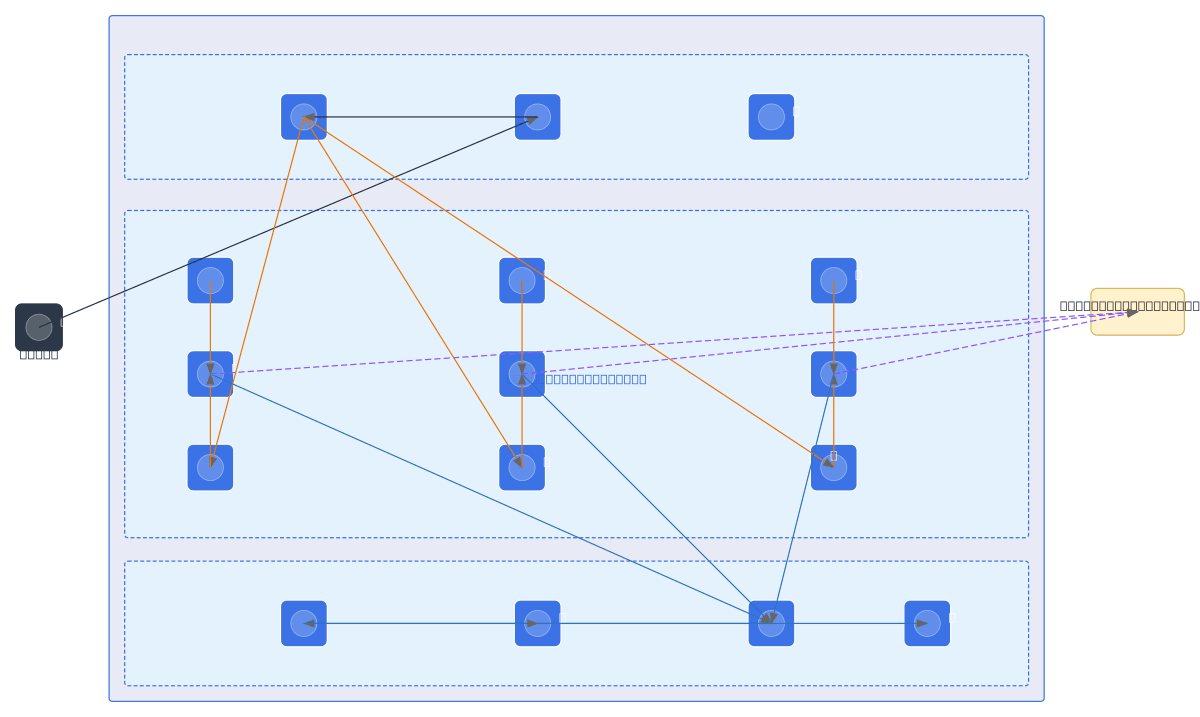
Multi-namespace Kubernetes microservices architecture with ingress-nginx routing traffic across three independent service deployments in the default namespace. Users connect through the Ingress Controller, which distributes requests to Service A, B, and C, each backed by Deployments and Pods that communicate with a PostgreSQL StatefulSet in the data namespace and external Redis Cache. This pattern isolates workloads by namespace, enforces NetworkPolicy controls on ingress traffic, and demonstrates stateful data persistence using PersistentVolumes and PersistentVolumeClaims. Fork this diagram to customize namespace isolation, add RBAC policies, or extend with additional microservices and storage backends. The architecture exemplifies production-grade separation of concerns, enabling independent scaling and security policies per namespace.

People also ask

How do I design a Kubernetes multi-namespace microservices architecture with ingress routing and persistent storage?

This diagram shows a production-grade Kubernetes setup where the ingress-nginx controller routes external traffic to three microservices (Service A, B, C) in the default namespace, while a PostgreSQL StatefulSet in the data namespace handles persistent data with PersistentVolumes. All services access external Redis Cache for caching, and NetworkPolicy enforces ingress security boundaries across na

Kubernetesmicroservicesingress-nginxStatefulSetmulti-namespaceDevOps
Domain:
Kubernetes
Audience:
Kubernetes platform engineers and DevOps architects designing multi-namespace microservices deployments

Generated by Diagrams.so — AI architecture diagram generator with native Draw.io output. Fork this diagram, remix it, or download as .drawio, PNG, or SVG.

Generate your own deploymentdiagram →

About This Architecture

Multi-namespace Kubernetes microservices architecture with ingress-nginx routing traffic across three independent service deployments in the default namespace. Users connect through the Ingress Controller, which distributes requests to Service A, B, and C, each backed by Deployments and Pods that communicate with a PostgreSQL StatefulSet in the data namespace and external Redis Cache. This pattern isolates workloads by namespace, enforces NetworkPolicy controls on ingress traffic, and demonstrates stateful data persistence using PersistentVolumes and PersistentVolumeClaims. Fork this diagram to customize namespace isolation, add RBAC policies, or extend with additional microservices and storage backends. The architecture exemplifies production-grade separation of concerns, enabling independent scaling and security policies per namespace.

People also ask

How do I design a Kubernetes multi-namespace microservices architecture with ingress routing and persistent storage?

This diagram shows a production-grade Kubernetes setup where the ingress-nginx controller routes external traffic to three microservices (Service A, B, C) in the default namespace, while a PostgreSQL StatefulSet in the data namespace handles persistent data with PersistentVolumes. All services access external Redis Cache for caching, and NetworkPolicy enforces ingress security boundaries across na

Kubernetes Multi-Namespace Microservices

Kubernetesintermediatemicroservicesingress-nginxStatefulSetmulti-namespaceDevOps
Domain: KubernetesAudience: Kubernetes platform engineers and DevOps architects designing multi-namespace microservices deployments
0 views0 favoritesPublic

Created by

June 11, 2026

Updated

June 11, 2026 at 3:07 PM

Type

deployment

Need a custom architecture diagram?

Describe your architecture in plain English and get a production-ready Draw.io diagram in seconds. Works for AWS, Azure, GCP, Kubernetes, and more.

Generate with AI