Kubernetes Microservices with External Data Stores
About This Architecture
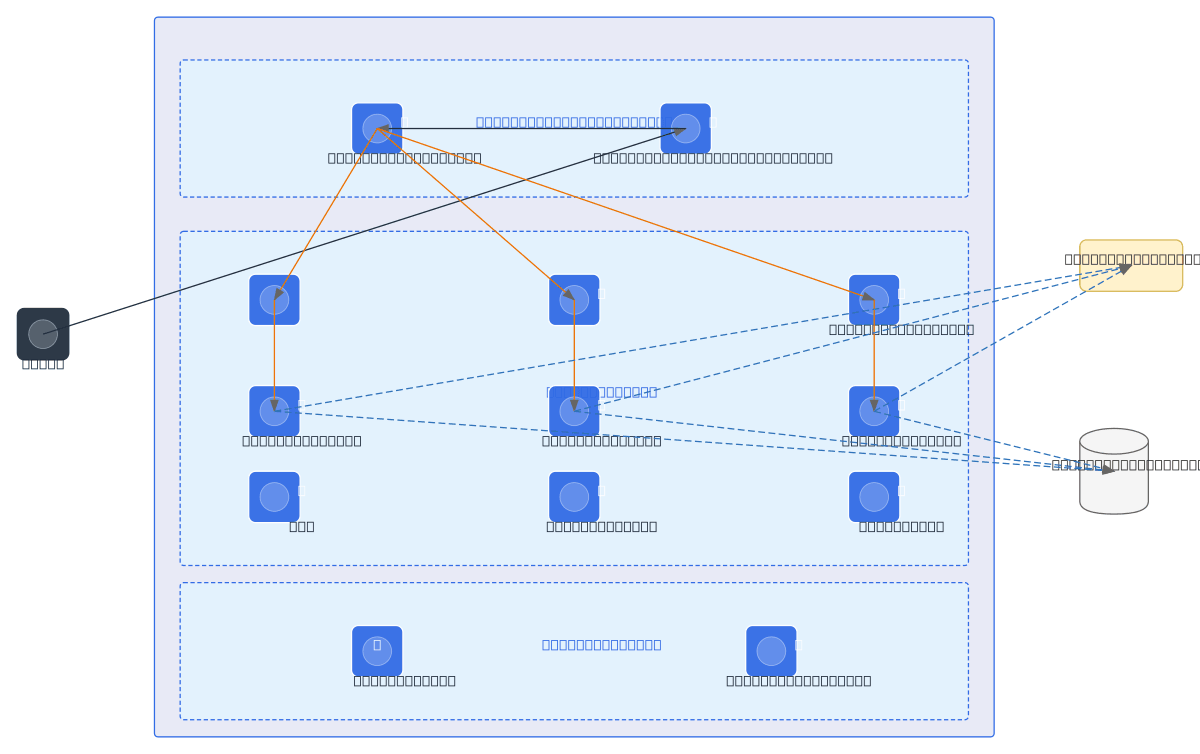
Kubernetes microservices architecture with ingress-nginx routing HTTPS traffic to three independent services deployed across isolated namespaces. The Ingress Controller distributes requests to Service A, B, and C, each backed by a dedicated microservice pod, with HPA enabling automatic scaling based on demand. All microservices share access to external PostgreSQL and Redis data stores via Secrets, while NetworkPolicy enforces least-privilege communication between namespaces. This pattern demonstrates production-grade separation of concerns, secure credential management, and stateless service design for high-availability deployments.
People also ask
How do I design a production Kubernetes microservices architecture with ingress routing, external databases, and automatic scaling?
This diagram shows a multi-namespace Kubernetes architecture where ingress-nginx routes HTTPS traffic to three independent microservices, each exposed via a Service on port 8080. All microservices access shared PostgreSQL and Redis data stores using Secrets for credential management, while NetworkPolicy enforces secure inter-namespace communication and HPA enables automatic pod scaling.
- Domain:
- Kubernetes
- Audience:
- Kubernetes platform engineers and DevOps architects designing scalable microservices deployments
Generated by Diagrams.so — AI architecture diagram generator with native Draw.io output. Fork this diagram, remix it, or download as .drawio, PNG, or SVG.