
About This Architecture
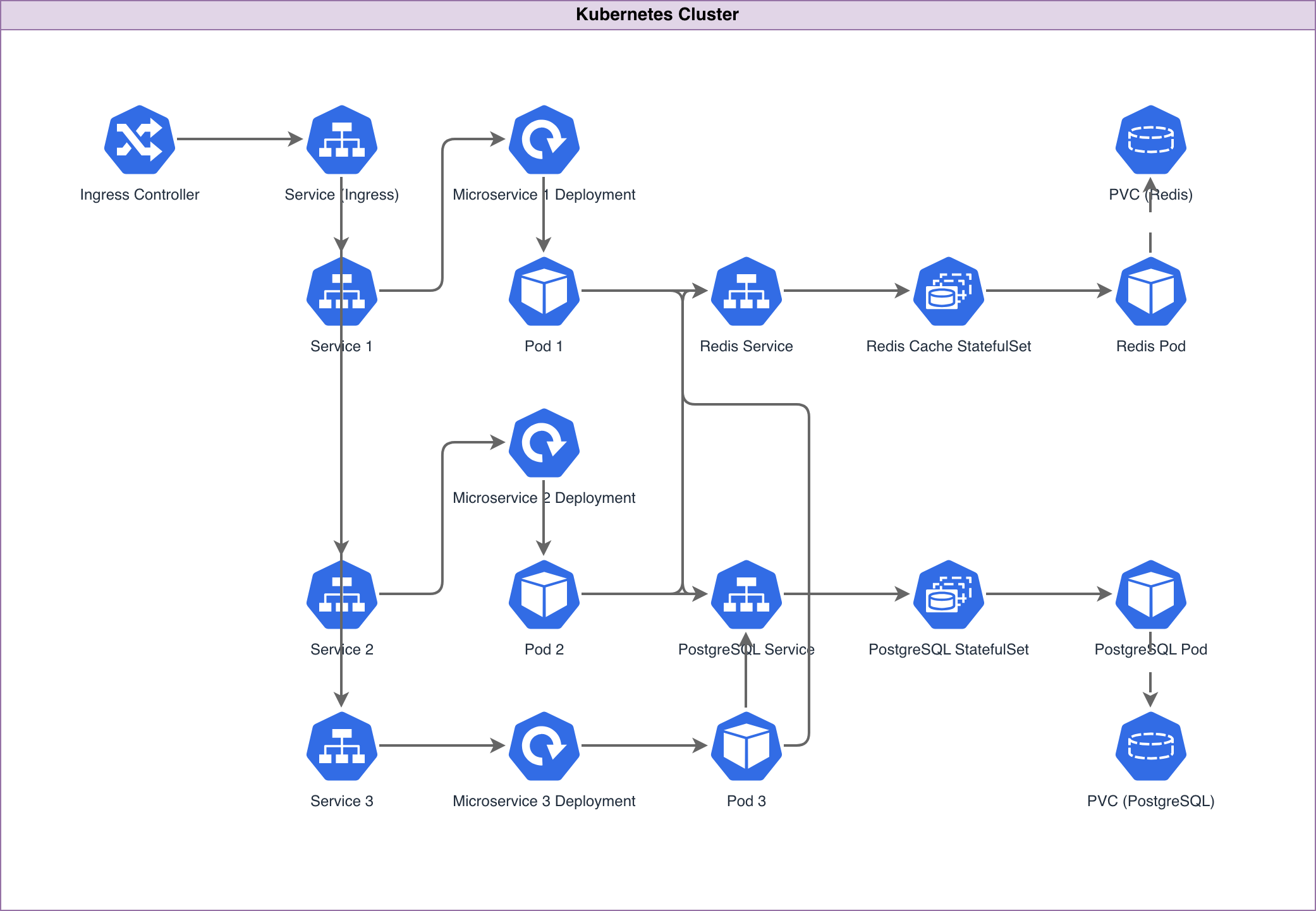
Production-ready Kubernetes microservices architecture featuring Ingress-based traffic routing to three independent service deployments with shared Redis caching and PostgreSQL persistence. External traffic flows through an Ingress Controller to dedicated Services, each backed by Deployments managing individual Pods that connect to centralized Redis Cache and PostgreSQL StatefulSets with persistent volume claims. This pattern demonstrates Kubernetes best practices for stateful workload management, service discovery, and data layer isolation in multi-service environments. Fork this diagram on Diagrams.so to customize service counts, swap Redis for Memcached, or add horizontal pod autoscaling annotations. StatefulSets with PVCs ensure data durability across pod restarts and node failures.