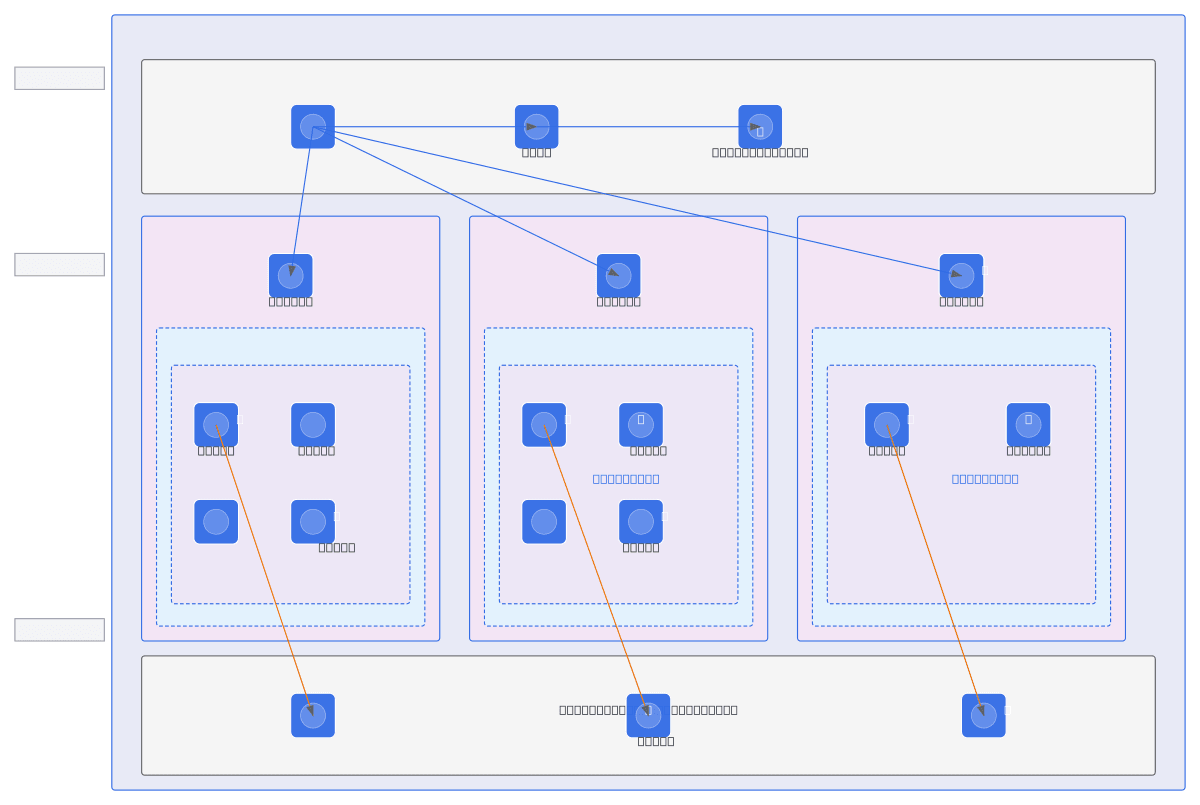
Kubernetes Cluster - 3 Nodes, 10 Pods, 3 PVCs
About This Architecture
Multi-node Kubernetes cluster architecture with a centralized Control Plane managing three Worker Nodes running ten Pods across three namespaces. The API Server communicates with all Worker Nodes and persists cluster state in etcd, enabling declarative infrastructure management. Three Persistent Volume Claims provide stateful storage for Pods requiring data persistence across restarts and node failures. Fork this diagram to customize node counts, Pod replicas, storage classes, and resource requests for your production environment.
People also ask
How does a Kubernetes cluster with multiple nodes, pods, and persistent storage work together?
A Kubernetes cluster uses a Control Plane (API Server + etcd) to manage three Worker Nodes running ten Pods across namespaces. Persistent Volume Claims attach to Pods needing stateful storage, while the API Server orchestrates all node communication and cluster state persistence in etcd.
- Domain:
- Kubernetes
- Audience:
- Kubernetes cluster administrators and platform engineers managing multi-node production deployments
Generated by Diagrams.so — AI architecture diagram generator with native Draw.io output. Fork this diagram, remix it, or download as .drawio, PNG, or SVG.