Humanoid University Orientation Robot Architecture

AZUREArchitectureadvanced
Humanoid University Orientation Robot Architecture — AZURE architecture diagram

About This Architecture

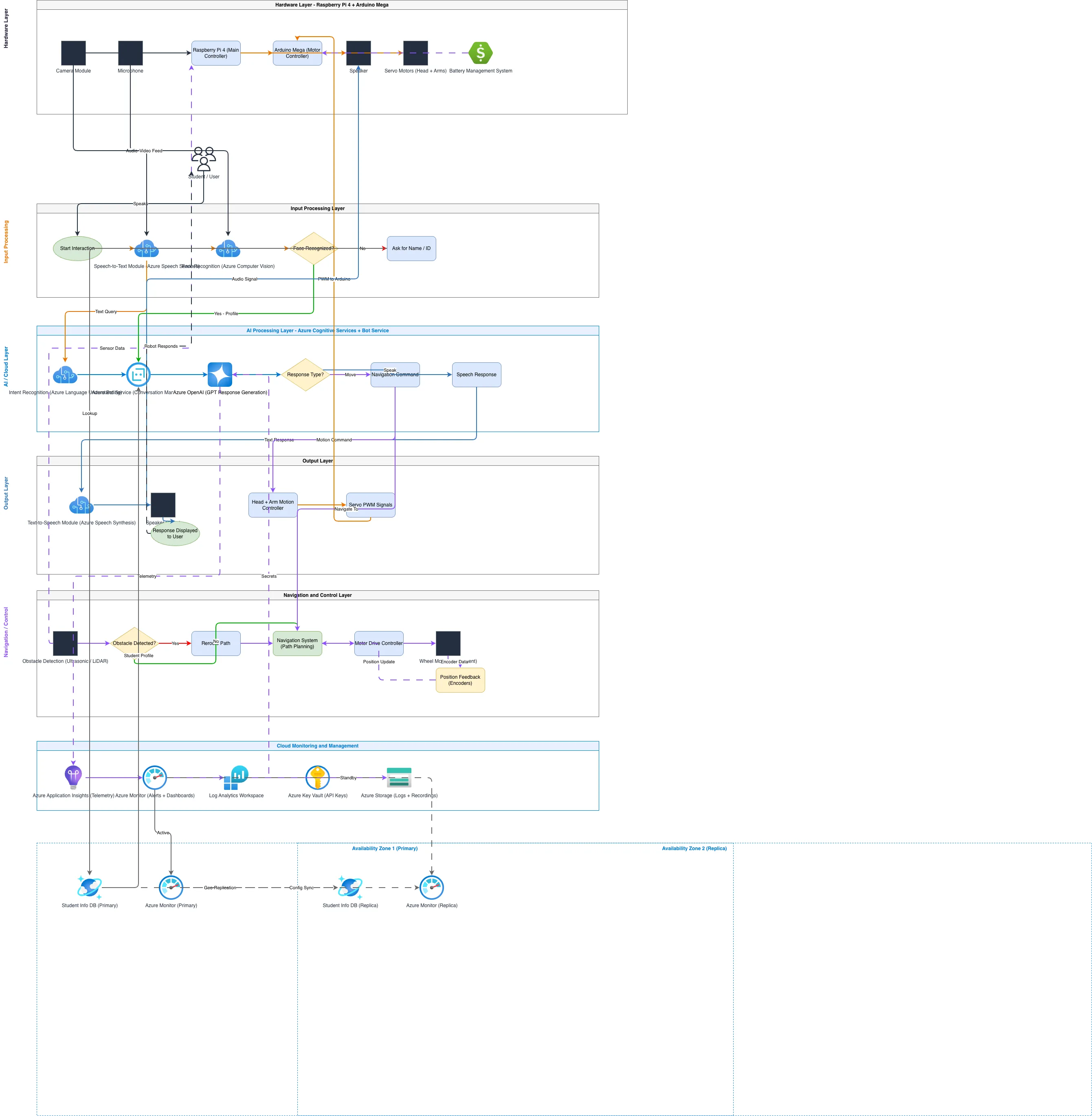
Humanoid university orientation robot powered by Azure Cognitive Services integrates Raspberry Pi 4 and Arduino Mega hardware with cloud-based AI for student interaction and autonomous navigation. The architecture routes student input through Azure Speech Services for speech-to-text, Azure Computer Vision for face recognition, and Azure Language Understanding for intent detection, with responses generated by Azure OpenAI and delivered via text-to-speech synthesis. Navigation and obstacle avoidance operate on-device via ultrasonic/LiDAR sensors feeding into a path-planning system that controls wheel and servo motors. Azure Application Insights and Monitor provide real-time telemetry, alerting, and centralized log analytics, while Azure Key Vault secures API credentials. This hybrid edge-cloud design demonstrates how to build responsive, scalable autonomous systems that combine local control with intelligent cloud processing for educational robotics applications.

People also ask

How do you build an autonomous humanoid robot that combines edge computing with Azure cloud AI services?

This diagram shows a hybrid architecture where a Raspberry Pi 4 and Arduino Mega handle real-time motor control and obstacle detection locally, while Azure Cognitive Services (Speech, Computer Vision, Language Understanding) and Azure OpenAI process student interactions in the cloud. Azure Application Insights and Monitor provide centralized observability and security via Key Vault.

AzureRoboticsEdge ComputingAI/MLAutonomous SystemsCognitive Services
Domain:
Cloud Azure
Audience:
Robotics engineers and Azure cloud architects designing intelligent autonomous systems

Generated by Diagrams.so — AI architecture diagram generator with native Draw.io output. Fork this diagram, remix it, or download as .drawio, PNG, or SVG.

Generate your own architecture diagram →

About This Architecture

Humanoid university orientation robot powered by Azure Cognitive Services integrates Raspberry Pi 4 and Arduino Mega hardware with cloud-based AI for student interaction and autonomous navigation. The architecture routes student input through Azure Speech Services for speech-to-text, Azure Computer Vision for face recognition, and Azure Language Understanding for intent detection, with responses generated by Azure OpenAI and delivered via text-to-speech synthesis. Navigation and obstacle avoidance operate on-device via ultrasonic/LiDAR sensors feeding into a path-planning system that controls wheel and servo motors. Azure Application Insights and Monitor provide real-time telemetry, alerting, and centralized log analytics, while Azure Key Vault secures API credentials. This hybrid edge-cloud design demonstrates how to build responsive, scalable autonomous systems that combine local control with intelligent cloud processing for educational robotics applications.

People also ask

How do you build an autonomous humanoid robot that combines edge computing with Azure cloud AI services?

This diagram shows a hybrid architecture where a Raspberry Pi 4 and Arduino Mega handle real-time motor control and obstacle detection locally, while Azure Cognitive Services (Speech, Computer Vision, Language Understanding) and Azure OpenAI process student interactions in the cloud. Azure Application Insights and Monitor provide centralized observability and security via Key Vault.

Humanoid University Orientation Robot Architecture

AzureadvancedRoboticsEdge ComputingAI/MLAutonomous SystemsCognitive Services
Domain: Cloud AzureAudience: Robotics engineers and Azure cloud architects designing intelligent autonomous systems
0 views0 favoritesPublic

Created by

May 18, 2026

Updated

May 18, 2026 at 2:23 PM

Type

architecture

Need a custom architecture diagram?

Describe your architecture in plain English and get a production-ready Draw.io diagram in seconds. Works for AWS, Azure, GCP, Kubernetes, and more.

Generate with AI