
About This Architecture
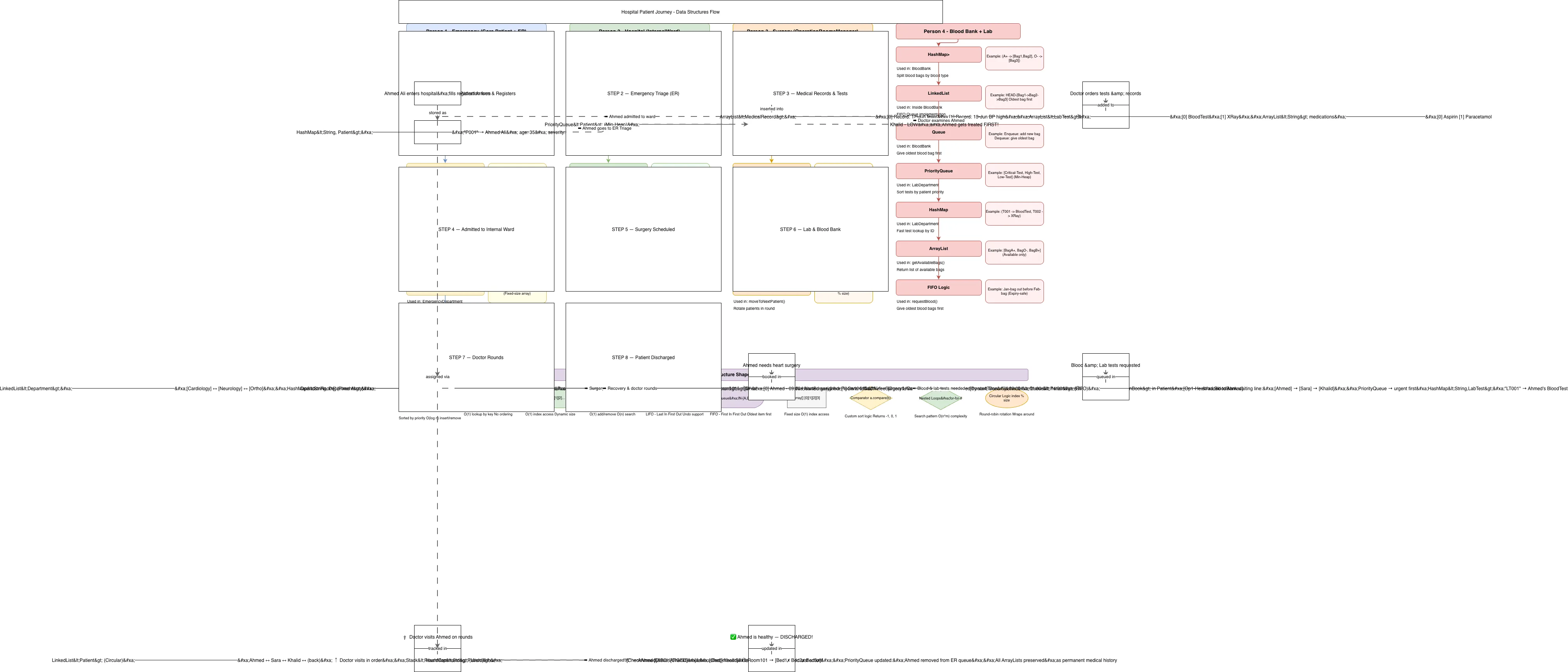
Hospital System Data Structures Overview demonstrates how to organize patient, department, and operation data using arrays, heaps, hash maps, and linked lists. The architecture separates three domains: Emergency (using PriorityQueue and HashMap for fast patient triage), InternalWard (using LinkedList for departments and nested loops for bed allocation), and OperationRoomsManager (using ArrayList and Comparator for scheduling). Each data structure choice directly addresses performance requirements—O(1) patient lookup, O(log n) priority sorting, and efficient bed discovery. This diagram teaches practitioners how to select appropriate collections for real-world constraints: fixed-size room arrays, dynamic medical record lists, and doubly-linked department chains. Fork and customize this flowchart to model your own healthcare or enterprise system architecture.