
About This Architecture
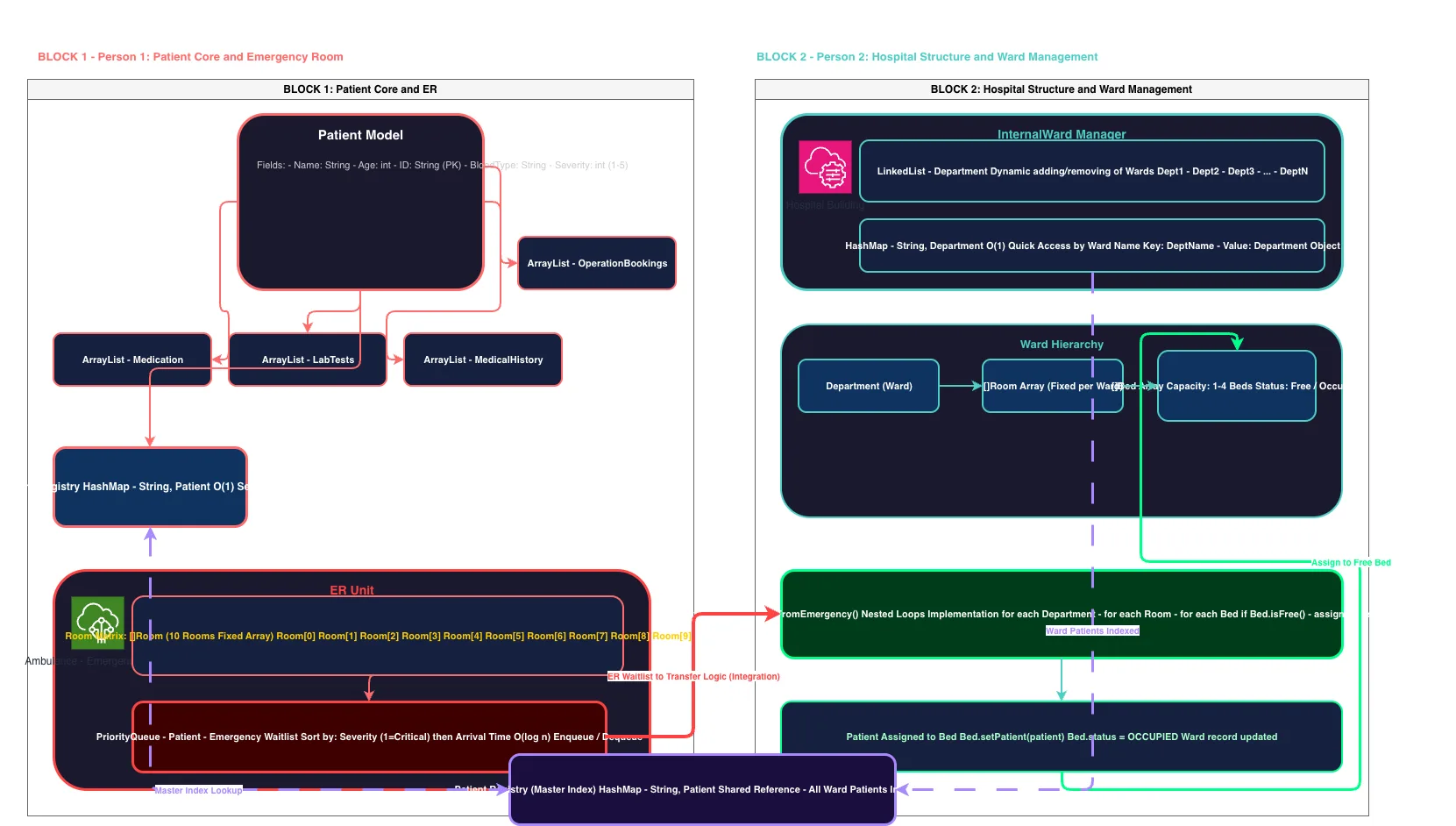
Hospital Management Integrated System uses a multi-block architecture combining patient core data models, emergency room triage, and ward management with optimized data structures for real-time operations. Patient data flows through a HashMap-indexed Patient Registry for O(1) lookup, while emergency cases populate a PriorityQueue sorted by severity and feed into transfer logic that assigns patients to available beds across departments. The system leverages fixed-size Room and Bed arrays per ward, LinkedList-based department management for dynamic ward scaling, and nested-loop transfer algorithms to match critical patients with available capacity. Deploy this architecture on AWS using RDS for the Patient Registry, SQS for the emergency waitlist queue, and Lambda functions to execute transfer logic, ensuring HIPAA compliance through encryption and access controls. Fork this diagram to customize department hierarchies, adjust emergency room capacity, or integrate AWS HealthLake for longitudinal patient records.