Hospital Entity Relationship Diagram

GENERALArchitectureintermediate
Hospital Entity Relationship Diagram — GENERAL architecture diagram

About This Architecture

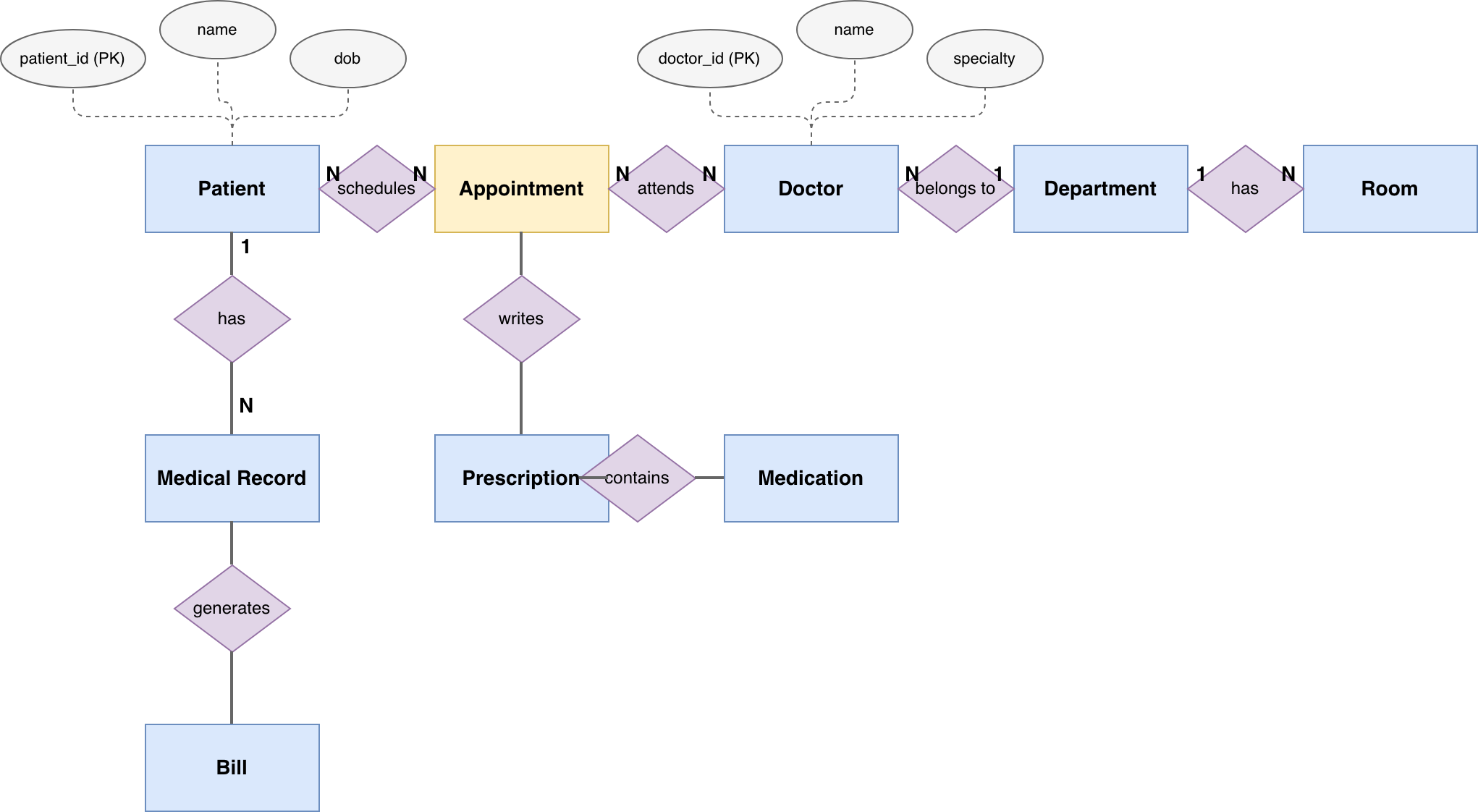
Hospital entity relationship diagram modeling core healthcare data structures including Patient, Doctor, Appointment, Department, Room, Medical Record, Prescription, Medication, and Bill entities. The schema captures patient scheduling flows where patients schedule appointments attended by doctors, while doctors write prescriptions containing medications and medical records generate bills. Cardinality notations (1:N relationships) illustrate how one patient can have multiple medical records and appointments, essential for HIPAA-compliant database normalization. Healthcare developers can fork this ERD on Diagrams.so to customize entity attributes or extend with Insurance and Lab Result tables. Primary keys (patient_id, doctor_id) and attributes like specialty and dob provide a foundation for relational database implementation.

People also ask

What entities and relationships should a hospital database ERD include?

A hospital ERD should include Patient, Doctor, Appointment, Department, Room, Medical Record, Prescription, Medication, and Bill entities with 1:N relationships linking patients to records and appointments.

ERDhealthcaredatabase designhospital managemententity relationshipdata modeling
Domain:
Software Architecture
Audience:
database architects and healthcare IT developers designing hospital management systems

Generated by Diagrams.so — AI architecture diagram generator with native Draw.io output. Fork this diagram, remix it, or download as .drawio, PNG, or SVG.

Generate your own architecture diagram →

About This Architecture

Hospital entity relationship diagram modeling core healthcare data structures including Patient, Doctor, Appointment, Department, Room, Medical Record, Prescription, Medication, and Bill entities. The schema captures patient scheduling flows where patients schedule appointments attended by doctors, while doctors write prescriptions containing medications and medical records generate bills. Cardinality notations (1:N relationships) illustrate how one patient can have multiple medical records and appointments, essential for HIPAA-compliant database normalization. Healthcare developers can fork this ERD on Diagrams.so to customize entity attributes or extend with Insurance and Lab Result tables. Primary keys (patient_id, doctor_id) and attributes like specialty and dob provide a foundation for relational database implementation.

People also ask

What entities and relationships should a hospital database ERD include?

A hospital ERD should include Patient, Doctor, Appointment, Department, Room, Medical Record, Prescription, Medication, and Bill entities with 1:N relationships linking patients to records and appointments.

Hospital Entity Relationship Diagram

AutointermediateERDhealthcaredatabase designhospital managemententity relationshipdata modeling
Domain: Software ArchitectureAudience: database architects and healthcare IT developers designing hospital management systems
19 views0 favoritesPublic

Created by

February 7, 2026

Updated

March 26, 2026 at 7:20 PM

Type

architecture

Need a custom architecture diagram?

Describe your architecture in plain English and get a production-ready Draw.io diagram in seconds. Works for AWS, Azure, GCP, Kubernetes, and more.

Generate with AI