Google Services Integration Architecture

general · architecture diagram.

About This Architecture

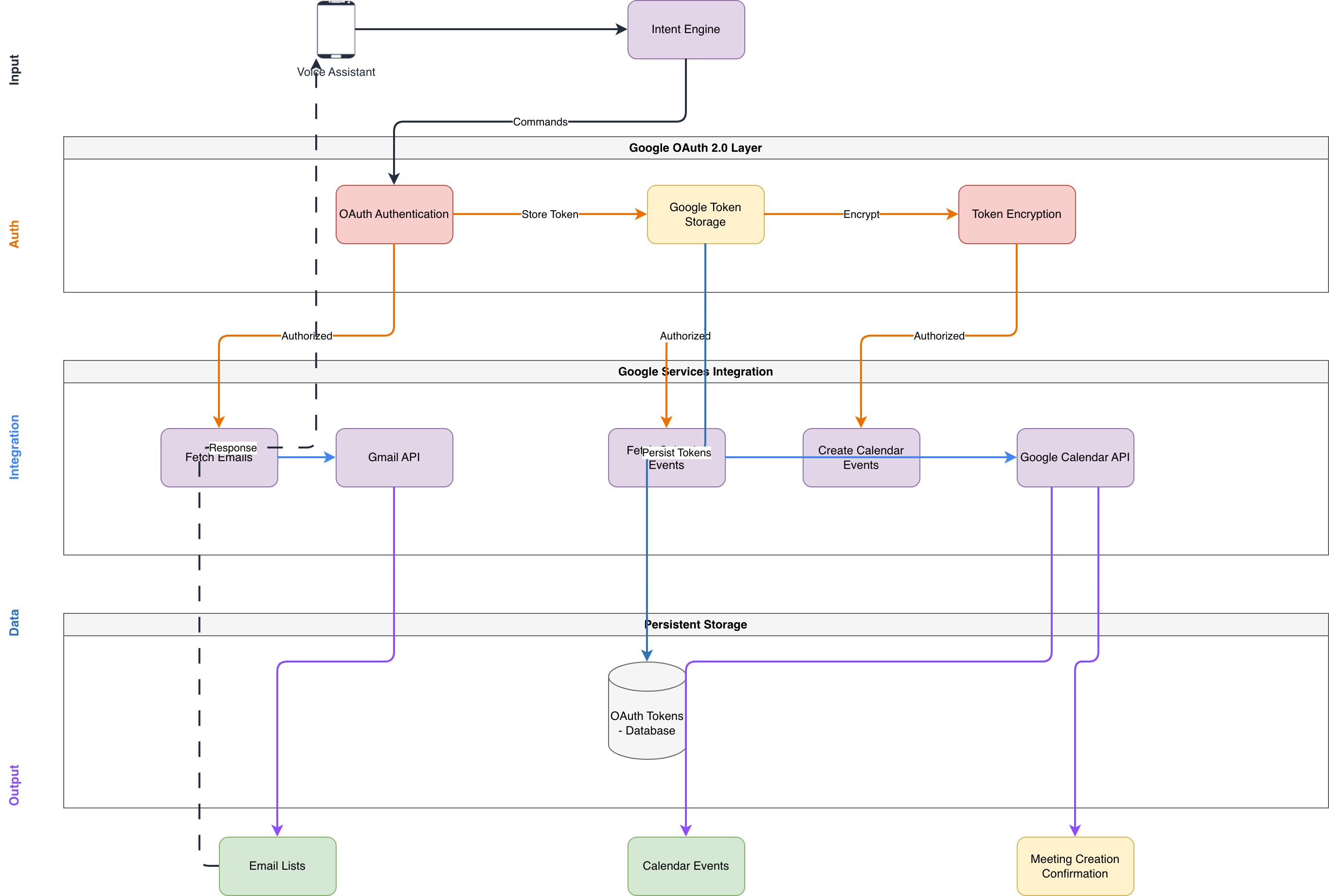
Voice-driven Google Services integration architecture using OAuth 2.0 authentication and token management to enable secure email and calendar operations. The Voice Assistant routes user intents through an Intent Engine to OAuth Authentication, which manages Google Token Storage with encryption before delegating to Gmail API and Google Calendar API for email retrieval and event creation. Token encryption and persistent database storage ensure secure credential handling across all Google service calls. This pattern demonstrates best practices for multi-service OAuth flows, reducing authentication complexity while maintaining least-privilege access to sensitive calendar and email data. Fork this diagram on Diagrams.so to customize token storage backends, add additional Google APIs, or adapt the encryption layer for your security requirements.

People also ask

How do you securely integrate multiple Google APIs like Gmail and Calendar with OAuth 2.0 token management?

This diagram shows a voice assistant architecture that authenticates via OAuth 2.0, stores encrypted tokens in a database, and delegates to Gmail API and Google Calendar API for secure email and calendar operations. Token encryption and persistent storage ensure credentials are protected across all service calls.

Google Services Integration Architecture

AutointermediateGoogle CloudOAuth 2.0API IntegrationVoice AssistantSecurityToken Management
Domain: Cloud MultiAudience: Cloud architects designing voice-enabled integrations with Google services
1 views0 favoritesPublic

Created by

March 7, 2026

Updated

March 25, 2026 at 2:31 AM

Type

architecture

Need a custom architecture diagram?

Describe your architecture in plain English and get a production-ready Draw.io diagram in seconds. Works for AWS, Azure, GCP, Kubernetes, and more.

Generate with AI