
About This Architecture
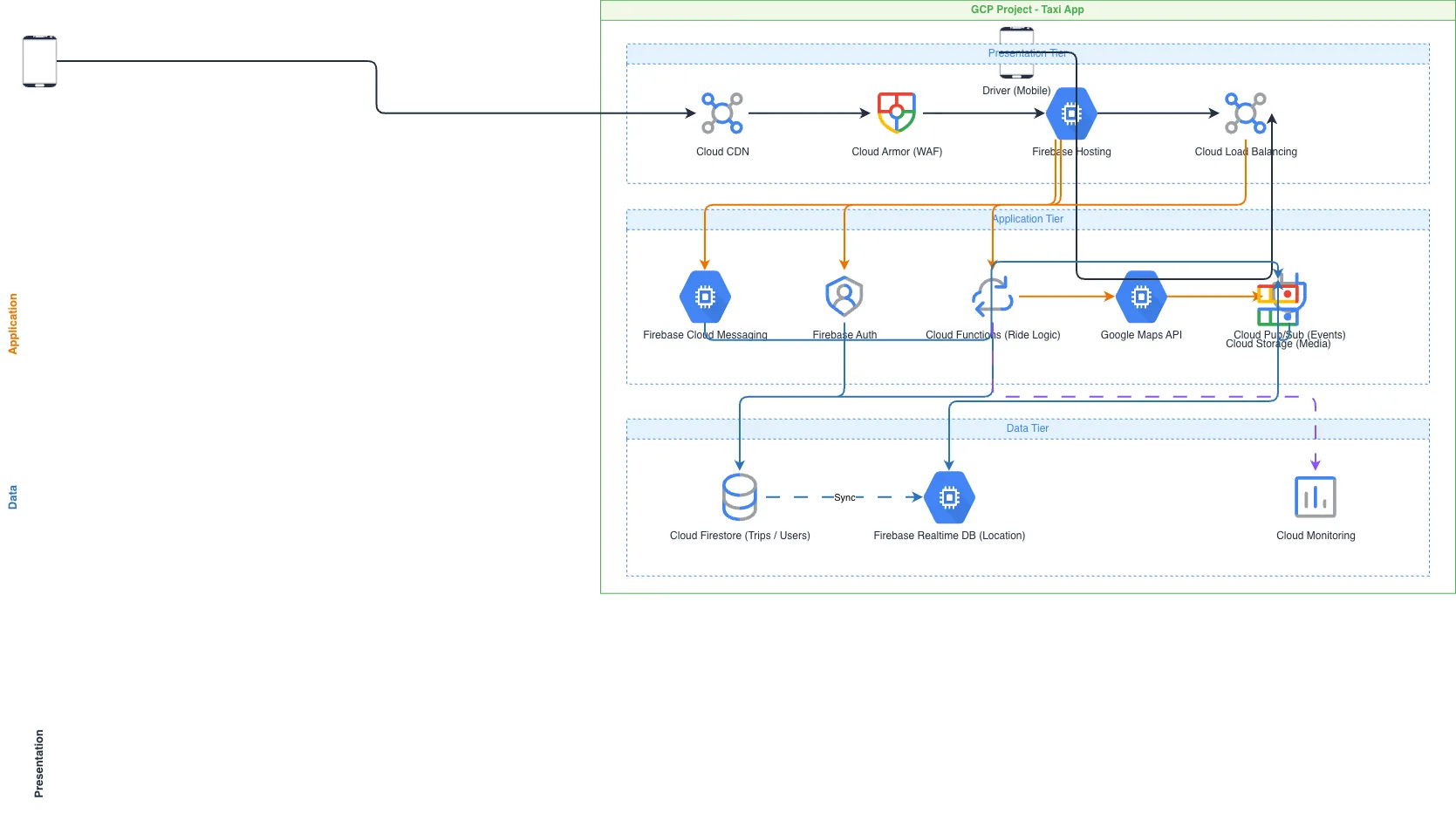
GCP Taxi App Architecture demonstrates a three-tier serverless design for real-time ride-sharing, combining Firebase services with Cloud Functions and Pub/Sub for event-driven coordination. Passenger and driver mobile clients connect through Cloud CDN and Cloud Load Balancing, passing through Cloud Armor WAF and Firebase Hosting before reaching Cloud Functions that orchestrate ride logic via Google Maps API and Cloud Pub/Sub events. Data flows across Cloud Firestore for persistent trip and user records, Firebase Realtime DB for live location updates, and Cloud Storage for media, with Firebase Auth securing access and Cloud Monitoring observing system health. This architecture exemplifies GCP's managed services approach, eliminating infrastructure overhead while enabling real-time features critical to on-demand mobility platforms. Fork this diagram on Diagrams.so to customize service regions, add traffic policies, or integrate additional GCP connectors for your taxi or delivery application. The separation of authentication, messaging, and location data across specialized databases reflects best practices for scaling independent read/write patterns in high-concurrency mobile apps.