
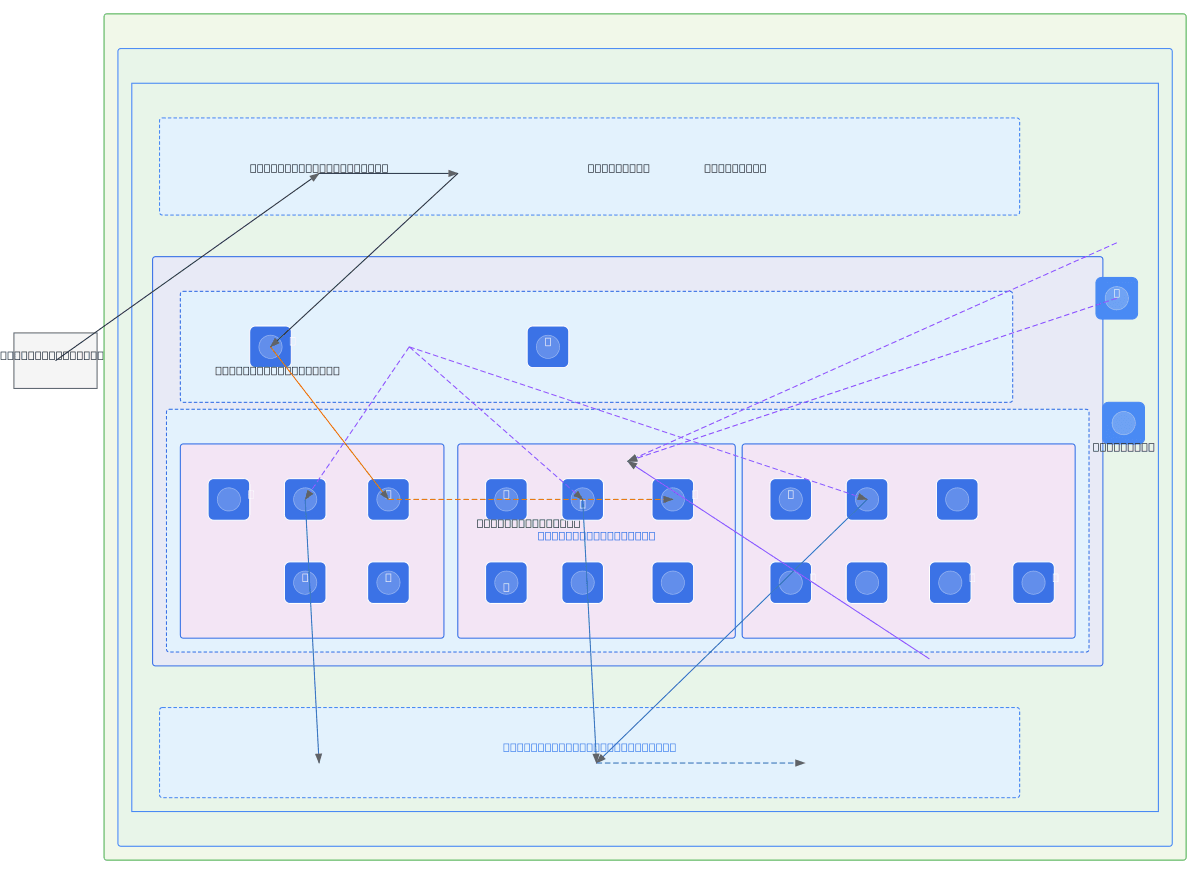
About This Architecture
Production-grade GKE microservices architecture with Istio service mesh, featuring three independent services (API, Auth, Data) deployed across dedicated nodes with auto-scaling and persistent storage. Traffic flows through Cloud Load Balancing and Cloud Armor WAF to an Ingress Controller, which routes requests to Istio-managed pods with inter-service communication via service mesh. The design integrates Cloud SQL PostgreSQL with read replicas, Cloud Memorystore Redis caching, persistent volumes backed by pd-ssd, and comprehensive observability through Cloud Monitoring and Logging. This architecture demonstrates best practices for multi-tier microservices including network policies, RBAC via ServiceAccounts, secrets management, and container image governance through Container Registry. Fork and customize this diagram to match your GCP project topology, adjust replica counts and resource classes, or extend with additional services and traffic policies.