GCP GitOps DevOps Pipeline - Flask on GKE

MULTIDeploymentadvanced
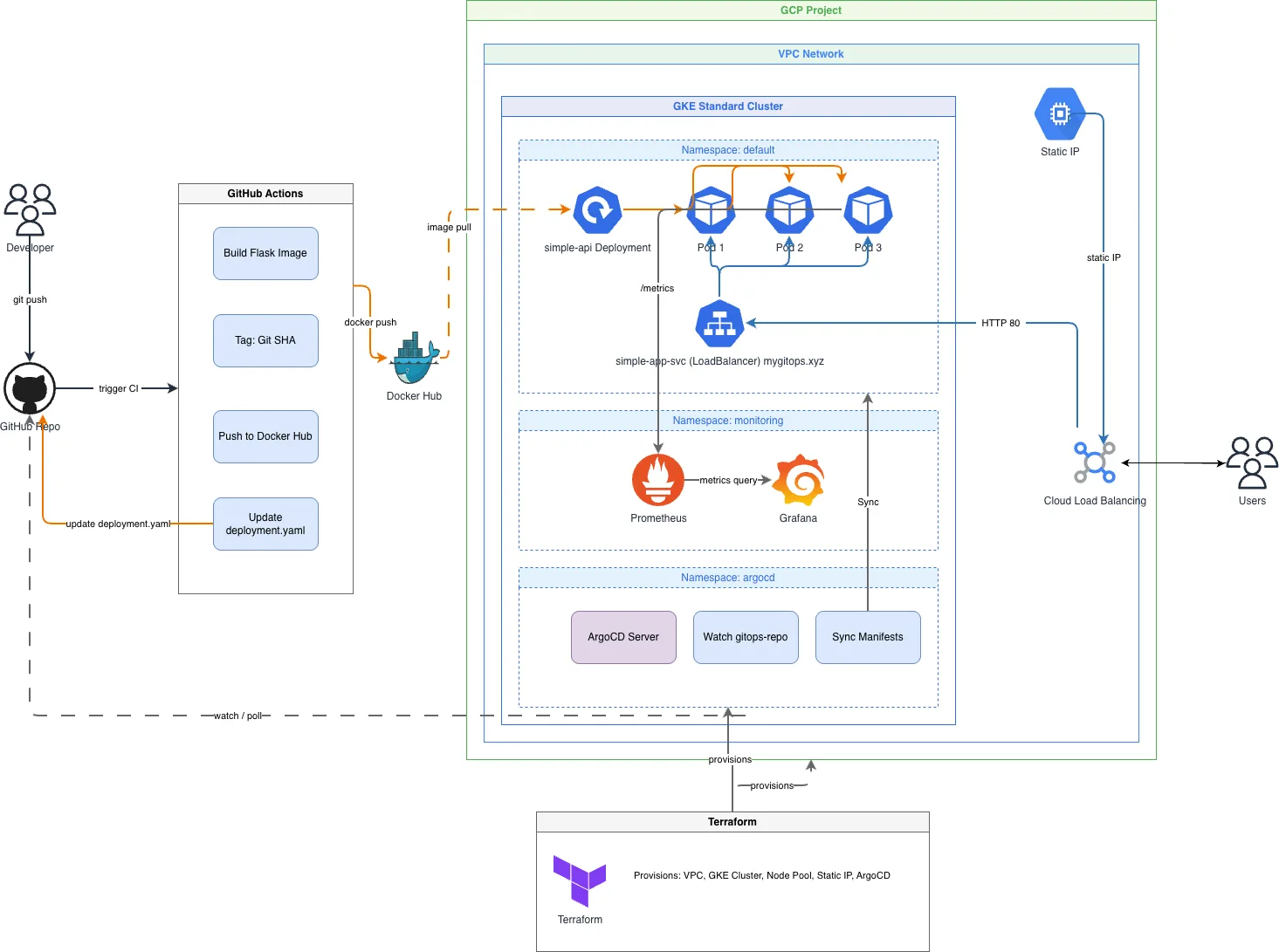
GCP GitOps DevOps Pipeline - Flask on GKE — MULTI deployment diagram

About This Architecture

GitOps-driven CI/CD pipeline deploying Flask applications to GCP GKE using GitHub Actions, ArgoCD, and Terraform infrastructure-as-code. Developer commits trigger GitHub Actions to build and push Docker images to Docker Hub, then update deployment manifests in a GitOps repository that ArgoCD continuously syncs to a GKE Standard Cluster. Three Flask Pod replicas run behind a LoadBalancer service with static IP and Cloud Load Balancing, while Prometheus and Grafana provide observability. Terraform provisions the entire GCP infrastructure including VPC, GKE cluster, node pool, and static IP, enabling repeatable, declarative deployments. This architecture demonstrates GitOps best practices: separation of concerns between CI (GitHub Actions) and CD (ArgoCD), immutable infrastructure, and audit trails via Git. Fork and customize this diagram to match your GCP project structure, Flask service topology, or monitoring stack.

People also ask

How do I set up a GitOps CI/CD pipeline to deploy Flask apps to GCP GKE with GitHub Actions and ArgoCD?

This diagram shows a complete GitOps workflow where GitHub Actions builds and pushes Flask Docker images to Docker Hub, then updates manifests in a GitOps repo that ArgoCD syncs to GKE. Terraform provisions the GCP infrastructure (VPC, GKE cluster, static IP), and Prometheus/Grafana monitor the running Flask pods behind a LoadBalancer service.

GCPKubernetesGitOpsCI/CDArgoCDTerraform
Domain:
Devops Cicd
Audience:
DevOps engineers implementing GitOps workflows on GKE with Flask microservices

Generated by Diagrams.so — AI architecture diagram generator with native Draw.io output. Fork this diagram, remix it, or download as .drawio, PNG, or SVG.

Generate your own deploymentdiagram →

About This Architecture

GitOps-driven CI/CD pipeline deploying Flask applications to GCP GKE using GitHub Actions, ArgoCD, and Terraform infrastructure-as-code. Developer commits trigger GitHub Actions to build and push Docker images to Docker Hub, then update deployment manifests in a GitOps repository that ArgoCD continuously syncs to a GKE Standard Cluster. Three Flask Pod replicas run behind a LoadBalancer service with static IP and Cloud Load Balancing, while Prometheus and Grafana provide observability. Terraform provisions the entire GCP infrastructure including VPC, GKE cluster, node pool, and static IP, enabling repeatable, declarative deployments. This architecture demonstrates GitOps best practices: separation of concerns between CI (GitHub Actions) and CD (ArgoCD), immutable infrastructure, and audit trails via Git. Fork and customize this diagram to match your GCP project structure, Flask service topology, or monitoring stack.

People also ask

How do I set up a GitOps CI/CD pipeline to deploy Flask apps to GCP GKE with GitHub Actions and ArgoCD?

This diagram shows a complete GitOps workflow where GitHub Actions builds and pushes Flask Docker images to Docker Hub, then updates manifests in a GitOps repo that ArgoCD syncs to GKE. Terraform provisions the GCP infrastructure (VPC, GKE cluster, static IP), and Prometheus/Grafana monitor the running Flask pods behind a LoadBalancer service.

GCP GitOps DevOps Pipeline - Flask on GKE

MultiadvancedGCPKubernetesGitOpsCI/CDArgoCDTerraform
Domain: Devops CicdAudience: DevOps engineers implementing GitOps workflows on GKE with Flask microservices
0 views0 favoritesPublic

Created by

May 28, 2026

Updated

May 29, 2026 at 12:46 AM

Type

deployment

Need a custom architecture diagram?

Describe your architecture in plain English and get a production-ready Draw.io diagram in seconds. Works for AWS, Azure, GCP, Kubernetes, and more.

Generate with AI