Fluxo de Entrada de Produtos - Estoque

GENERALArchitectureintermediate
Fluxo de Entrada de Produtos - Estoque — GENERAL architecture diagram

About This Architecture

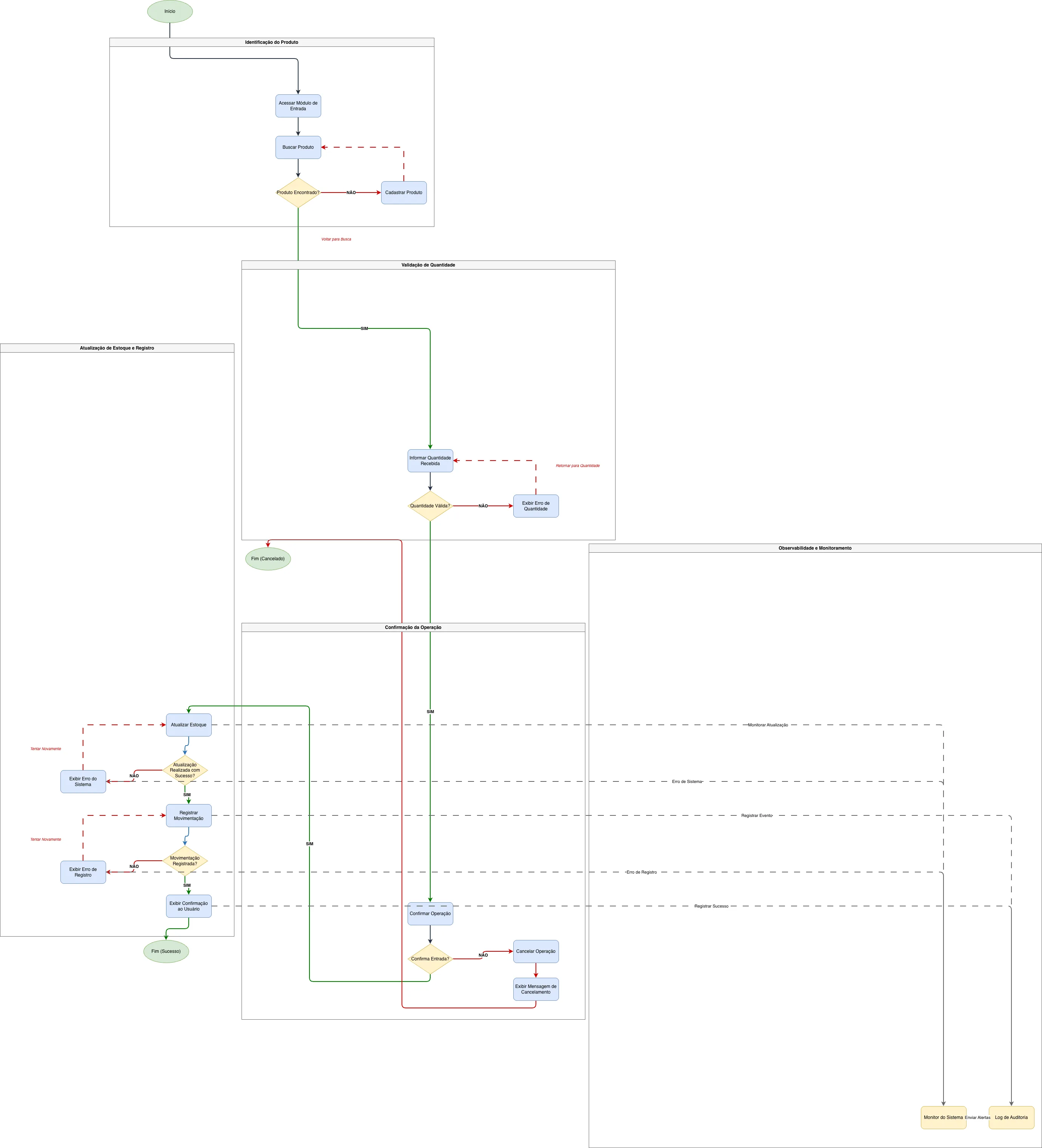
Product intake workflow for inventory management systems, orchestrating product search, quantity validation, and stock updates through a series of decision gates and error-handling loops. The flow begins with module access and product lookup, then branches to new product registration or quantity entry based on product existence. Quantity validation triggers error feedback loops, while successful confirmation routes to stock updates and movement logging with comprehensive error recovery paths. This architecture demonstrates best practices for transactional integrity in warehouse operations, ensuring data consistency across product registration, inventory updates, and audit trails. Fork this diagram on Diagrams.so to customize validation rules, add barcode scanning steps, or integrate with your ERP system. The dual error-handling paths for stock updates and movement registration reflect production-grade resilience patterns critical for high-volume inventory operations.

People also ask

What is the complete workflow for receiving and registering products in an inventory management system?

This diagram shows the end-to-end product intake process: starting with product search, validating quantities, confirming operations, updating stock, and logging movements. It includes decision points for product existence and quantity validity, plus error-handling loops that route failures back to retry points, ensuring data integrity throughout the intake cycle.

inventory-managementworkflow-designwarehouse-operationsprocess-flowerror-handlingstock-management
Domain:
Software Architecture
Audience:
inventory management system designers and warehouse operations managers

Generated by Diagrams.so — AI architecture diagram generator with native Draw.io output. Fork this diagram, remix it, or download as .drawio, PNG, or SVG.

Generate your own architecture diagram →

About This Architecture

Product intake workflow for inventory management systems, orchestrating product search, quantity validation, and stock updates through a series of decision gates and error-handling loops. The flow begins with module access and product lookup, then branches to new product registration or quantity entry based on product existence. Quantity validation triggers error feedback loops, while successful confirmation routes to stock updates and movement logging with comprehensive error recovery paths. This architecture demonstrates best practices for transactional integrity in warehouse operations, ensuring data consistency across product registration, inventory updates, and audit trails. Fork this diagram on Diagrams.so to customize validation rules, add barcode scanning steps, or integrate with your ERP system. The dual error-handling paths for stock updates and movement registration reflect production-grade resilience patterns critical for high-volume inventory operations.

People also ask

What is the complete workflow for receiving and registering products in an inventory management system?

This diagram shows the end-to-end product intake process: starting with product search, validating quantities, confirming operations, updating stock, and logging movements. It includes decision points for product existence and quantity validity, plus error-handling loops that route failures back to retry points, ensuring data integrity throughout the intake cycle.

Fluxo de Entrada de Produtos - Estoque

Autointermediateinventory-managementworkflow-designwarehouse-operationsprocess-flowerror-handlingstock-management
Domain: Software ArchitectureAudience: inventory management system designers and warehouse operations managers
0 views0 favoritesPublic

Created by

May 20, 2026

Updated

May 20, 2026 at 1:32 PM

Type

architecture

Need a custom architecture diagram?

Describe your architecture in plain English and get a production-ready Draw.io diagram in seconds. Works for AWS, Azure, GCP, Kubernetes, and more.

Generate with AI