Estados de Validez de TokenInvitado architecture diagram

About This Architecture

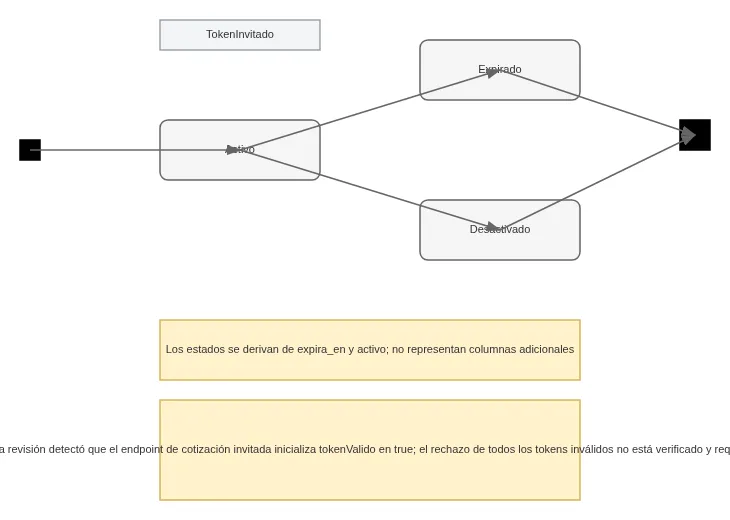
TokenInvitado state machine defines three validity states: Activo, Expirado, and Desactivado, derived from expira_en and activo attributes without additional database columns. The diagram shows transitions from Activo to either Expirado (time-based expiration) or Desactivado (manual revocation), both terminating at end state. This pattern simplifies token validation logic by consolidating expiration and revocation into a single state model. Fork this diagram to customize state transitions, add intermediate states, or adapt the model for other token types. Understanding token state machines prevents security gaps in authentication flows and reduces endpoint validation complexity.

People also ask

How should I model token expiration and revocation states in a token lifecycle system?

TokenInvitado uses a three-state model: Activo (valid), Expirado (time-based), and Desactivado (manually revoked), derived from expira_en and activo without extra columns. This consolidates validation logic and prevents complex endpoint checking.

Estados de Validez de TokenInvitado

Autointermediatestate machinetoken lifecycleauthenticationbackend architectureUML diagramAPI design
Domain: Software ArchitectureAudience: backend engineers designing token lifecycle management systems
4 views0 favoritesPublic

Created by

November 2, 2026

Updated

November 7, 2026 at 10:57 AM

Type

uml

Make your own

Need a custom architecture diagram?

Describe your architecture in plain English and get a production-ready Draw.io diagram in seconds. Works for AWS, Azure, GCP, Kubernetes, and more.

Generate with AI

AI-generated. Verify before production use. Learn more

Report this diagram