Diccionario de Datos - Inventario Comida Rapida

GENERALArchitectureintermediate
Diccionario de Datos - Inventario Comida Rapida — GENERAL architecture diagram

About This Architecture

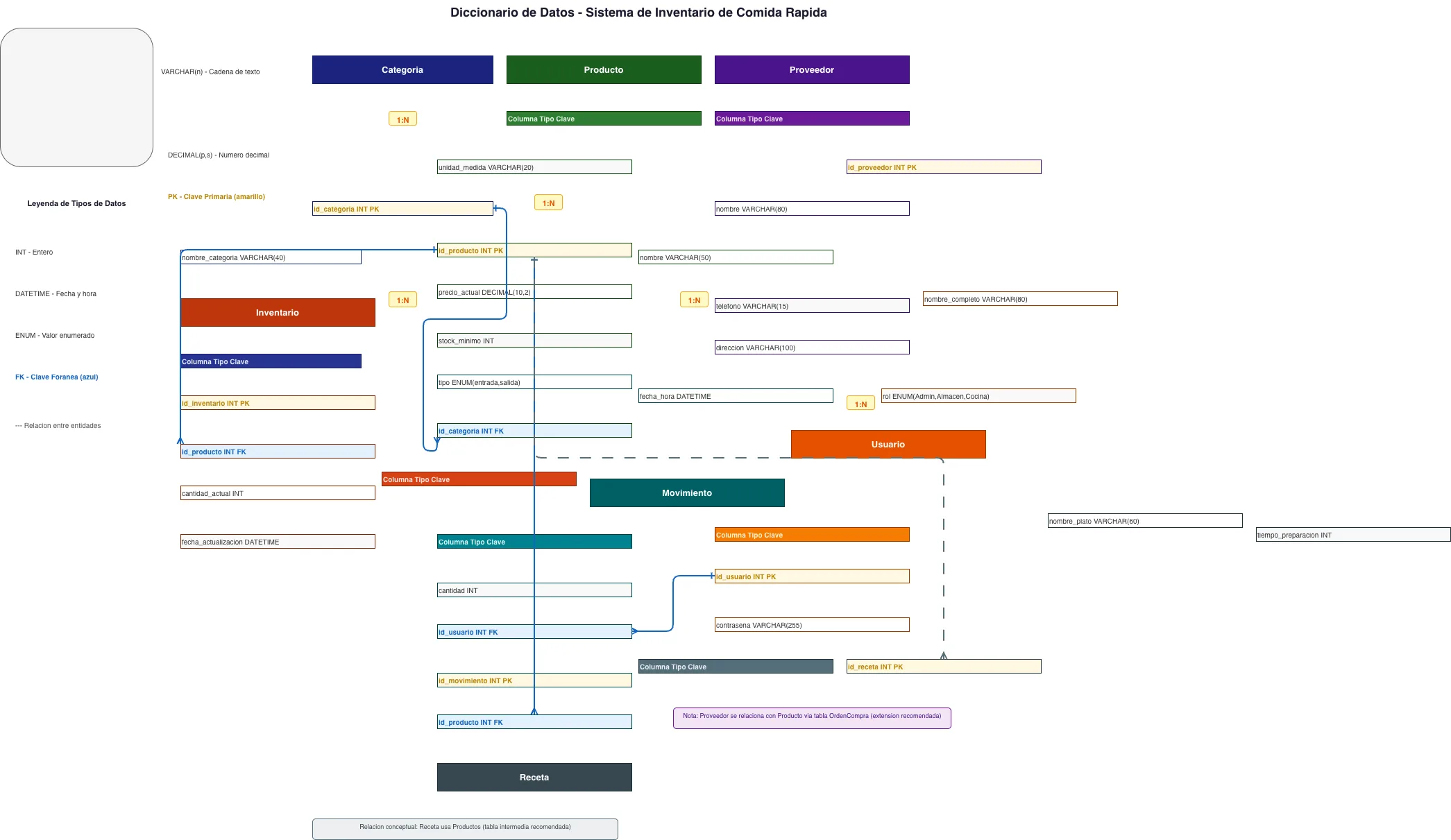
Fast-food inventory management data dictionary defining seven core entities: Categoria, Producto, Proveedor, Inventario, Movimiento, Usuario, and Receta with primary and foreign key relationships. The schema enforces referential integrity through foreign keys linking products to categories, inventory records to products, stock movements to users and products, and recipes to ingredients via a recommended junction table. This normalized structure prevents data anomalies, ensures audit trails for inventory transactions, and supports role-based access control across Admin, Almacen, and Cocina user roles. Fork this diagram on Diagrams.so to customize column definitions, add the OrdenCompra bridge table, or export as .drawio for use in database design tools. The ENUM fields for movement types and user roles enable efficient filtering and reporting on inventory flows and operational permissions.

People also ask

What is the best database schema structure for a fast-food restaurant inventory management system?

This data dictionary defines a normalized relational schema with seven core entities: Producto (items with pricing and stock levels), Inventario (current quantities), Movimiento (audit trail of entries/exits), Usuario (role-based staff), Categoria (product grouping), Proveedor (supplier info), and Receta (dish definitions). Primary and foreign keys enforce referential integrity, while ENUM fields

data-dictionaryrelational-databaseinventory-managementschema-designfood-servicenormalization
Domain:
Data Engineering
Audience:
Database designers and food service inventory managers building relational schemas

Generated by Diagrams.so — AI architecture diagram generator with native Draw.io output. Fork this diagram, remix it, or download as .drawio, PNG, or SVG.

Generate your own architecture diagram →

About This Architecture

Fast-food inventory management data dictionary defining seven core entities: Categoria, Producto, Proveedor, Inventario, Movimiento, Usuario, and Receta with primary and foreign key relationships. The schema enforces referential integrity through foreign keys linking products to categories, inventory records to products, stock movements to users and products, and recipes to ingredients via a recommended junction table. This normalized structure prevents data anomalies, ensures audit trails for inventory transactions, and supports role-based access control across Admin, Almacen, and Cocina user roles. Fork this diagram on Diagrams.so to customize column definitions, add the OrdenCompra bridge table, or export as .drawio for use in database design tools. The ENUM fields for movement types and user roles enable efficient filtering and reporting on inventory flows and operational permissions.

People also ask

What is the best database schema structure for a fast-food restaurant inventory management system?

This data dictionary defines a normalized relational schema with seven core entities: Producto (items with pricing and stock levels), Inventario (current quantities), Movimiento (audit trail of entries/exits), Usuario (role-based staff), Categoria (product grouping), Proveedor (supplier info), and Receta (dish definitions). Primary and foreign keys enforce referential integrity, while ENUM fields

Diccionario de Datos - Inventario Comida Rapida

Autointermediatedata-dictionaryrelational-databaseinventory-managementschema-designfood-servicenormalization
Domain: Data EngineeringAudience: Database designers and food service inventory managers building relational schemas
0 views0 favoritesPublic

Created by

May 7, 2026

Updated

May 7, 2026 at 12:54 AM

Type

architecture

Need a custom architecture diagram?

Describe your architecture in plain English and get a production-ready Draw.io diagram in seconds. Works for AWS, Azure, GCP, Kubernetes, and more.

Generate with AI