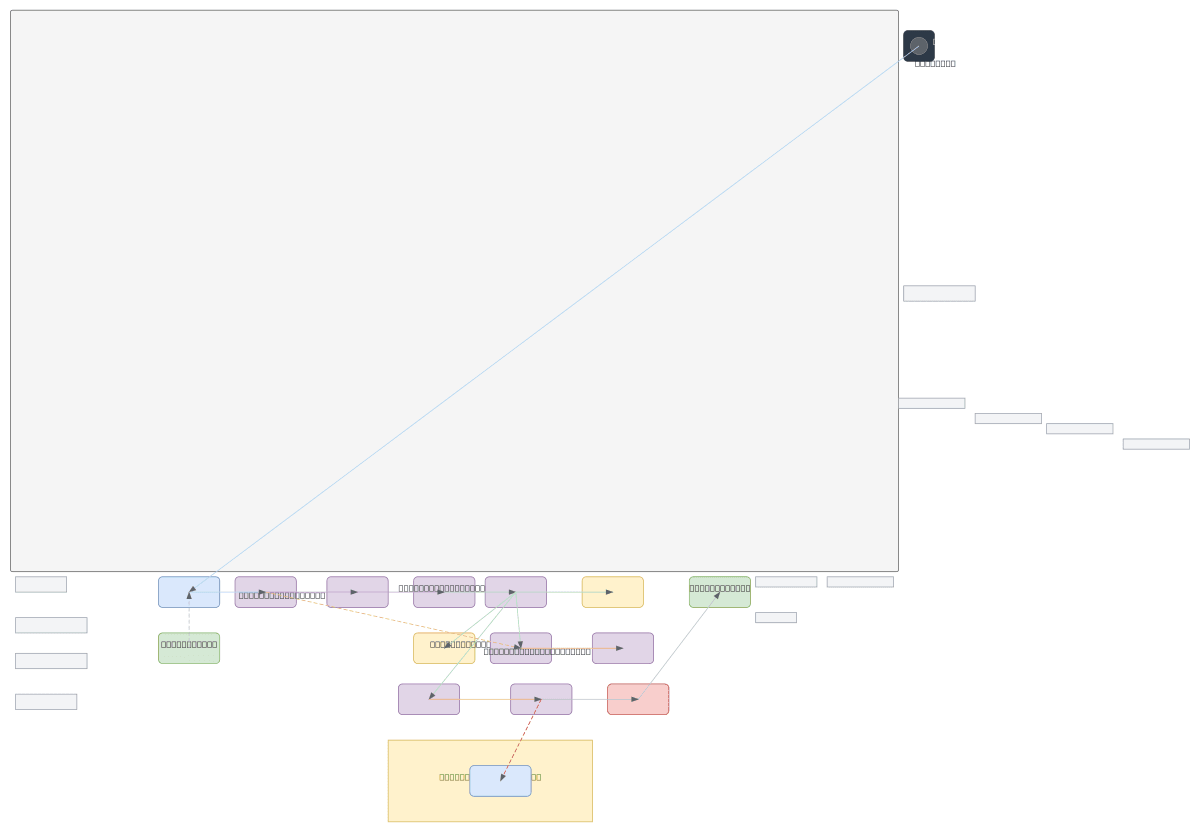
CyraFlow AI Pentesting Framework Pipeline

GENERALArchitectureadvanced
CyraFlow AI Pentesting Framework Pipeline — GENERAL architecture diagram

About This Architecture

CyraFlow AI Pentesting Framework Pipeline orchestrates multi-stage security testing through intent classification, tool filtering, and ReAct-based LLM reasoning. User input flows from CLI and YAML config through Intent Classifier and Action Subcategory Classifier, then Tool Filter Engine routes requests to ReAct Engine, which coordinates with a Swappable LLM Adapter and MCP Manager for dynamic tool execution. MCP Servers (nmap, Metasploit, CredScan) execute against isolated lab targets like Metasploitable VM, with results logged to JSONL and chat history maintained for context. This architecture enables security teams to automate reconnaissance, exploitation, and reporting while maintaining tool flexibility and audit trails. Fork this diagram on Diagrams.so to customize LLM providers, add MCP servers, or adapt the pipeline for your threat model. The modular design supports swapping Ollama, Gemini, or OpenAI backends without pipeline restructuring.

People also ask

How does CyraFlow AI automate penetration testing workflows using intent classification and ReAct reasoning?

CyraFlow routes user input through Intent Classifier and Action Subcategory Classifier to Tool Filter Engine, which feeds ReAct Engine for LLM-driven reasoning. ReAct coordinates with MCP Manager to execute nmap, Metasploit, and CredScan against isolated targets, logging results to JSONL while maintaining chat history for context.

securitypenetration-testingAI-orchestrationReAct-engineMCP-serversLLM-integration
Domain:
Security
Audience:
security engineers and penetration testers automating pentesting workflows with AI-driven orchestration

Generated by Diagrams.so — AI architecture diagram generator with native Draw.io output. Fork this diagram, remix it, or download as .drawio, PNG, or SVG.

Generate your own architecturediagram →

About This Architecture

CyraFlow AI Pentesting Framework Pipeline orchestrates multi-stage security testing through intent classification, tool filtering, and ReAct-based LLM reasoning. User input flows from CLI and YAML config through Intent Classifier and Action Subcategory Classifier, then Tool Filter Engine routes requests to ReAct Engine, which coordinates with a Swappable LLM Adapter and MCP Manager for dynamic tool execution. MCP Servers (nmap, Metasploit, CredScan) execute against isolated lab targets like Metasploitable VM, with results logged to JSONL and chat history maintained for context. This architecture enables security teams to automate reconnaissance, exploitation, and reporting while maintaining tool flexibility and audit trails. Fork this diagram on Diagrams.so to customize LLM providers, add MCP servers, or adapt the pipeline for your threat model. The modular design supports swapping Ollama, Gemini, or OpenAI backends without pipeline restructuring.

People also ask

How does CyraFlow AI automate penetration testing workflows using intent classification and ReAct reasoning?

CyraFlow routes user input through Intent Classifier and Action Subcategory Classifier to Tool Filter Engine, which feeds ReAct Engine for LLM-driven reasoning. ReAct coordinates with MCP Manager to execute nmap, Metasploit, and CredScan against isolated targets, logging results to JSONL while maintaining chat history for context.

CyraFlow AI Pentesting Framework Pipeline

Autoadvancedsecuritypenetration-testingAI-orchestrationReAct-engineMCP-serversLLM-integration
Domain: SecurityAudience: security engineers and penetration testers automating pentesting workflows with AI-driven orchestration
0 views0 favoritesPublic

Created by

May 30, 2026

Updated

May 30, 2026 at 2:11 AM

Type

architecture

Need a custom architecture diagram?

Describe your architecture in plain English and get a production-ready Draw.io diagram in seconds. Works for AWS, Azure, GCP, Kubernetes, and more.

Generate with AI