
About This Architecture
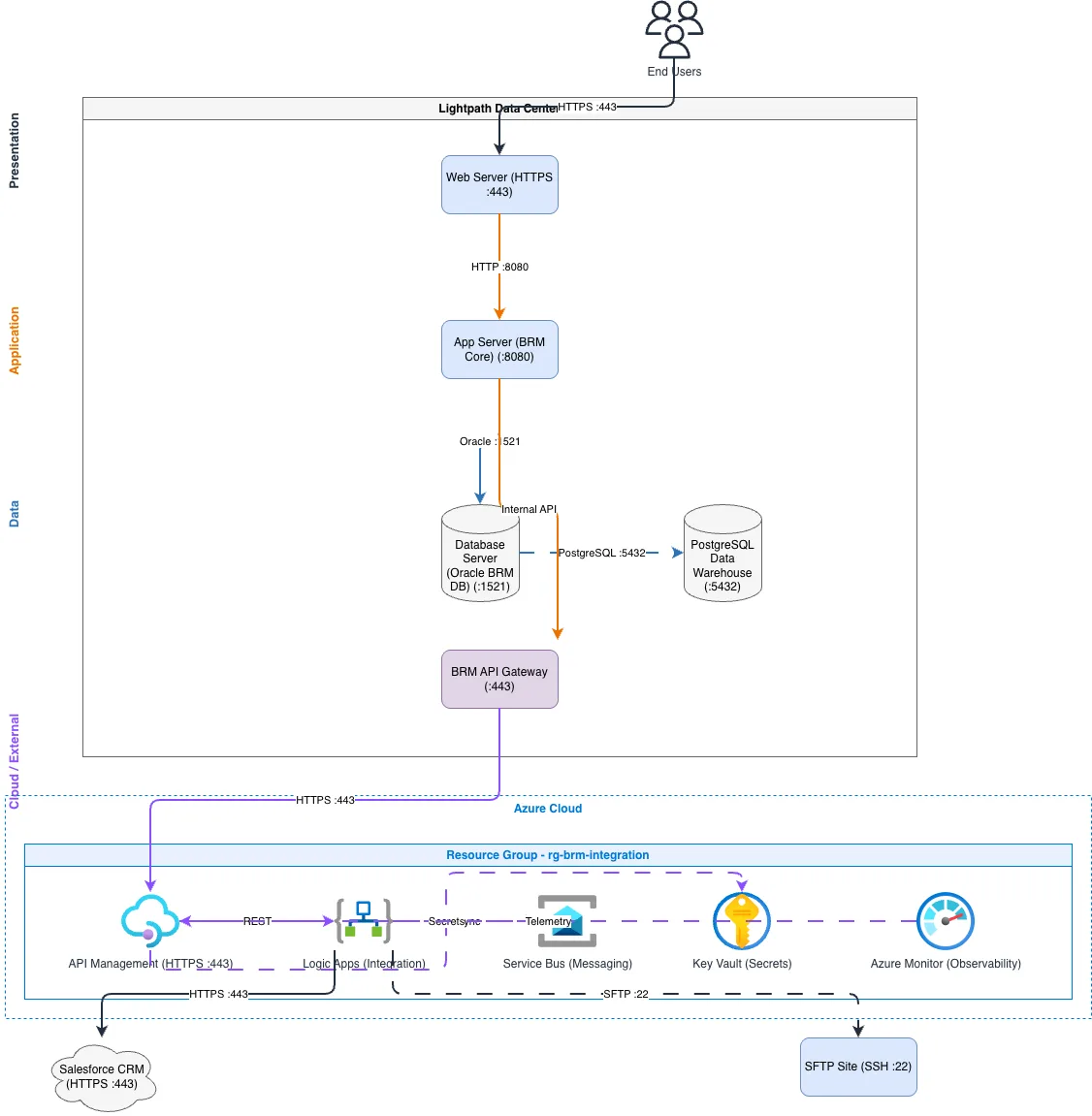
BRM billing system hybrid architecture spanning Lightpath on-premises data center and Azure cloud with secure API-driven integration. End users connect via HTTPS to a Web Server, which routes requests to the BRM Core App Server and Oracle BRM Database on-premises, while a PostgreSQL Data Warehouse in Azure handles analytics. The BRM API Gateway exposes billing APIs to Azure API Management, which orchestrates integrations through Logic Apps, Service Bus messaging, and Key Vault secrets management, with real-time observability via Azure Monitor. This architecture demonstrates secure hybrid billing operations with on-premises data residency and cloud-native integration patterns. Fork and customize this diagram to match your billing system topology, data residency requirements, or add additional Azure services like Functions or Event Grid. Consider implementing Azure ExpressRoute for dedicated, low-latency connectivity between Lightpath and Azure to reduce API latency and improve compliance posture.