
About This Architecture
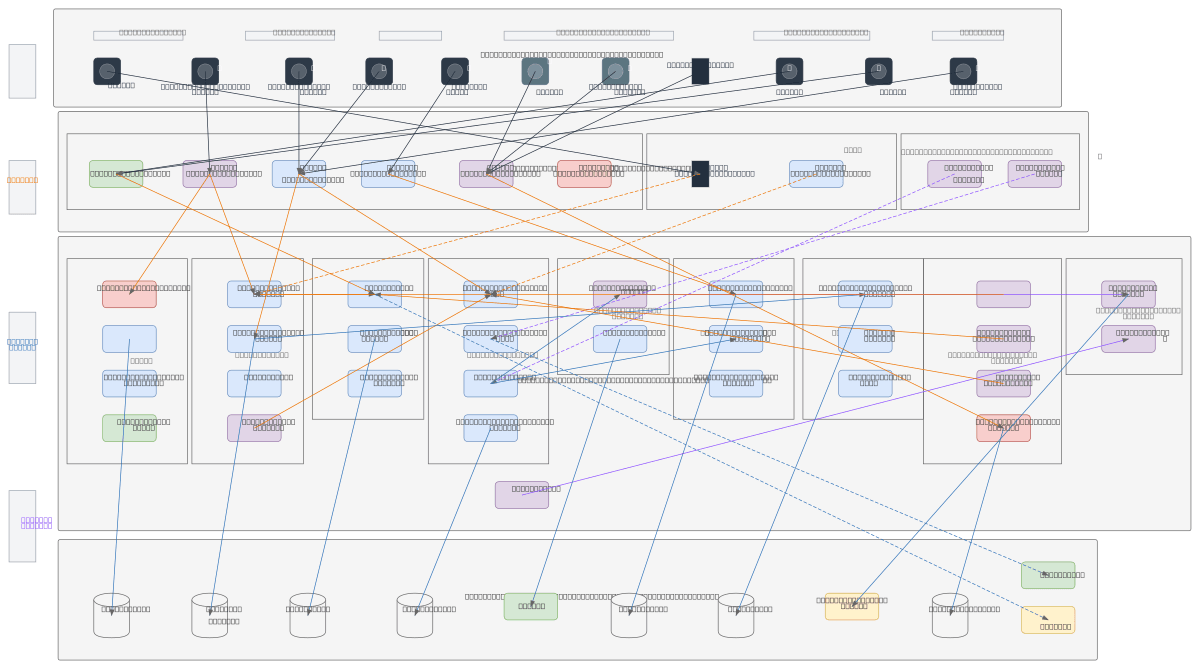
BaiYun's cross-border logistics system uses a four-layer architecture separating entry points, internal/external systems, domain-driven business modules, and polyglot persistence. Layer 1 routes diverse clients—dropship customers, suppliers, staff, and API integrators—through role-based portals and gateways secured by WAF/CDN. Layer 2 orchestrates self-built systems (official website, customer portal, admin console, supplier system, open platform gateway) alongside procured solutions (YJT apps, carrier APIs, customs interfaces). Layer 3 implements domain modules for customers, orders, pricing, logistics fulfillment, tracking, suppliers, finance, notifications, and open platform integrations, each with specialized APIs and message bus coordination. Layer 4 persists data across domain-aligned databases (customer, order, pricing, logistics, tracking NoSQL, supplier, finance), notification logs, and Redis caching. This architecture enables BaiYun to scale multi-tenant operations, integrate third-party carriers and customs systems, and expose APIs to external customers and suppliers while maintaining clear separation of concerns. Fork this diagram on Diagrams.so to customize domain boundaries, add deployment topology, or adapt the pattern for your own logistics or marketplace platform.