
About This Architecture
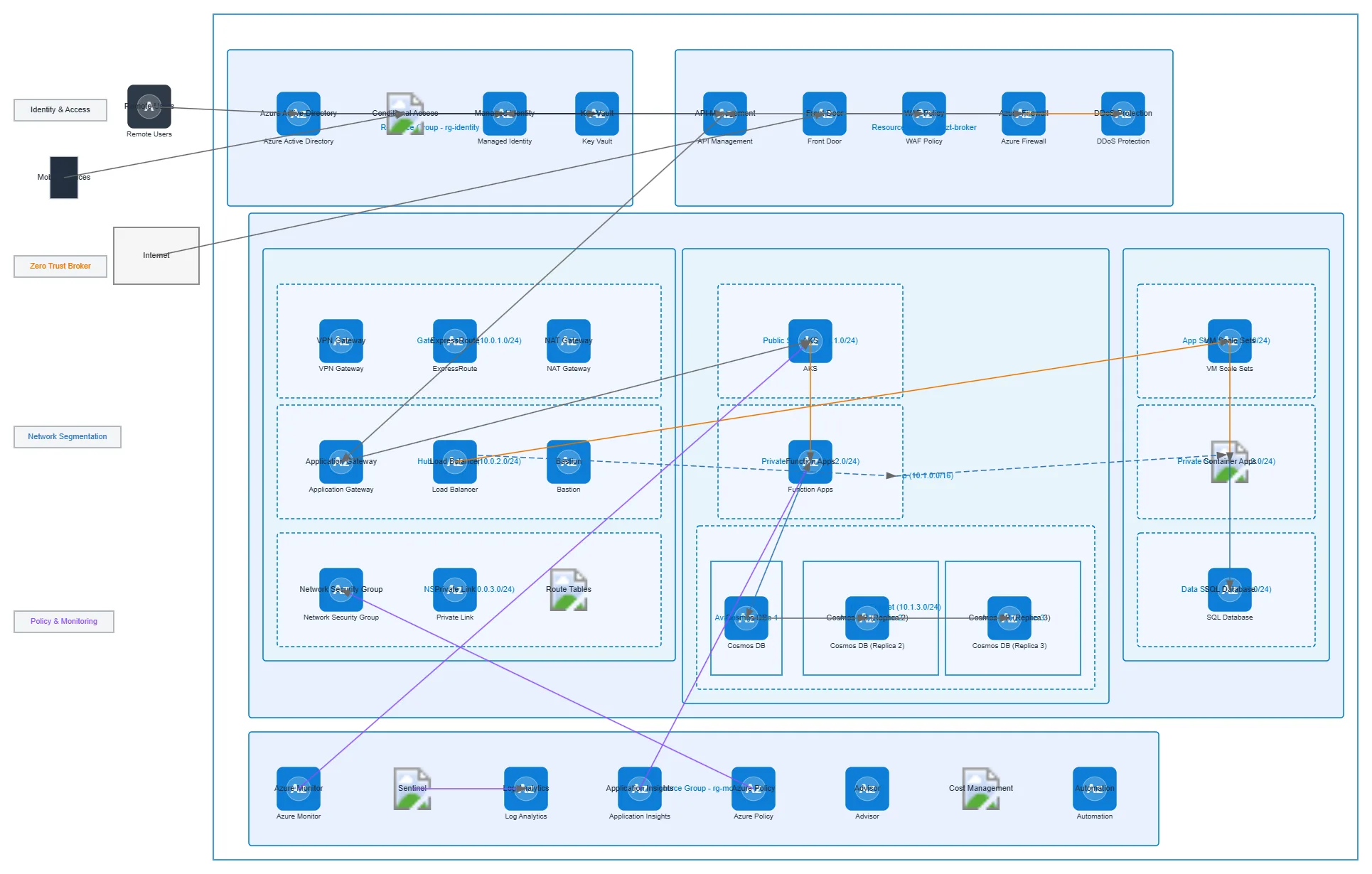
Azure Zero Trust Network Architecture implements identity-first security across hub-and-spoke topology with Azure AD conditional access, API Management, and Azure Firewall. Remote users and mobile devices authenticate via Azure Active Directory and Conditional Access before accessing managed identities and Key Vault secrets, while inbound traffic flows through Front Door, WAF Policy, and DDoS Protection to API Management and Application Gateway. Hub VNet (10.0.0.0/16) connects Spoke VNet 1 (AKS, Function Apps, Cosmos DB) and Spoke VNet 2 (VM Scale Sets, Container Apps, SQL Database) via Network Security Groups, Private Link, and Route Tables, with comprehensive monitoring via Azure Monitor, Sentinel, Log Analytics, and Application Insights. This architecture enforces least-privilege access, encrypts all data paths, and eliminates implicit trust—critical for regulated workloads and multi-tenant cloud environments. Fork and customize this diagram on Diagrams.so to align with your subscription, resource groups, and compliance requirements.