AWS Three-Tier Web App with EKS and RDS MySQL — AWS architecture diagram

About This Architecture

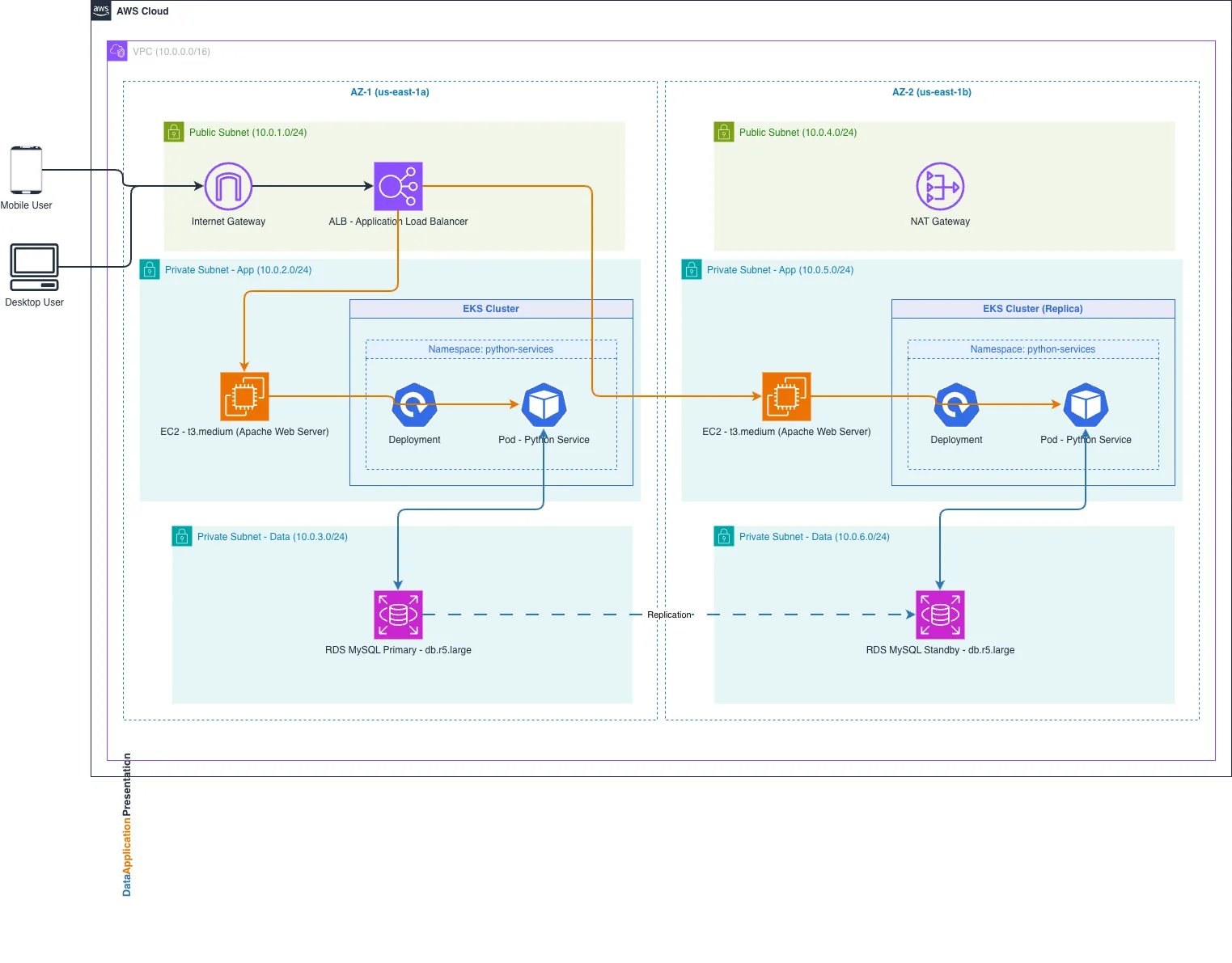
Three-tier AWS web application spanning two availability zones with ALB routing traffic to Apache web servers and EKS-managed Python microservices. EC2 instances in private app subnets forward requests to containerized Python services deployed across EKS clusters in both AZs, while RDS MySQL Primary and Standby instances in separate data subnets provide redundant database persistence. This architecture demonstrates multi-AZ resilience, separation of concerns across presentation, application, and data layers, and automated failover capabilities critical for production workloads. Fork this diagram on Diagrams.so to customize subnets, instance types, or add additional services like ElastiCache or S3. The design balances cost efficiency using t3.medium instances with high availability through cross-AZ replication and managed Kubernetes orchestration.

People also ask

How do I design a highly available three-tier web application on AWS using EKS and RDS with multi-AZ failover?

This diagram shows a production-grade AWS architecture spanning two availability zones with an Application Load Balancer distributing traffic to Apache web servers and EKS-managed Python microservices. RDS MySQL Primary and Standby instances provide automatic failover, while separate public, app, and data subnets enforce security boundaries and enable independent scaling of each tier.

AWS Three-Tier Web App with EKS and RDS MySQL

AWSadvancedEKSKubernetesRDSthree-tier architecturehigh availability
Domain: Cloud AwsAudience: AWS solutions architects designing highly available web applications on EKS
17 views0 favoritesPublic

Created by

April 10, 2026

Updated

September 22, 2026 at 10:58 AM

Type

architecture

Need a custom architecture diagram?

Describe your architecture in plain English and get a production-ready Draw.io diagram in seconds. Works for AWS, Azure, GCP, Kubernetes, and more.

Generate with AI

AI-generated. Verify before production use. Learn more

Report this diagram