
About This Architecture
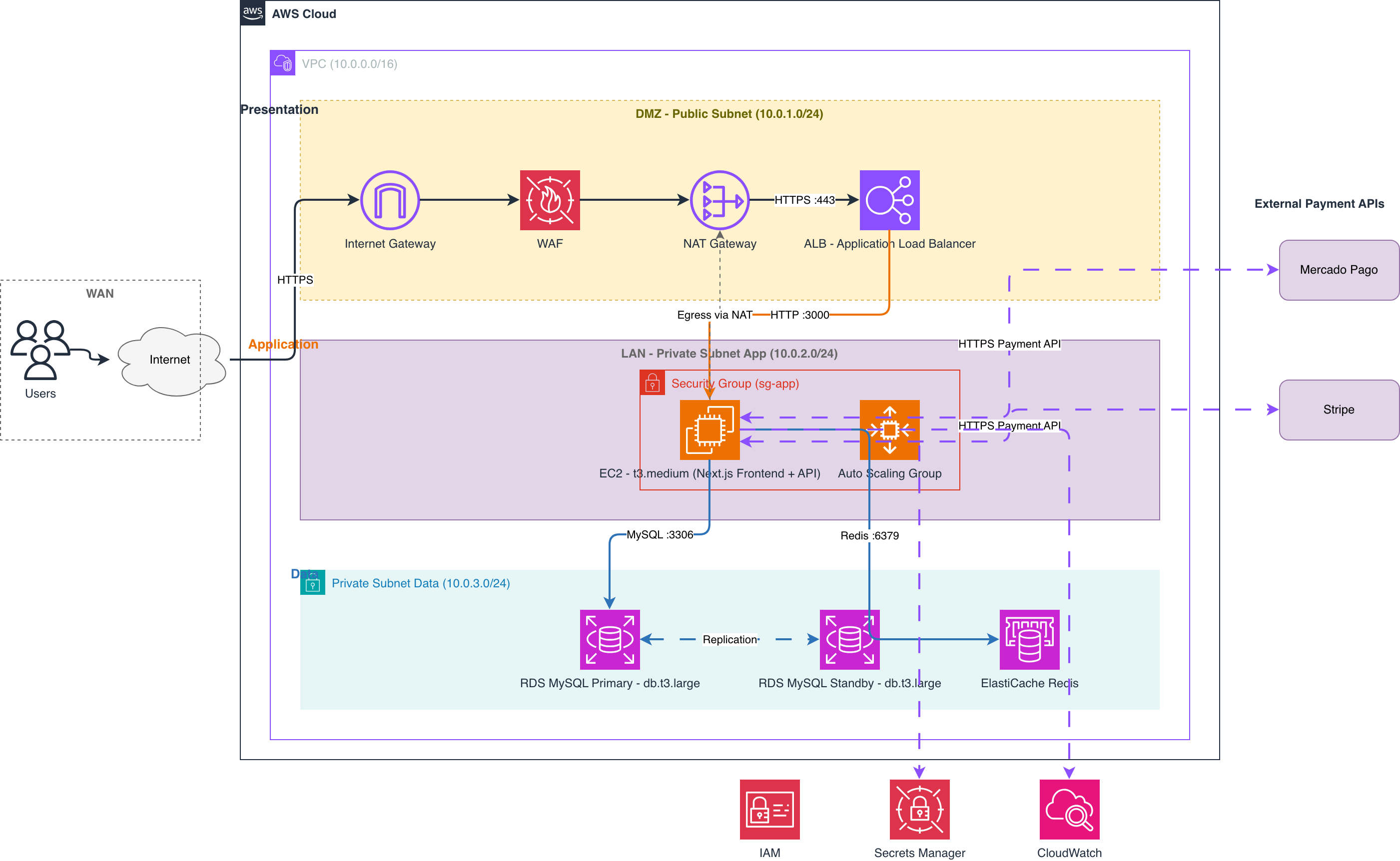
AWS Next.js full-stack deployment combining EC2 t3.medium instances with Auto Scaling, RDS MySQL replication, and ElastiCache Redis for a production-grade web application. Traffic flows from users through Internet Gateway, WAF, and ALB to Next.js frontend and API running on EC2, with secure backend access to RDS Primary/Standby, Redis cache, and external payment gateways Mercado Pago and Stripe. This architecture demonstrates AWS best practices: multi-tier VPC design with public DMZ and private app/data subnets, database high availability via synchronous replication, secrets management via Secrets Manager, and comprehensive monitoring through CloudWatch. Fork this diagram to customize instance types, scaling policies, or add additional services like S3 for static assets or Lambda for serverless functions. The NAT Gateway enables secure outbound connectivity from private subnets to payment APIs while maintaining zero inbound internet exposure.