AWS Large-Scale EC Site Architecture

AWSArchitectureadvanced
AWS Large-Scale EC Site Architecture — AWS architecture diagram

About This Architecture

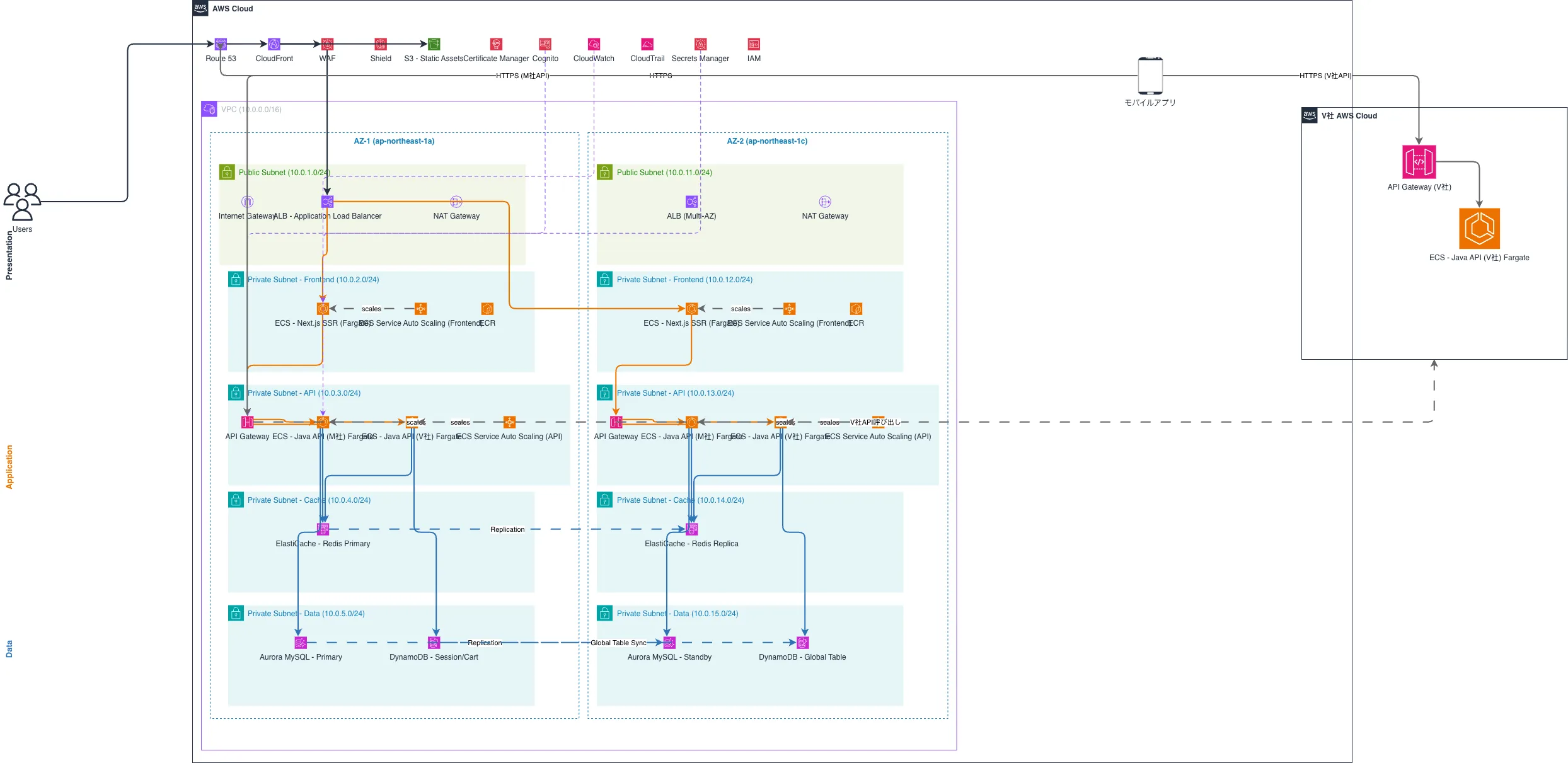
Multi-AZ e-commerce architecture spanning two AWS regions with Route 53 DNS, CloudFront CDN, and WAF protection routing traffic through Application Load Balancers to containerized Next.js SSR and Java API services on ECS Fargate. Frontend and API tiers communicate via API Gateway, with ElastiCache Redis and Aurora MySQL providing distributed caching and relational data persistence across availability zones. Session and cart data leverage DynamoDB Global Tables for real-time synchronization, while CloudWatch, CloudTrail, Cognito, and Secrets Manager provide observability, security, and identity management at scale. Fork this diagram to customize subnet ranges, add additional regions, or adjust Fargate task sizing for your e-commerce workload. This architecture demonstrates AWS best practices for high-availability, fault-tolerant SaaS platforms handling millions of concurrent users.

People also ask

How do I architect a highly available e-commerce platform on AWS across multiple availability zones?

This diagram shows a production e-commerce architecture using Route 53 for DNS, CloudFront for CDN, ECS Fargate for containerized Next.js and Java services, Aurora MySQL for relational data, ElastiCache Redis for caching, and DynamoDB Global Tables for session/cart data—all deployed across two AZs for fault tolerance and low-latency access.

AWSECS FargateMulti-AZE-CommerceMicroservicesHigh Availability
Domain:
Cloud Aws
Audience:
AWS solutions architects designing multi-AZ e-commerce platforms

Generated by Diagrams.so — AI architecture diagram generator with native Draw.io output. Fork this diagram, remix it, or download as .drawio, PNG, or SVG.

Generate your own architecture diagram →

About This Architecture

Multi-AZ e-commerce architecture spanning two AWS regions with Route 53 DNS, CloudFront CDN, and WAF protection routing traffic through Application Load Balancers to containerized Next.js SSR and Java API services on ECS Fargate. Frontend and API tiers communicate via API Gateway, with ElastiCache Redis and Aurora MySQL providing distributed caching and relational data persistence across availability zones. Session and cart data leverage DynamoDB Global Tables for real-time synchronization, while CloudWatch, CloudTrail, Cognito, and Secrets Manager provide observability, security, and identity management at scale. Fork this diagram to customize subnet ranges, add additional regions, or adjust Fargate task sizing for your e-commerce workload. This architecture demonstrates AWS best practices for high-availability, fault-tolerant SaaS platforms handling millions of concurrent users.

People also ask

How do I architect a highly available e-commerce platform on AWS across multiple availability zones?

This diagram shows a production e-commerce architecture using Route 53 for DNS, CloudFront for CDN, ECS Fargate for containerized Next.js and Java services, Aurora MySQL for relational data, ElastiCache Redis for caching, and DynamoDB Global Tables for session/cart data—all deployed across two AZs for fault tolerance and low-latency access.

AWS Large-Scale EC Site Architecture

AWSadvancedECS FargateMulti-AZE-CommerceMicroservicesHigh Availability
Domain: Cloud AwsAudience: AWS solutions architects designing multi-AZ e-commerce platforms
0 views0 favoritesPublic

Created by

April 17, 2026

Updated

April 17, 2026 at 7:48 AM

Type

architecture

Need a custom architecture diagram?

Describe your architecture in plain English and get a production-ready Draw.io diagram in seconds. Works for AWS, Azure, GCP, Kubernetes, and more.

Generate with AI