AWS EKS Multi-AZ Infrastructure Architecture

AWSArchitectureadvanced
AWS EKS Multi-AZ Infrastructure Architecture — AWS architecture diagram

About This Architecture

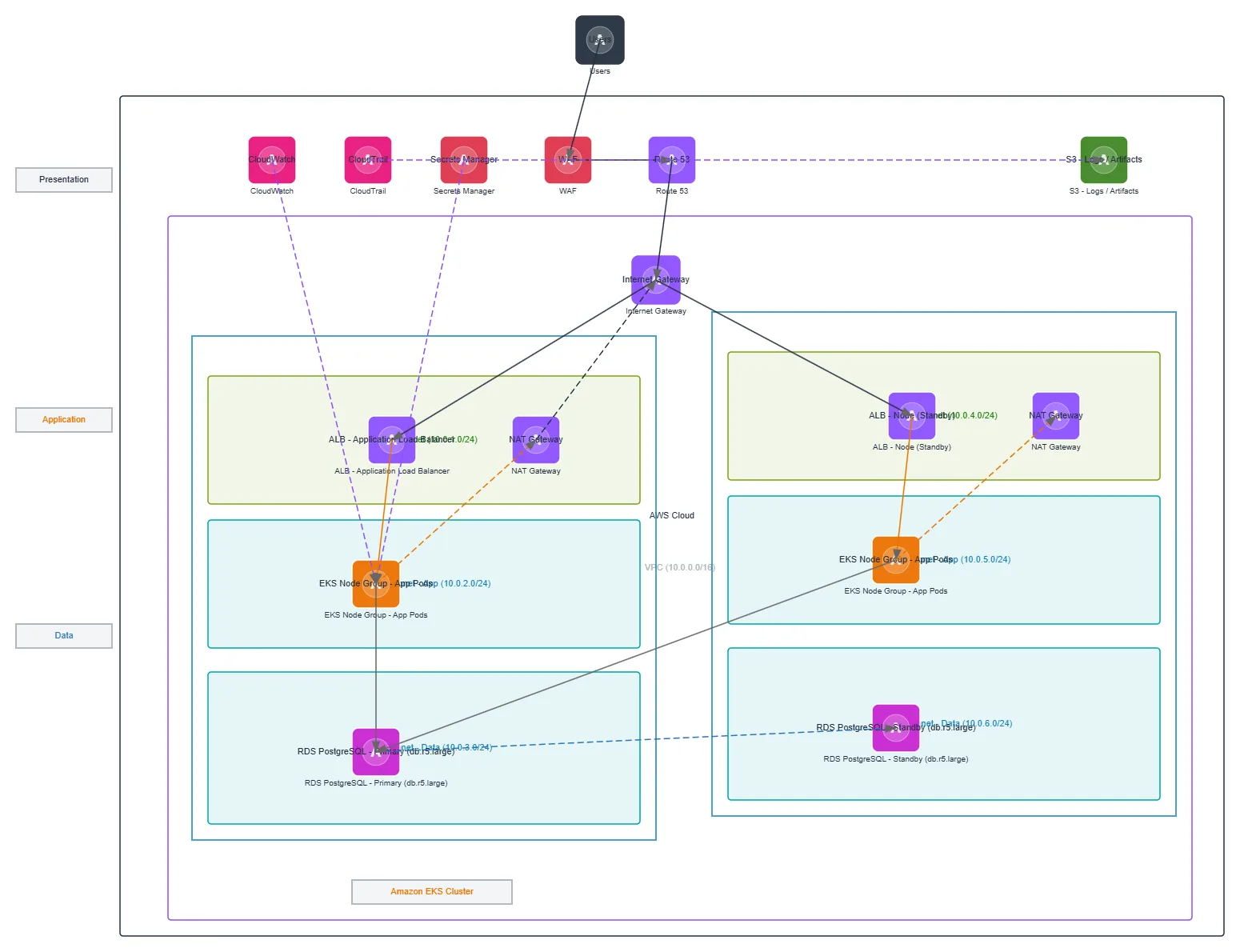
Multi-AZ EKS cluster spanning two availability zones with redundant ALBs, NAT Gateways, and RDS PostgreSQL primary-standby replication for fault tolerance. Traffic flows from users through WAF and Route 53 to Application Load Balancers, which distribute requests across EKS Node Groups running containerized application pods in isolated private subnets. RDS PostgreSQL instances replicate synchronously between AZ-1 and AZ-2, while CloudWatch monitors cluster health, Secrets Manager secures credentials, and CloudTrail logs all API activity to S3. This architecture eliminates single points of failure, ensures automatic failover across zones, and maintains compliance through comprehensive observability and audit trails. Fork this diagram to customize subnet CIDR blocks, instance types, or add additional services like ElastiCache or DynamoDB. The design demonstrates AWS best practices for production-grade Kubernetes deployments requiring 99.99% uptime SLAs.

People also ask

How do I design a highly available AWS EKS cluster across multiple availability zones with automatic failover?

This diagram shows a multi-AZ EKS architecture with redundant ALBs in each zone, RDS PostgreSQL primary-standby replication, and NAT Gateways for outbound traffic. Route 53 and WAF provide DNS failover and DDoS protection, while CloudWatch and CloudTrail ensure observability and compliance across the entire infrastructure.

AWSEKSKubernetesMulti-AZHigh AvailabilityRDS
Domain:
Cloud Aws
Audience:
AWS solutions architects designing highly available Kubernetes infrastructure

Generated by Diagrams.so — AI architecture diagram generator with native Draw.io output. Fork this diagram, remix it, or download as .drawio, PNG, or SVG.

Generate your own architecturediagram →

AWS EKS Multi-AZ Infrastructure Architecture — AWS architecture diagram

About This Architecture

Multi-AZ EKS cluster spanning two availability zones with redundant ALBs, NAT Gateways, and RDS PostgreSQL primary-standby replication for fault tolerance. Traffic flows from users through WAF and Route 53 to Application Load Balancers, which distribute requests across EKS Node Groups running containerized application pods in isolated private subnets. RDS PostgreSQL instances replicate synchronously between AZ-1 and AZ-2, while CloudWatch monitors cluster health, Secrets Manager secures credentials, and CloudTrail logs all API activity to S3. This architecture eliminates single points of failure, ensures automatic failover across zones, and maintains compliance through comprehensive observability and audit trails. Fork this diagram to customize subnet CIDR blocks, instance types, or add additional services like ElastiCache or DynamoDB. The design demonstrates AWS best practices for production-grade Kubernetes deployments requiring 99.99% uptime SLAs.

People also ask

How do I design a highly available AWS EKS cluster across multiple availability zones with automatic failover?

This diagram shows a multi-AZ EKS architecture with redundant ALBs in each zone, RDS PostgreSQL primary-standby replication, and NAT Gateways for outbound traffic. Route 53 and WAF provide DNS failover and DDoS protection, while CloudWatch and CloudTrail ensure observability and compliance across the entire infrastructure.

AWS EKS Multi-AZ Infrastructure Architecture

AWSadvancedEKSKubernetesMulti-AZHigh AvailabilityRDS
Domain: Cloud AwsAudience: AWS solutions architects designing highly available Kubernetes infrastructure
0 views0 favoritesPublic

Created by

June 27, 2026

Updated

June 27, 2026 at 12:23 PM

Type

architecture

Need a custom architecture diagram?

Describe your architecture in plain English and get a production-ready Draw.io diagram in seconds. Works for AWS, Azure, GCP, Kubernetes, and more.

Generate with AI