Plasticidad de los Suelos - Mecanica de Suelos

AWSFlowchartintermediate
Plasticidad de los Suelos - Mecanica de Suelos — AWS flowchart diagram

About This Architecture

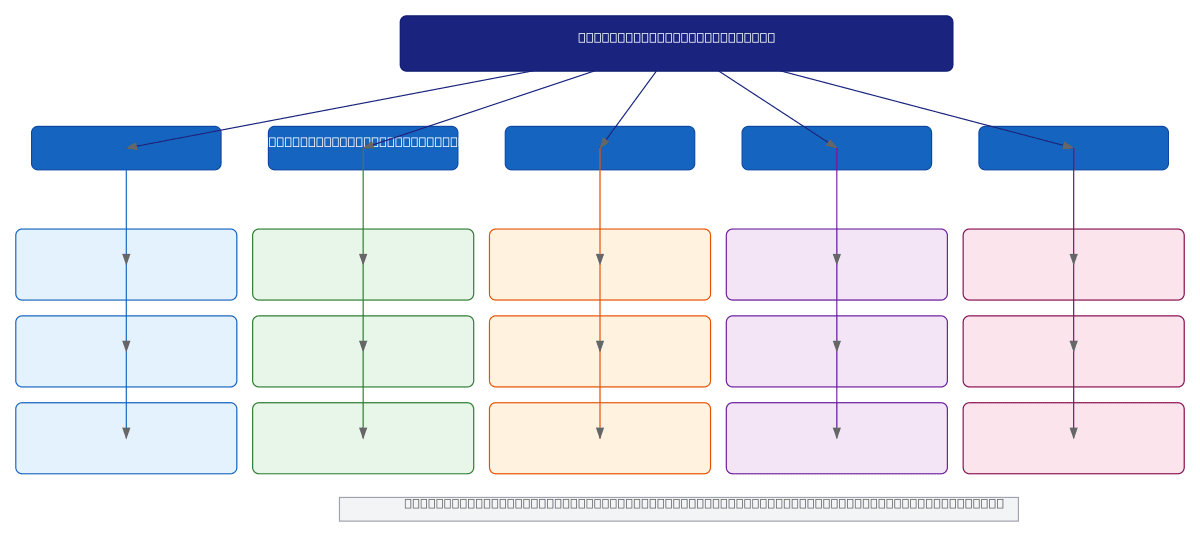
Soil plasticity fundamentals covering the deformation behavior of clay-rich soils without cracking or volume loss, governed by water content and clay mineral structure. The diagram maps four soil consistency states—solid, semi-solid, plastic, and liquid—and their transitions via Atterberg limits (LL, LP, LC) determined by ASTM D4318 laboratory testing. Plasticity Index (IP = LL − LP) and Liquidity Index (IL) quantify soil compressibility and current consistency, enabling engineers to predict settlement, liquefaction risk, and construction suitability. Fork this flowchart to customize for regional soil classifications, add site-specific test data, or embed in geotechnical reports and course materials. The practical example (LL 68.40%, LP 22.71%, IP 45.69%) demonstrates high-plasticity clay behavior critical for foundation design.

People also ask

What are Atterberg limits and how do they determine soil plasticity and consistency?

Atterberg limits (Liquid Limit, Plastic Limit, Shrinkage Limit) are ASTM D4318 thresholds that define transitions between soil consistency states. Plasticity Index (IP = LL − LP) and Liquidity Index (IL) quantify soil deformability and current moisture state, enabling prediction of compressibility, settlement, and liquefaction risk in foundation design.

geotechnical engineeringsoil mechanicsAtterberg limitsplasticity indexASTM D4318foundation design
Domain:
Mechanical Engineering
Audience:
Civil and geotechnical engineers studying soil mechanics and plasticity classification

Generated by Diagrams.so — AI architecture diagram generator with native Draw.io output. Fork this diagram, remix it, or download as .drawio, PNG, or SVG.

Generate your own flowchart diagram →

About This Architecture

Soil plasticity fundamentals covering the deformation behavior of clay-rich soils without cracking or volume loss, governed by water content and clay mineral structure. The diagram maps four soil consistency states—solid, semi-solid, plastic, and liquid—and their transitions via Atterberg limits (LL, LP, LC) determined by ASTM D4318 laboratory testing. Plasticity Index (IP = LL − LP) and Liquidity Index (IL) quantify soil compressibility and current consistency, enabling engineers to predict settlement, liquefaction risk, and construction suitability. Fork this flowchart to customize for regional soil classifications, add site-specific test data, or embed in geotechnical reports and course materials. The practical example (LL 68.40%, LP 22.71%, IP 45.69%) demonstrates high-plasticity clay behavior critical for foundation design.

People also ask

What are Atterberg limits and how do they determine soil plasticity and consistency?

Atterberg limits (Liquid Limit, Plastic Limit, Shrinkage Limit) are ASTM D4318 thresholds that define transitions between soil consistency states. Plasticity Index (IP = LL − LP) and Liquidity Index (IL) quantify soil deformability and current moisture state, enabling prediction of compressibility, settlement, and liquefaction risk in foundation design.

Plasticidad de los Suelos - Mecanica de Suelos

AWSintermediategeotechnical engineeringsoil mechanicsAtterberg limitsplasticity indexASTM D4318foundation design
Domain: Mechanical EngineeringAudience: Civil and geotechnical engineers studying soil mechanics and plasticity classification
0 views0 favoritesPublic

Created by

May 2, 2026

Updated

May 2, 2026 at 9:39 PM

Type

flowchart

Need a custom architecture diagram?

Describe your architecture in plain English and get a production-ready Draw.io diagram in seconds. Works for AWS, Azure, GCP, Kubernetes, and more.

Generate with AI