
About This Architecture
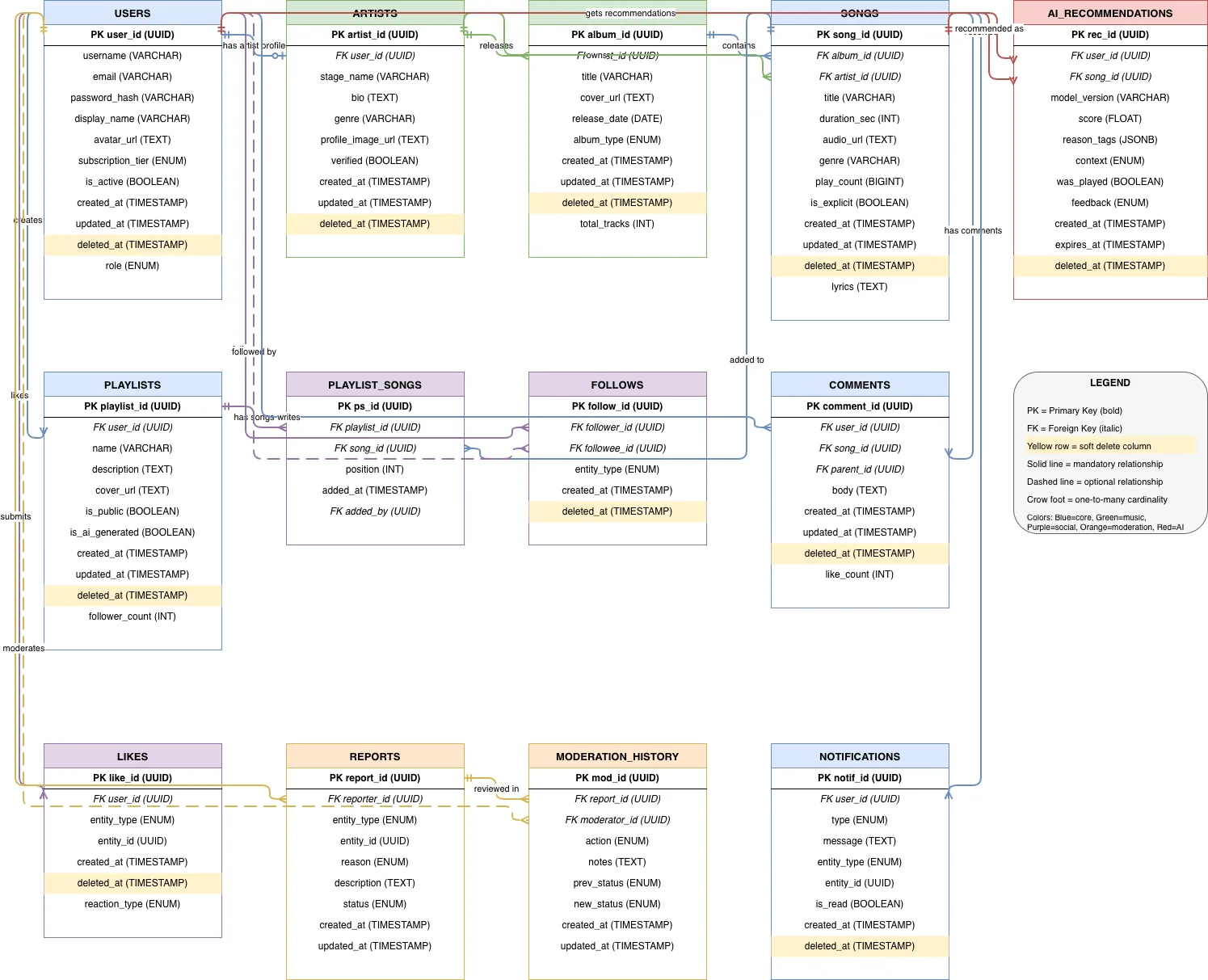
Spotify-like music streaming ER diagram with seven core entities: USERS, ARTISTS, ALBUMS, SONGS, PLAYLISTS, PLAYLIST_SONGS, FOLLOWS, and COMMENTS. Data flows from USERS through ARTISTS and ALBUMS to SONGS, with PLAYLISTS enabling user-curated collections via the PLAYLIST_SONGS junction table. The FOLLOWS table manages user-to-user and user-to-artist relationships, while COMMENTS enable song-level engagement with nested reply support. This normalized schema demonstrates best practices for multi-tenant SaaS platforms: soft deletes via deleted_at timestamps, role-based access control through user roles, and audit trails with created_at and updated_at fields. Fork this diagram on Diagrams.so to customize for your streaming service, add indexes, or extend with analytics tables. Consider adding a LIKES or RATINGS table for user engagement metrics and a LISTENING_HISTORY table for recommendation engines.