
About This Architecture
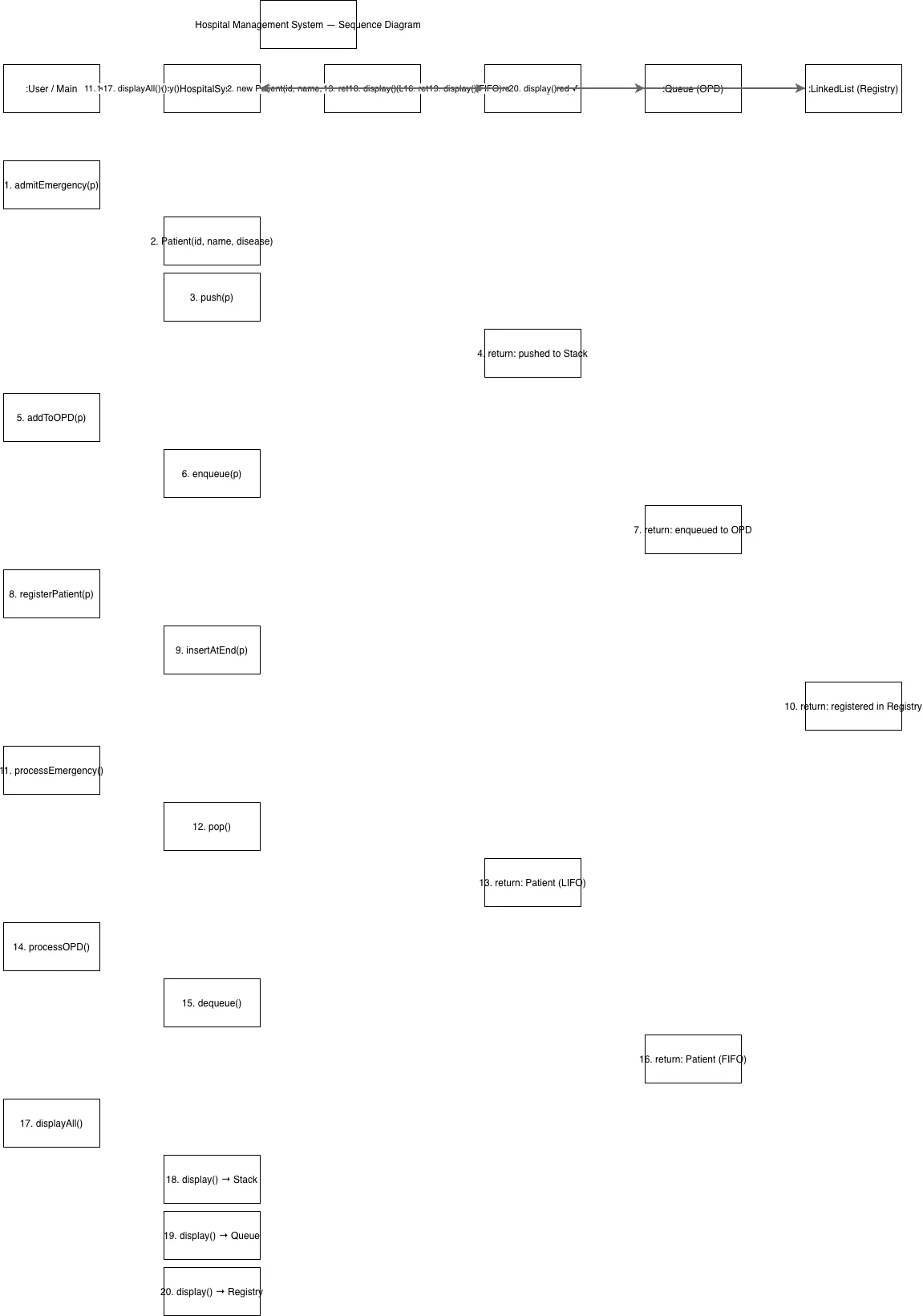
Hospital Management System ERD integrates four core data structures—Patient master table, Stack for emergency records (LIFO), Queue for OPD token management (FIFO), and LinkedList for dynamic patient registry—each linked via Patient_ID foreign keys. Data flows from the Patient entity to emergency, outpatient, and registry subsystems, enabling concurrent handling of critical cases, sequential clinic queuing, and flexible patient tracking. This multi-structure design solves the challenge of managing heterogeneous hospital workflows—urgent care prioritization, fair appointment sequencing, and real-time patient lookup—within a single coherent schema. Fork this diagram on Diagrams.so to customize table schemas, add appointment or billing entities, or export as .drawio for your database design documentation. The architecture demonstrates how combining relational tables with specialized data structures (Stack, Queue, LinkedList) optimizes both transactional consistency and operational efficiency in healthcare systems.