
About This Architecture
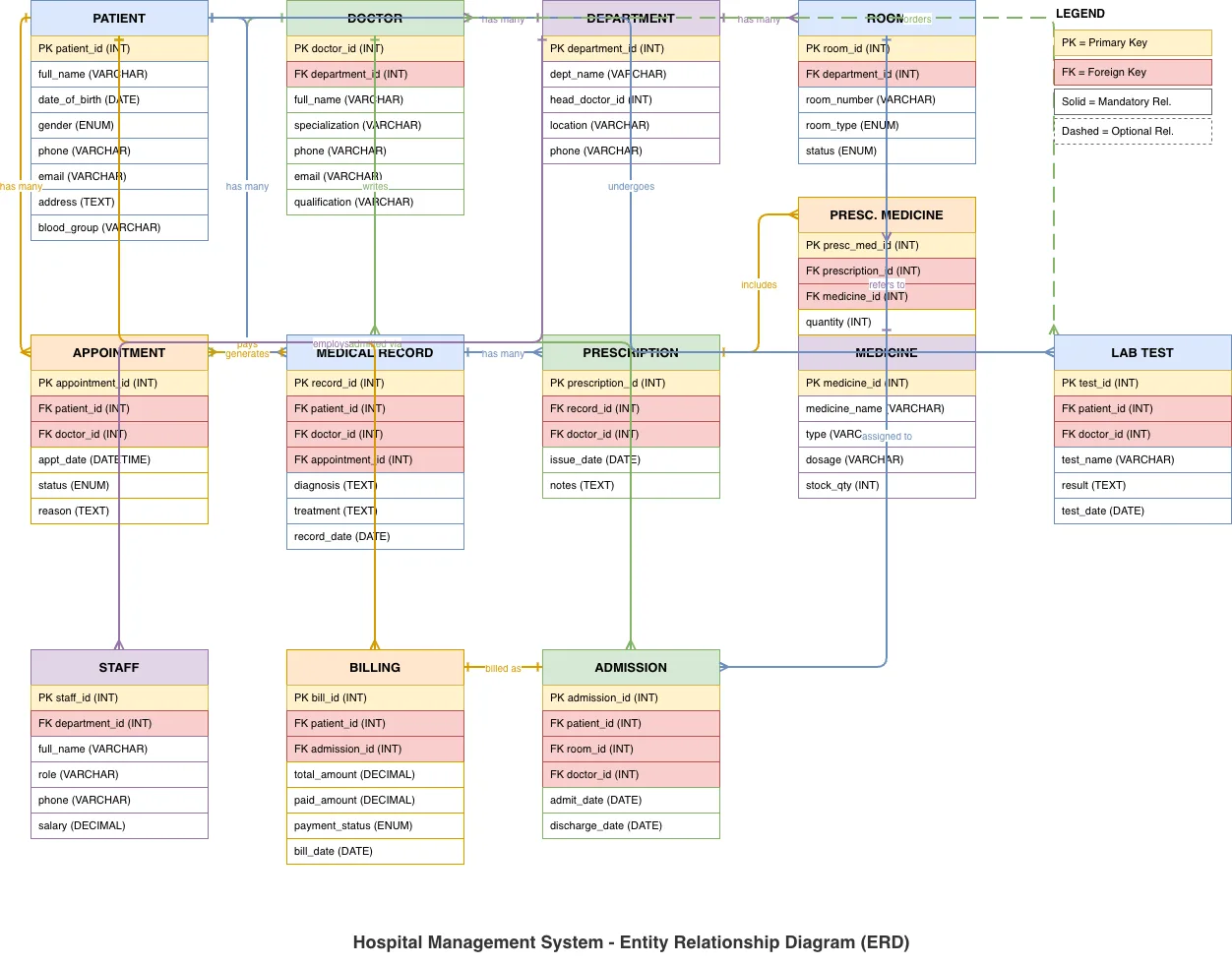
Hospital Management System ERD models core clinical and administrative workflows across 12 interconnected entities: PATIENT, DOCTOR, DEPARTMENT, APPOINTMENT, MEDICAL RECORD, PRESCRIPTION, MEDICINE, ROOM, ADMISSION, BILLING, STAFF, and LAB TEST. Data flows from patient registration through appointments and medical records to prescriptions and billing, with department and room management supporting admissions and staff allocation. This normalized schema enforces referential integrity and separates concerns—clinical data (diagnoses, treatments) from operational data (billing, room status)—enabling scalable, auditable healthcare operations. Fork this ERD on Diagrams.so to customize entities, add audit trails, or extend with insurance or pharmacy modules. The design demonstrates healthcare data modeling best practices: mandatory relationships for critical workflows (patient-to-appointment-to-record) and optional relationships for flexible scenarios (optional lab tests).