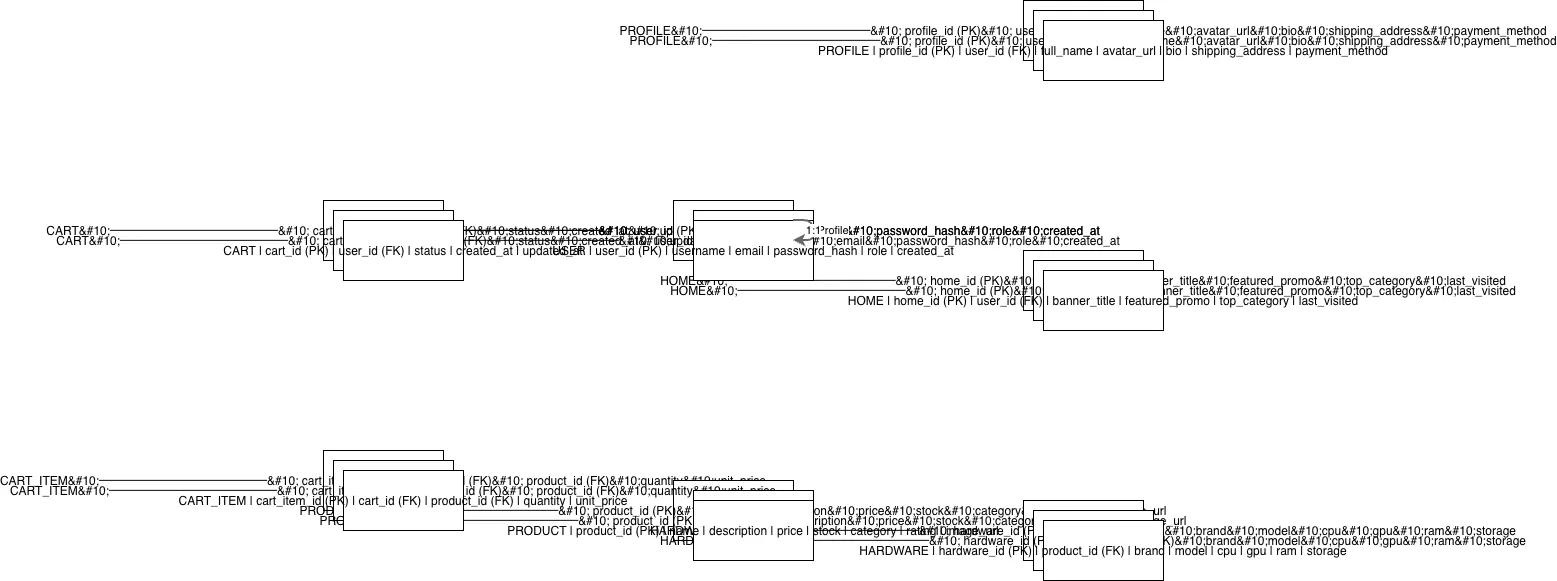
Gaming Online Shop ERD
About This Architecture
Gaming Online Shop ERD models a relational database for an e-commerce platform with user accounts, product catalogs, shopping carts, and hardware specifications. Users link to profiles, home pages, and carts; products branch into hardware-specific details like CPU, GPU, RAM, and storage. Cart items join users and products with quantity and pricing snapshots, enabling transactional integrity and inventory tracking. Fork this diagram on Diagrams.so to customize schemas, add order history or review tables, or export as SQL DDL for RDS provisioning. This schema supports multi-tenant gaming hardware sales with role-based access control and audit timestamps.
People also ask
What does a relational database schema look like for a gaming e-commerce platform?
This ERD shows a normalized schema with USER as the root entity linking to PROFILE, HOME, and CART tables. PRODUCT and HARDWARE tables model gaming hardware specs (CPU, GPU, RAM), while CART_ITEM bridges users' shopping carts to products with quantity and pricing. The design supports user authentication, inventory tracking, and transactional cart operations.
- Domain:
- Data Engineering
- Audience:
- Backend engineers and database architects designing e-commerce platforms on AWS
Generated by Diagrams.so — AI architecture diagram generator with native Draw.io output. Fork this diagram, remix it, or download as .drawio, PNG, or SVG.