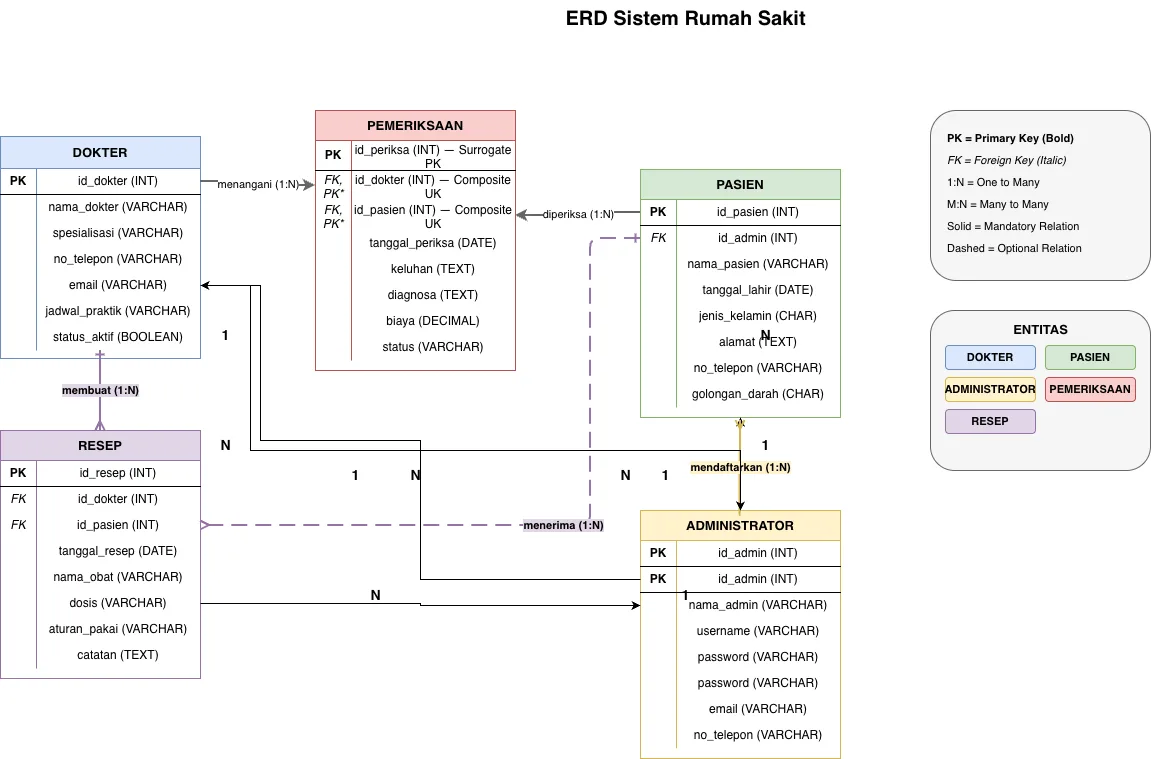
ERD Sistem Rumah Sakit

GENERALErintermediate
ERD Sistem Rumah Sakit — GENERAL er diagram

About This Architecture

Hospital management system ERD with five core entities: DOKTER (doctors), PASIEN (patients), ADMINISTRATOR (staff), PEMERIKSAAN (medical examinations), and RESEP (prescriptions). Doctors conduct examinations and issue prescriptions to patients, while administrators manage patient records through foreign key relationships. The schema enforces referential integrity with primary and foreign keys, capturing clinical workflows from patient intake through diagnosis and medication dispensing. Fork this diagram on Diagrams.so to customize field names, add new entities like billing or lab results, or export as .drawio for use in your database design documentation. This normalized structure supports multi-user healthcare operations with clear separation of roles and audit trails.

People also ask

What does a complete hospital management system database schema look like with doctors, patients, and prescriptions?

This ERD shows a normalized hospital database with five entities: DOKTER (doctors with specialization and schedule), PASIEN (patients with demographics), ADMINISTRATOR (staff managing records), PEMERIKSAAN (exams linking doctors and patients), and RESEP (prescriptions). One-to-many relationships enforce that one doctor examines many patients and issues many prescriptions, while administrators over

database-designentity-relationship-diagramhealthcare-systemshospital-managementrelational-databasedata-modeling
Domain:
Data Engineering
Audience:
Database designers and healthcare IT professionals building hospital management systems

Generated by Diagrams.so — AI architecture diagram generator with native Draw.io output. Fork this diagram, remix it, or download as .drawio, PNG, or SVG.

Generate your own er diagram →

About This Architecture

Hospital management system ERD with five core entities: DOKTER (doctors), PASIEN (patients), ADMINISTRATOR (staff), PEMERIKSAAN (medical examinations), and RESEP (prescriptions). Doctors conduct examinations and issue prescriptions to patients, while administrators manage patient records through foreign key relationships. The schema enforces referential integrity with primary and foreign keys, capturing clinical workflows from patient intake through diagnosis and medication dispensing. Fork this diagram on Diagrams.so to customize field names, add new entities like billing or lab results, or export as .drawio for use in your database design documentation. This normalized structure supports multi-user healthcare operations with clear separation of roles and audit trails.

People also ask

What does a complete hospital management system database schema look like with doctors, patients, and prescriptions?

This ERD shows a normalized hospital database with five entities: DOKTER (doctors with specialization and schedule), PASIEN (patients with demographics), ADMINISTRATOR (staff managing records), PEMERIKSAAN (exams linking doctors and patients), and RESEP (prescriptions). One-to-many relationships enforce that one doctor examines many patients and issues many prescriptions, while administrators over

ERD Sistem Rumah Sakit

Autointermediatedatabase-designentity-relationship-diagramhealthcare-systemshospital-managementrelational-databasedata-modeling
Domain: Data EngineeringAudience: Database designers and healthcare IT professionals building hospital management systems
0 views0 favoritesPublic

Created by

May 8, 2026

Updated

May 8, 2026 at 9:02 AM

Type

er

Need a custom architecture diagram?

Describe your architecture in plain English and get a production-ready Draw.io diagram in seconds. Works for AWS, Azure, GCP, Kubernetes, and more.

Generate with AI