
About This Architecture
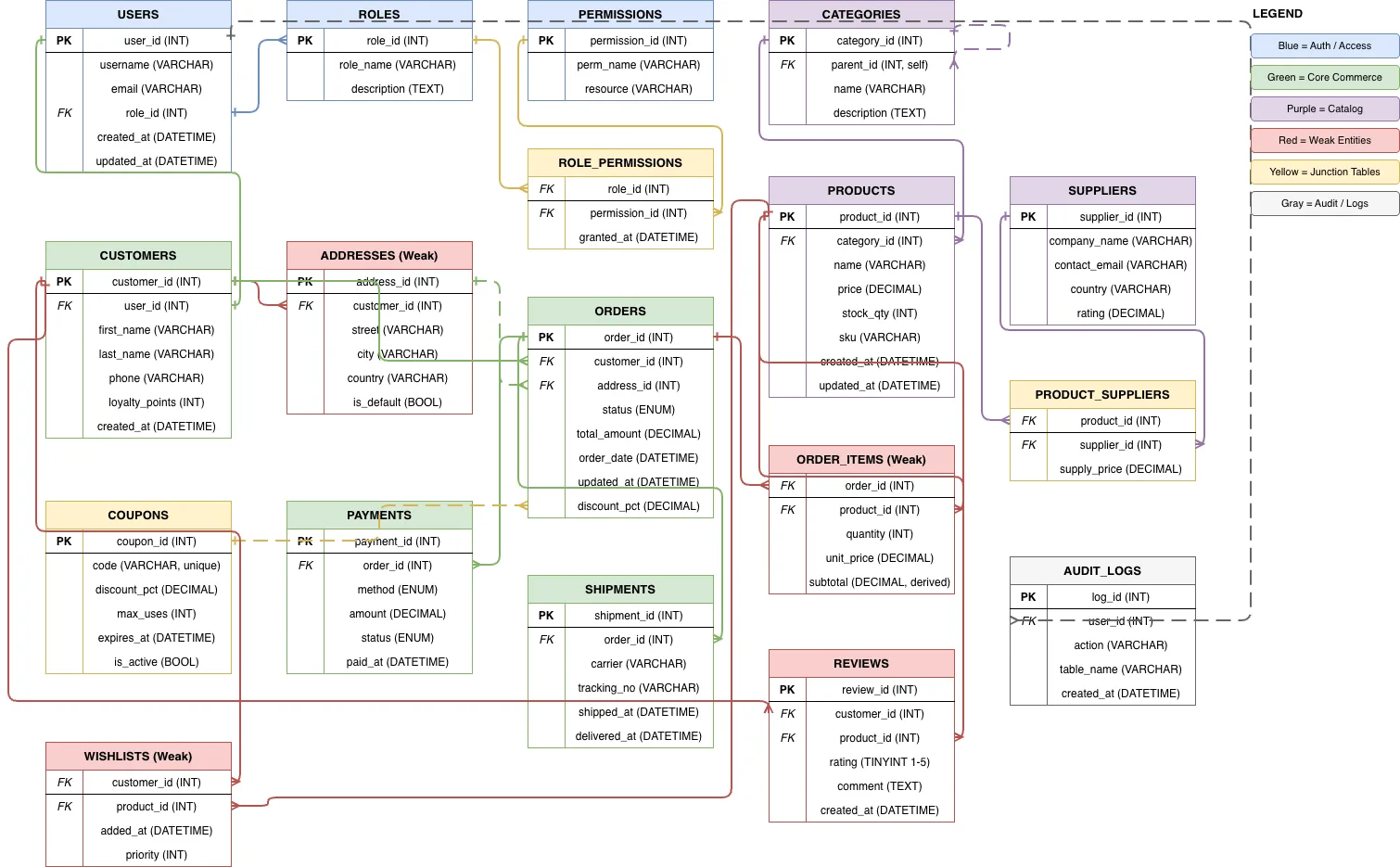
Comprehensive e-commerce platform ER diagram modeling users, roles, permissions, customers, products, orders, and payments with normalized relational schema. The design separates authentication (USERS, ROLES, PERMISSIONS) from customer profiles (CUSTOMERS, ADDRESSES) and transactional data (ORDERS, ORDER_ITEMS, PAYMENTS), with product catalog management (PRODUCTS, CATEGORIES, SUPPLIERS) supporting multi-supplier sourcing. This normalized structure enforces referential integrity, supports role-based access control, and scales efficiently for high-transaction retail systems. Fork and customize this diagram on Diagrams.so to adapt table structures, add indexes, or extend with inventory or review entities. The weak entity relationships (ADDRESSES, ORDER_ITEMS) and self-referencing CATEGORIES enable hierarchical product organization and customer address management.