Bookstore System ER Diagram

GENERALErintermediate
Bookstore System ER Diagram — GENERAL er diagram

About This Architecture

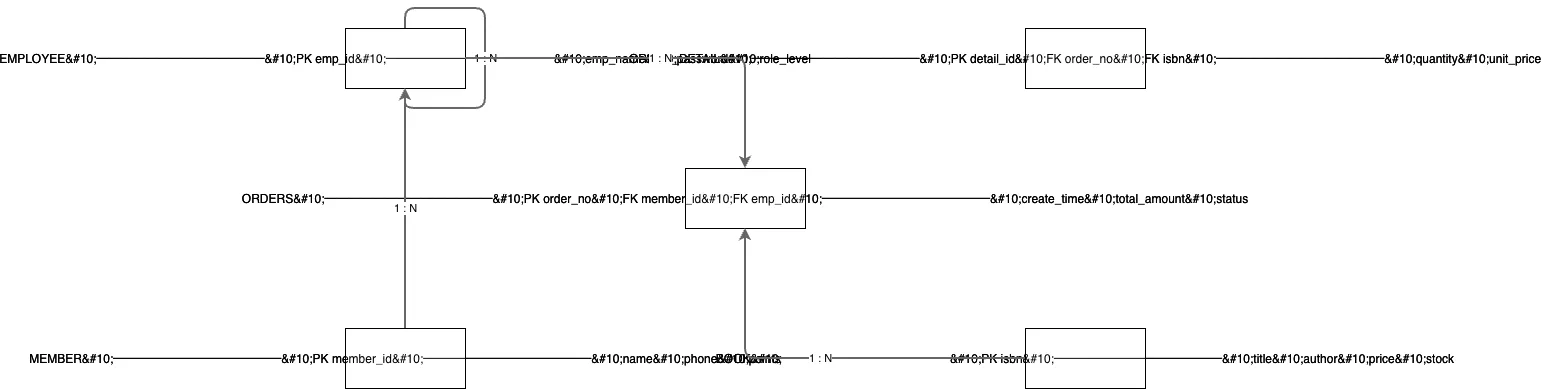
Bookstore System ER diagram models a relational database with five core entities: Book, Member, Order, Employee, and OrderDetail. Members place orders through employees, with each order containing multiple line items linked to books via ISBN and quantity details. This schema demonstrates normalized design patterns for retail inventory management, member loyalty tracking, and order fulfillment workflows. Fork and customize this diagram on Diagrams.so to adapt it for your bookstore, library, or retail platform. The design supports transactional integrity through foreign keys while enabling analytics on sales, member behavior, and inventory levels.

People also ask

How do you design a relational database schema for a bookstore order management system?

This ER diagram shows a normalized five-entity schema where Members place Orders through Employees, with OrderDetail line items linking to Books. The design uses primary keys (ISBN, CardNo, OrderID, EmpID, DetailID) and foreign keys to maintain referential integrity across inventory, member profiles, and transaction history.

ER diagramdatabase designrelational databasebookstoreSQL schemadata modeling
Domain:
Data Engineering
Audience:
Database designers and backend developers building e-commerce systems

Generated by Diagrams.so — AI architecture diagram generator with native Draw.io output. Fork this diagram, remix it, or download as .drawio, PNG, or SVG.

Generate your own erdiagram →

About This Architecture

Bookstore System ER diagram models a relational database with five core entities: Book, Member, Order, Employee, and OrderDetail. Members place orders through employees, with each order containing multiple line items linked to books via ISBN and quantity details. This schema demonstrates normalized design patterns for retail inventory management, member loyalty tracking, and order fulfillment workflows. Fork and customize this diagram on Diagrams.so to adapt it for your bookstore, library, or retail platform. The design supports transactional integrity through foreign keys while enabling analytics on sales, member behavior, and inventory levels.

People also ask

How do you design a relational database schema for a bookstore order management system?

This ER diagram shows a normalized five-entity schema where Members place Orders through Employees, with OrderDetail line items linking to Books. The design uses primary keys (ISBN, CardNo, OrderID, EmpID, DetailID) and foreign keys to maintain referential integrity across inventory, member profiles, and transaction history.

Bookstore System ER Diagram

AutointermediateER diagramdatabase designrelational databasebookstoreSQL schemadata modeling
Domain: Data EngineeringAudience: Database designers and backend developers building e-commerce systems
0 views0 favoritesPublic

Created by

May 31, 2026

Updated

May 31, 2026 at 12:54 PM

Type

er

Need a custom architecture diagram?

Describe your architecture in plain English and get a production-ready Draw.io diagram in seconds. Works for AWS, Azure, GCP, Kubernetes, and more.

Generate with AI