Zero Trust Architecture - Full Stack
About This Architecture
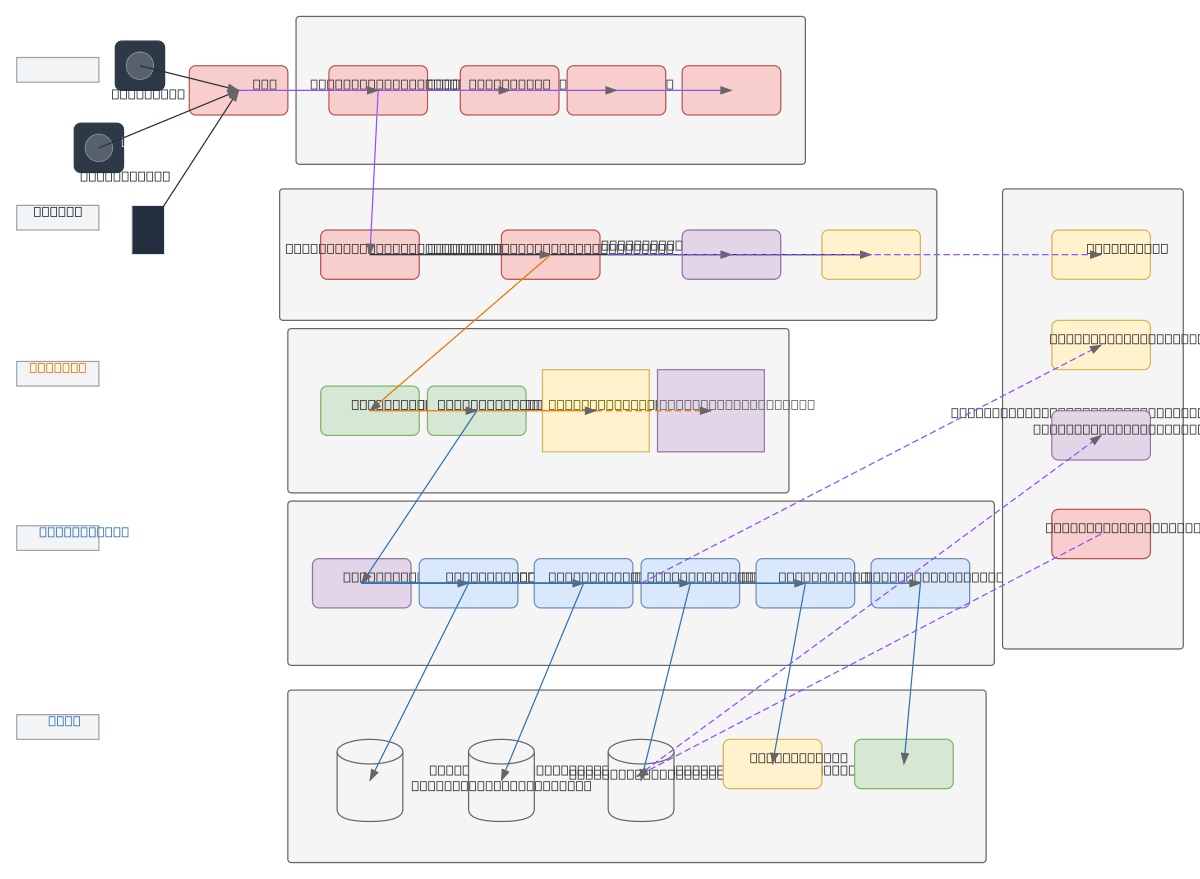
Zero Trust Architecture - Full Stack implements defense-in-depth by eliminating implicit trust, requiring continuous verification at every access layer. End users, admin users, and mobile devices authenticate through WAF and IdP with MFA, feeding identity and policy decisions to a centralized Policy Engine that enforces micro-segmentation, encrypted tunnels, and real-time risk evaluation. Microservices (User, Payment, Inventory, Order, Notification) sit behind an API Gateway within encrypted network segments, with all data stores encrypted at rest and in transit, while SIEM and centralized logging provide continuous observability. Fork this diagram to customize policy rules, add your KMS provider, or adapt network segments to your organizational trust boundaries.
People also ask
How do I design a zero-trust architecture that verifies every user and device, enforces policies at every layer, and encrypts all data in transit and at rest?
This diagram shows a complete zero-trust model where End Users, Admin Users, and Mobile Devices authenticate via IdP with MFA before reaching a WAF, then pass through a Policy Decision Point and Policy Enforcement Point that evaluate risk in real-time. Network micro-segmentation with encrypted tunnels isolates public and private segments, while microservices access encrypted databases and object s
- Domain:
- Security
- Audience:
- Security architects designing zero-trust network and identity frameworks
Generated by Diagrams.so — AI architecture diagram generator with native Draw.io output. Fork this diagram, remix it, or download as .drawio, PNG, or SVG.
