WattWise ERD - Smart Energy Monitor

AWSErintermediate
WattWise ERD - Smart Energy Monitor — AWS er diagram

About This Architecture

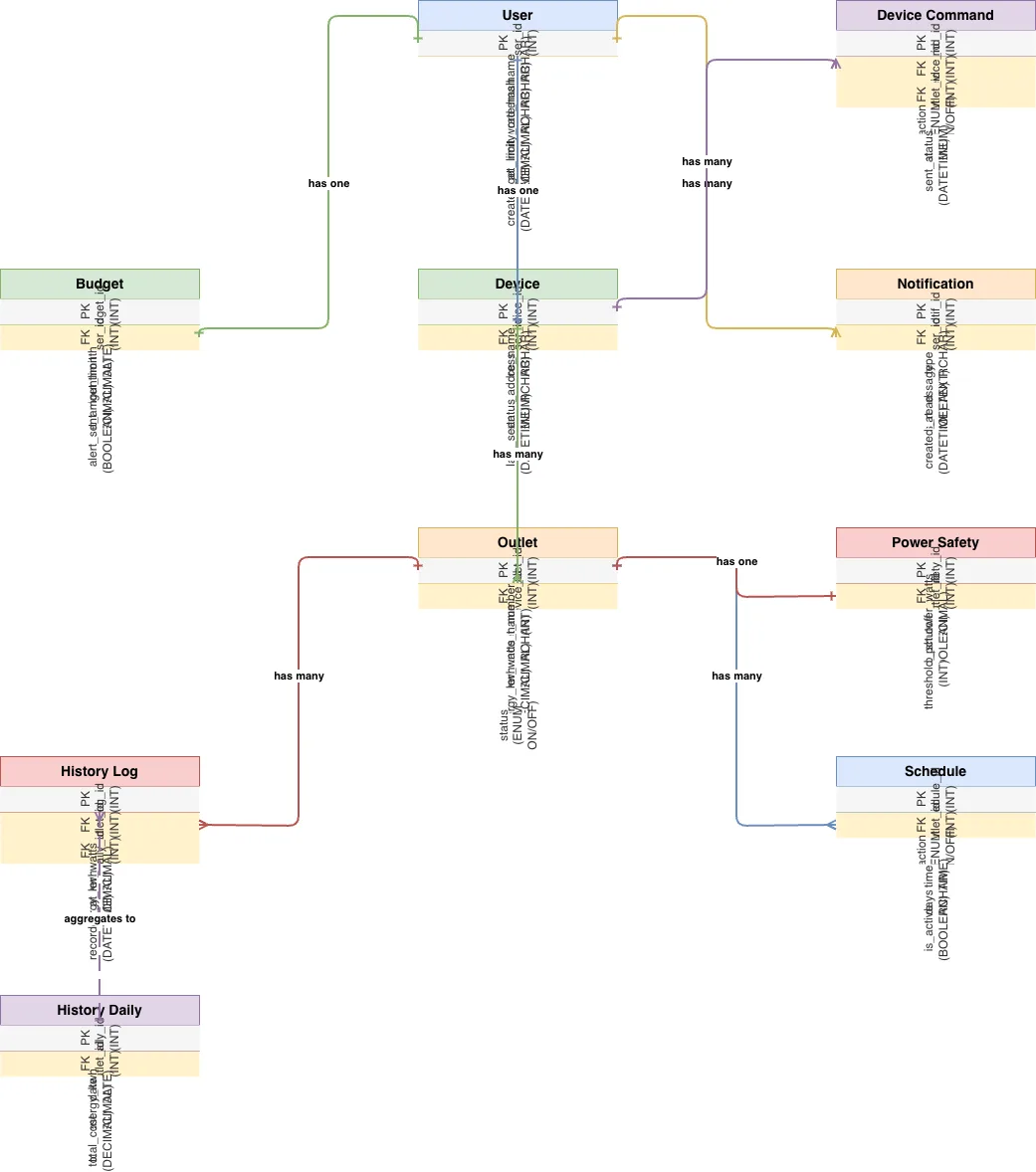
WattWise ERD models a comprehensive smart energy monitoring platform with nine interconnected entities tracking users, IoT devices, power outlets, and consumption patterns. Data flows from Device and Outlet entities through History Log and History Daily for granular and aggregated energy tracking, while Budget and Notification entities manage user alerts and spending limits. The schema demonstrates normalized database design for real-time power monitoring, historical analytics, and automated safety controls—essential for IoT applications requiring reliable audit trails and multi-tenant isolation. Fork this diagram on Diagrams.so to customize table relationships, add indexes, or adapt the schema for your AWS RDS or DynamoDB implementation. The Power Safety and Device Command entities exemplify how to layer automation and safety constraints into an energy management system.

People also ask

What does a normalized database schema look like for an IoT smart energy monitoring platform?

The WattWise ERD shows a nine-table normalized schema where User entities own Devices, Devices contain Outlets, and Outlets generate History Log entries aggregated into History Daily summaries. Budget, Notification, Schedule, Power Safety, and Device Command tables layer in cost tracking, alerts, automation, and safety constraints—a production-ready pattern for AWS RDS-backed IoT applications.

ERDdatabase-designIoTAWSenergy-monitoringsmart-home
Domain:
Data Engineering
Audience:
Backend engineers and database architects designing IoT energy monitoring systems

Generated by Diagrams.so — AI architecture diagram generator with native Draw.io output. Fork this diagram, remix it, or download as .drawio, PNG, or SVG.

Generate your own er diagram →

About This Architecture

WattWise ERD models a comprehensive smart energy monitoring platform with nine interconnected entities tracking users, IoT devices, power outlets, and consumption patterns. Data flows from Device and Outlet entities through History Log and History Daily for granular and aggregated energy tracking, while Budget and Notification entities manage user alerts and spending limits. The schema demonstrates normalized database design for real-time power monitoring, historical analytics, and automated safety controls—essential for IoT applications requiring reliable audit trails and multi-tenant isolation. Fork this diagram on Diagrams.so to customize table relationships, add indexes, or adapt the schema for your AWS RDS or DynamoDB implementation. The Power Safety and Device Command entities exemplify how to layer automation and safety constraints into an energy management system.

People also ask

What does a normalized database schema look like for an IoT smart energy monitoring platform?

The WattWise ERD shows a nine-table normalized schema where User entities own Devices, Devices contain Outlets, and Outlets generate History Log entries aggregated into History Daily summaries. Budget, Notification, Schedule, Power Safety, and Device Command tables layer in cost tracking, alerts, automation, and safety constraints—a production-ready pattern for AWS RDS-backed IoT applications.

WattWise ERD - Smart Energy Monitor

AWSintermediateERDdatabase-designIoTenergy-monitoringsmart-home
Domain: Data EngineeringAudience: Backend engineers and database architects designing IoT energy monitoring systems
0 views0 favoritesPublic

Created by

May 1, 2026

Updated

May 1, 2026 at 3:45 AM

Type

er

Need a custom architecture diagram?

Describe your architecture in plain English and get a production-ready Draw.io diagram in seconds. Works for AWS, Azure, GCP, Kubernetes, and more.

Generate with AI