UniCarpool Domain Model
MULTISequenceintermediate
UniCarpool Domain Model — MULTI sequence diagram

About This Architecture

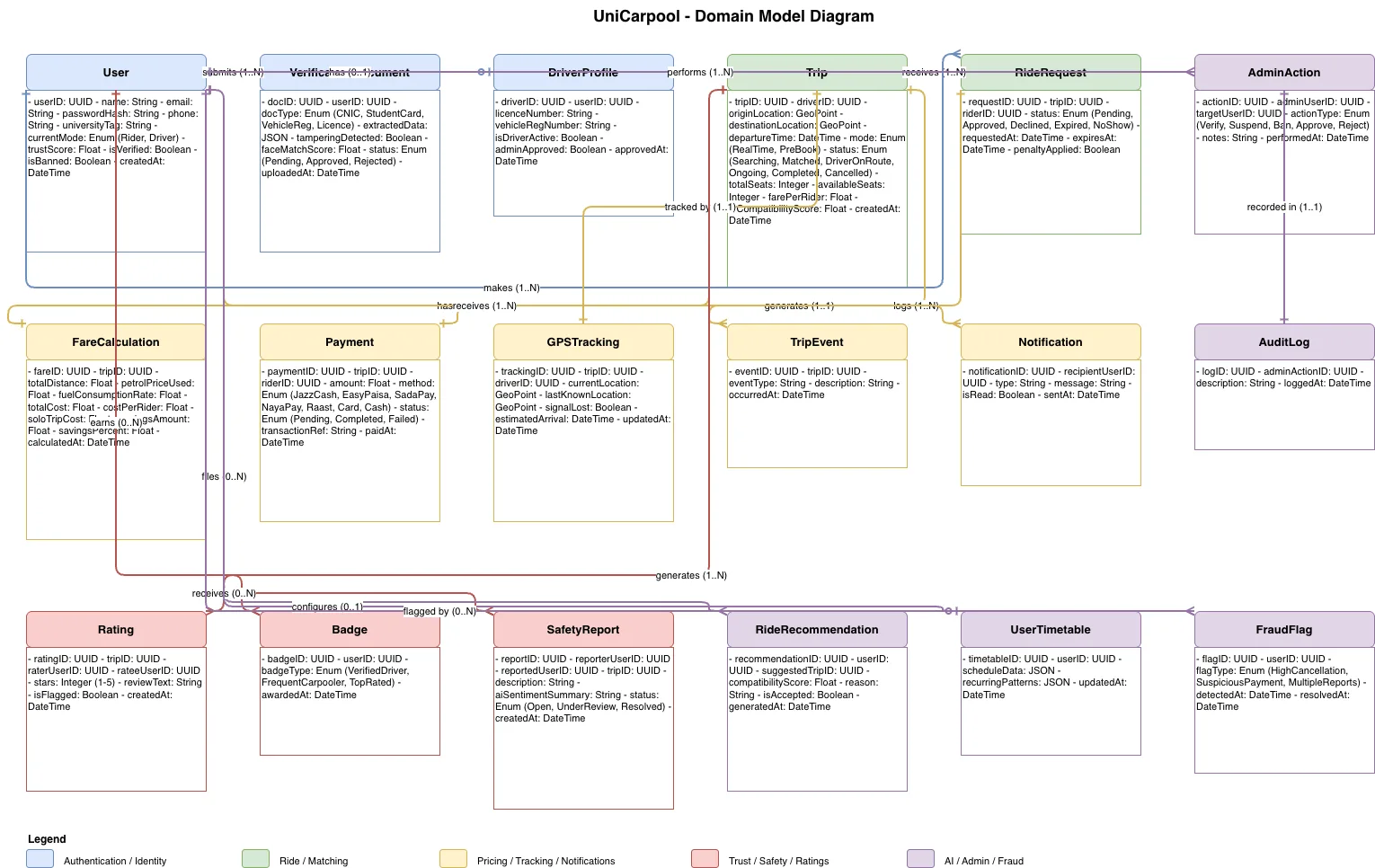
UniCarpool domain model diagram maps eight interconnected entities spanning authentication, ride matching, pricing, tracking, and trust systems. User, DriverProfile, Trip, RideRequest, and Payment entities form the core transaction flow, while GPSTracking, TripEvent, and Notification entities enable real-time operations. VerificationDocument, Rating, Badge, SafetyReport, FraudFlag, and AdminAction entities enforce safety and compliance across the platform. This comprehensive model demonstrates how to structure a multi-tenant ride-sharing system with clear separation between identity, transactional, operational, and governance concerns. Fork this diagram on Diagrams.so to customize entity relationships, add new attributes, or adapt it for your own carpooling or mobility platform. The legend organizes entities into five logical domains: Authentication/Identity, Ride/Matching, Pricing/Tracking/Notifications, Trust/Safety/Ratings, and AI/Admin/Fraud detection.

People also ask

What are the key entities and relationships in a ride-sharing platform domain model?

The UniCarpool domain model organizes ride-sharing into five domains: User and VerificationDocument handle authentication; Trip, RideRequest, and DriverProfile manage ride matching; FareCalculation, Payment, GPSTracking, and TripEvent handle transactions and tracking; Rating, Badge, and SafetyReport build trust; and AdminAction, AuditLog, and FraudFlag enforce governance and safety compliance.

domain-modelride-sharingsoftware-architectureentity-relationshipsbackend-designcarpooling-platform
Domain:
Software Architecture
Audience:
Backend engineers designing domain models for ride-sharing platforms

Generated by Diagrams.so — AI architecture diagram generator with native Draw.io output. Fork this diagram, remix it, or download as .drawio, PNG, or SVG.

Generate your own sequence diagram →

About This Architecture

UniCarpool domain model diagram maps eight interconnected entities spanning authentication, ride matching, pricing, tracking, and trust systems. User, DriverProfile, Trip, RideRequest, and Payment entities form the core transaction flow, while GPSTracking, TripEvent, and Notification entities enable real-time operations. VerificationDocument, Rating, Badge, SafetyReport, FraudFlag, and AdminAction entities enforce safety and compliance across the platform. This comprehensive model demonstrates how to structure a multi-tenant ride-sharing system with clear separation between identity, transactional, operational, and governance concerns. Fork this diagram on Diagrams.so to customize entity relationships, add new attributes, or adapt it for your own carpooling or mobility platform. The legend organizes entities into five logical domains: Authentication/Identity, Ride/Matching, Pricing/Tracking/Notifications, Trust/Safety/Ratings, and AI/Admin/Fraud detection.

People also ask

What are the key entities and relationships in a ride-sharing platform domain model?

The UniCarpool domain model organizes ride-sharing into five domains: User and VerificationDocument handle authentication; Trip, RideRequest, and DriverProfile manage ride matching; FareCalculation, Payment, GPSTracking, and TripEvent handle transactions and tracking; Rating, Badge, and SafetyReport build trust; and AdminAction, AuditLog, and FraudFlag enforce governance and safety compliance.

UniCarpool Domain Model

Multiintermediatedomain-modelride-sharingsoftware-architectureentity-relationshipsbackend-designcarpooling-platform
Domain: Software ArchitectureAudience: Backend engineers designing domain models for ride-sharing platforms
0 views0 favoritesPublic

Created by

May 9, 2026

Updated

May 9, 2026 at 7:37 PM

Type

sequence

Need a custom architecture diagram?

Describe your architecture in plain English and get a production-ready Draw.io diagram in seconds. Works for AWS, Azure, GCP, Kubernetes, and more.

Generate with AI