UML Use Case - Gestion de Tournois Sportifs

GENERALArchitectureintermediate
UML Use Case - Gestion de Tournois Sportifs — GENERAL architecture diagram

About This Architecture

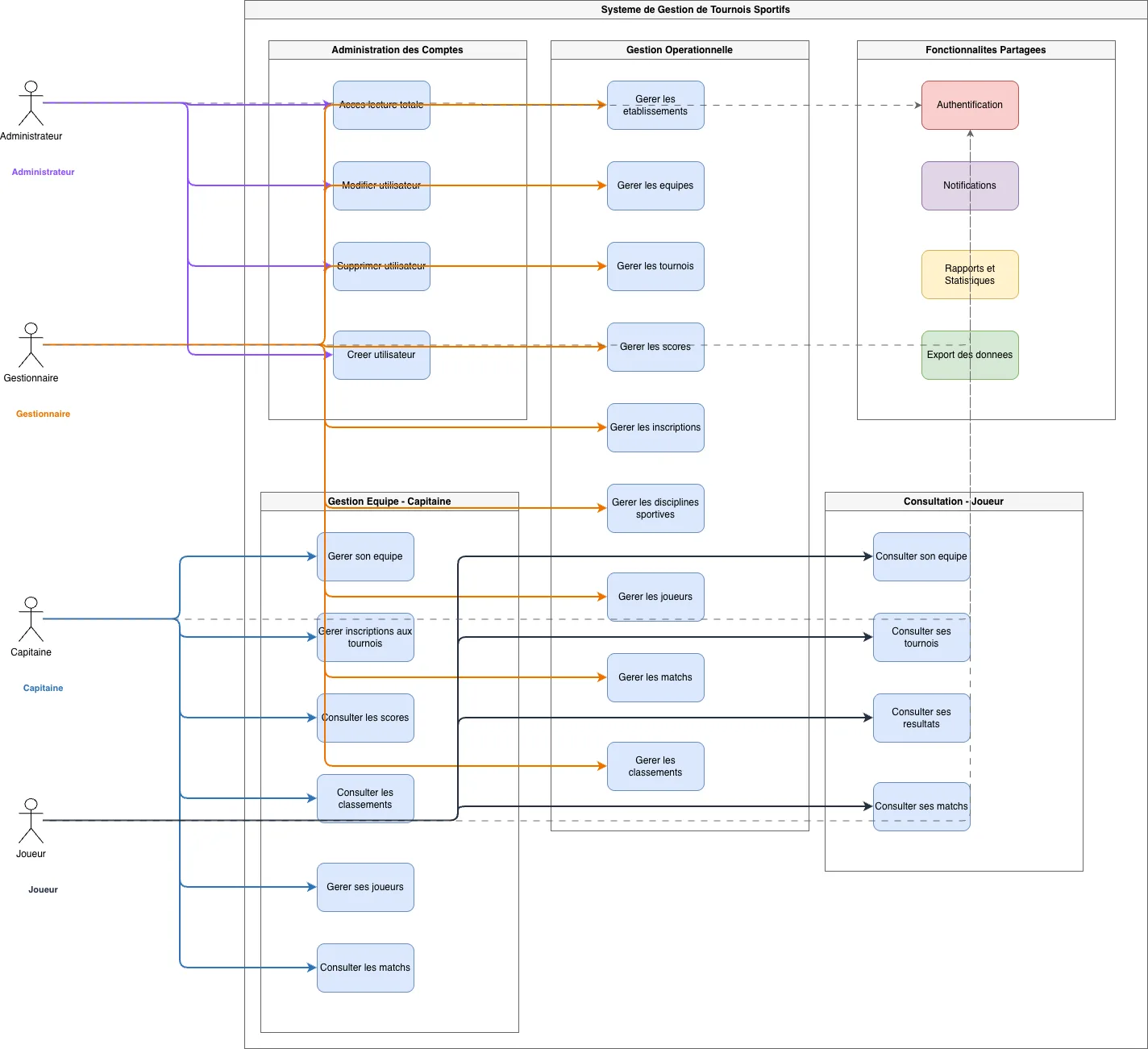
UML use case diagram modeling a multi-role sports tournament management system with four distinct user personas: Administrator, Gestionnaire, Capitaine, and Joueur. The system separates concerns across account administration, operational management, team leadership, and player consultation, with shared authentication and reporting features. Administrators control user lifecycle and full system access; Gestionnaires manage facilities, disciplines, teams, players, tournaments, matches, scores, and rankings; Capitaines oversee their team and tournament registrations; Joueurs view team, match, and results information. This role-based access control pattern demonstrates least-privilege design and clear separation of duties essential for scalable multi-tenant sports platforms. Fork this diagram on Diagrams.so to customize roles, add new use cases, or adapt it for your tournament management requirements.

People also ask

How do you design a role-based sports tournament management system with different user permissions?

This UML use case diagram defines four distinct roles—Administrator (user management and full access), Gestionnaire (operational management of facilities and tournaments), Capitaine (team and tournament oversight), and Joueur (read-only consultation)—each with specific use cases and shared authentication. The architecture demonstrates least-privilege access control and clear separation of duties a

UMLuse case diagramsports managementrole-based access controlsoftware architecturetournament system
Domain:
Software Architecture
Audience:
Software architects and business analysts designing role-based sports tournament management systems

Generated by Diagrams.so — AI architecture diagram generator with native Draw.io output. Fork this diagram, remix it, or download as .drawio, PNG, or SVG.

Generate your own architecture diagram →

About This Architecture

UML use case diagram modeling a multi-role sports tournament management system with four distinct user personas: Administrator, Gestionnaire, Capitaine, and Joueur. The system separates concerns across account administration, operational management, team leadership, and player consultation, with shared authentication and reporting features. Administrators control user lifecycle and full system access; Gestionnaires manage facilities, disciplines, teams, players, tournaments, matches, scores, and rankings; Capitaines oversee their team and tournament registrations; Joueurs view team, match, and results information. This role-based access control pattern demonstrates least-privilege design and clear separation of duties essential for scalable multi-tenant sports platforms. Fork this diagram on Diagrams.so to customize roles, add new use cases, or adapt it for your tournament management requirements.

People also ask

How do you design a role-based sports tournament management system with different user permissions?

This UML use case diagram defines four distinct roles—Administrator (user management and full access), Gestionnaire (operational management of facilities and tournaments), Capitaine (team and tournament oversight), and Joueur (read-only consultation)—each with specific use cases and shared authentication. The architecture demonstrates least-privilege access control and clear separation of duties a

UML Use Case - Gestion de Tournois Sportifs

AutointermediateUMLuse case diagramsports managementrole-based access controlsoftware architecturetournament system
Domain: Software ArchitectureAudience: Software architects and business analysts designing role-based sports tournament management systems
0 views0 favoritesPublic

Created by

May 13, 2026

Updated

May 13, 2026 at 11:30 AM

Type

architecture

Need a custom architecture diagram?

Describe your architecture in plain English and get a production-ready Draw.io diagram in seconds. Works for AWS, Azure, GCP, Kubernetes, and more.

Generate with AI