Shelf Monitoring System Architecture

GENERALArchitectureintermediate
Shelf Monitoring System Architecture — GENERAL architecture diagram

About This Architecture

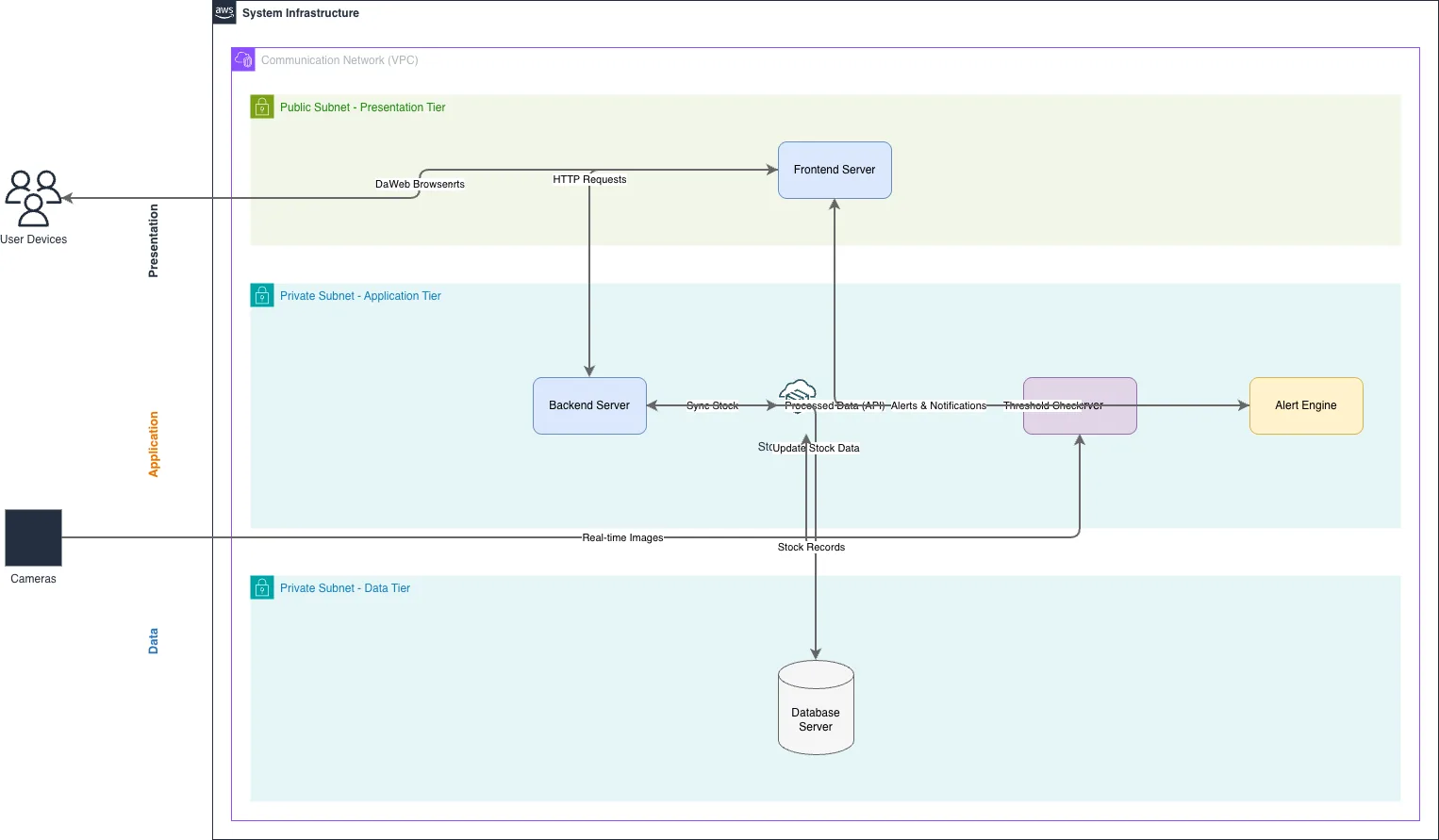
Shelf monitoring system with three-tier architecture separating presentation, application, and data layers across public and private subnets. User devices connect to a frontend server in the public subnet, which routes requests to backend and AI servers in private subnets for processing and inference. Cameras feed real-time shelf data to the AI server for inventory detection, with results persisted in a database server isolated in the data tier. This architecture enforces network segmentation and least-privilege access, critical for retail environments handling sensitive inventory and customer data. Fork and customize this diagram on Diagrams.so to adapt subnet configurations, add load balancers, or integrate additional camera feeds.

People also ask

How should I architect a shelf monitoring system with cameras and AI inference across public and private network tiers?

This diagram shows a three-tier architecture where user devices and frontend servers occupy a public subnet, backend and AI servers run in a private application tier, and the database resides in an isolated data tier. Cameras stream to the AI server for real-time inventory detection, with results flowing to the backend and database for persistence and analytics.

three-tier architectureVPC designIoT systemscomputer visionretail technologynetwork segmentation
Domain:
Cloud Multi
Audience:
Solutions architects designing retail IoT and computer vision systems

Generated by Diagrams.so — AI architecture diagram generator with native Draw.io output. Fork this diagram, remix it, or download as .drawio, PNG, or SVG.

Generate your own architecture diagram →

About This Architecture

Shelf monitoring system with three-tier architecture separating presentation, application, and data layers across public and private subnets. User devices connect to a frontend server in the public subnet, which routes requests to backend and AI servers in private subnets for processing and inference. Cameras feed real-time shelf data to the AI server for inventory detection, with results persisted in a database server isolated in the data tier. This architecture enforces network segmentation and least-privilege access, critical for retail environments handling sensitive inventory and customer data. Fork and customize this diagram on Diagrams.so to adapt subnet configurations, add load balancers, or integrate additional camera feeds.

People also ask

How should I architect a shelf monitoring system with cameras and AI inference across public and private network tiers?

This diagram shows a three-tier architecture where user devices and frontend servers occupy a public subnet, backend and AI servers run in a private application tier, and the database resides in an isolated data tier. Cameras stream to the AI server for real-time inventory detection, with results flowing to the backend and database for persistence and analytics.

Shelf Monitoring System Architecture

Autointermediatethree-tier architectureVPC designIoT systemscomputer visionretail technologynetwork segmentation
Domain: Cloud MultiAudience: Solutions architects designing retail IoT and computer vision systems
0 views0 favoritesPublic

Created by

May 3, 2026

Updated

May 3, 2026 at 9:13 PM

Type

architecture

Need a custom architecture diagram?

Describe your architecture in plain English and get a production-ready Draw.io diagram in seconds. Works for AWS, Azure, GCP, Kubernetes, and more.

Generate with AI